WhatsApp:+86 18005022363 WeChat: +86 18005022363
  Email:
Product Overview
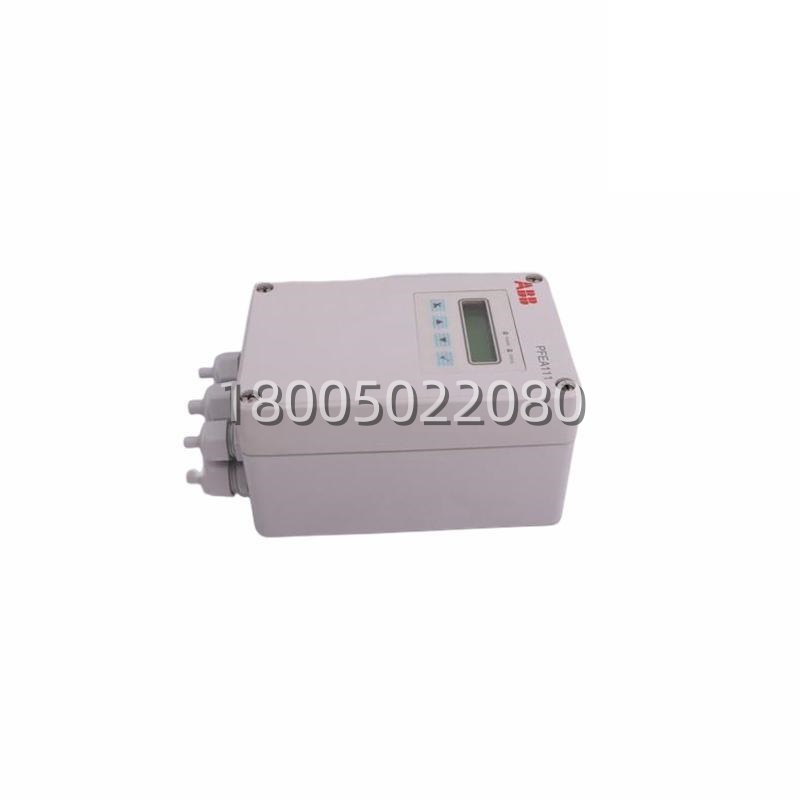
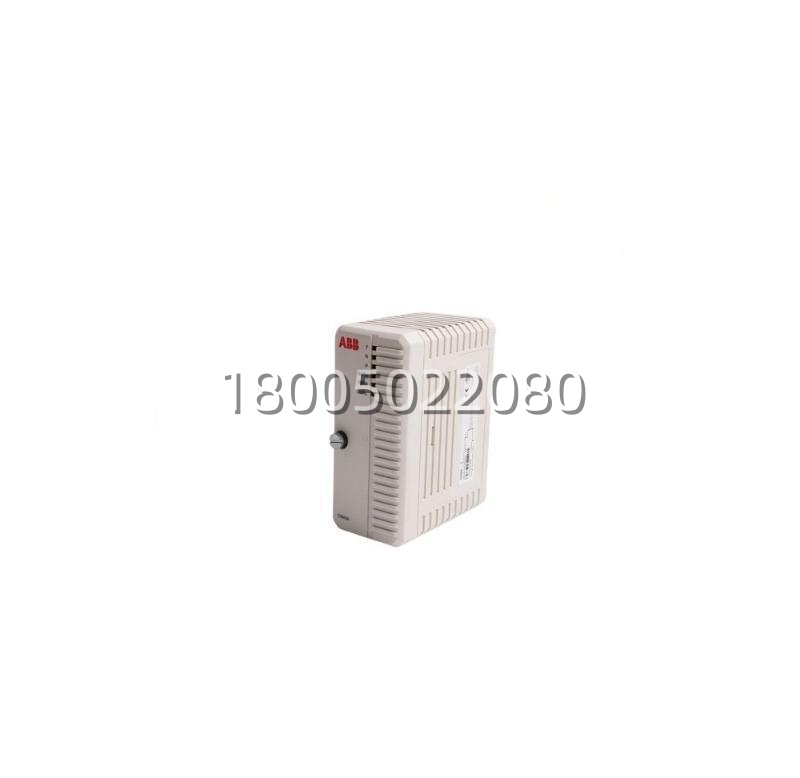
The PFSK104 (ABB article YM322001-EB) is ABB’s signal processing and control core board within the PFSK module family, purpose-built for the local control stations of ABB’s DCS portfolio — Advant Controller (AC450/AC460 lineage), Lutec OCS, Freelance, and Symphony Plus / 800xA process-control deployments. Unlike the NPOW/NINT/NGPS boards we covered earlier (those belong to the ACS800 drives / AC800PEC power-electronic side), the PFSK104 lives on the processside of ABB’s house — it’s the “compute + signal conditioning” node in a DCS local station that typically ships as a 3–4 module set: PFSK101 (24 V DC power supply board, feeds the backplane), PFSK102 (I/O acquisition front-end — AI/AO/DI/DO termination and crude sampling), and PFSK104 (the signal-processing core that takes PFSK102’s raw samples, runs filtering / linearization / cold-junction compensation / PID closure / interlocking logic, and drives the outputs back through the backplane). A PFSK111 display panel often accompanies the set for local HMI. The “104” slot in the local-station rack is therefore the intelligence — the PFSK102 is eyes/ears, PFSK104 is the brain, PFSK101 is the heart.The PFSK104 (YM322001-EB) is specified for 8 AI + 8 AO + 16 DI/DO, all 24 V DC photoelectric-isolated on the digital side, with the analog side configurable per channel (4–20 mA, 0–20 mA, 0–10 V, ±10 V, Pt100 for the AI side; 4–20 mA, 0–10 V for AO). Resolution is 14-bit AD/DA (sources vary 14–16 bit; ±0.05 % FS accuracy is the ABB-published figure for this revision). Isolation is channel-to-channel ≥2.5 kV DC with power-signal-communication triple isolation — the same discipline ABB uses on S800 I/O, brought into the PFSK local-station form factor. Internal communication is RS-485 backplane bus to the PFSK102/PFSK101/PFSK111; external Ethernet / Modbus / Profibus to the plant DCS network is routed through the backplane to the station’s uplink module (the PFSK104 itself doesn’t land plant-network cables — it’s a compute board, not a gateway).The canonical deployment for PFSK104 (YM322001-EB) is web-tension control stations (paper-machine sections, film lines, steel strip processing where tension PID needs microsecond-consistent loop closure with cold-compensation on load cells / tension transducers) and DCS local stations in power-gen BOP,石化辅机, water/wastewater chemical dosing — anywhere a DCS local station needs autonomous PID + signal conditioning without routing every sensor to the central cabinet. The PFSK104 runs autonomously on the station’s backplane: if the uplink to the central DCS (Advant / 800xA / Freelance controller) breaks, the local station can still hold PID and interlocks because the PFSK104 has the application logic downloaded into its non-volatile store. This “local autonomy” is the architectural reason plants keep PFSK104 spares — it’s the brains of the local station; if it dies, the station goes blind/deaf/dumb even though PFSK101 (power) and PFSK102 (I/O) are fine.One operational caution worth flagging early: unlike the NPOW/NINT/NGPS drive boards (which are firmware-less, plug-and-play), the PFSK104 (YM322001-EB) doescarry configuration / application logic — the PID blocks, linearization curves, cold-junction tables, and I/O mapping for that local station are downloaded into the PFSK104 from the DCS engineering tool (Control Builder for Freelance / CB for Advant / 800xA Builder). A bare replacement PFSK104 straight from the box is empty — it needs the station’s application downloaded before the local station comes alive. And firmware-revision matching matters: a PFSK104 YM322001-EB from a much newer batch may have a firmware rev that the station’s backplane/PFSK101 doesn’t recognize, causing a bus-fault LED on the PFSK111 or a “station not found” on the DCS uplink. This is the #1 trap in PFSK104 spare deployment — covered in Maintenance below.
Technical Specifications
| Parameter Name | Parameter Value |
|---|---|
| Product Model | PFSK104 |
| Manufacturer | ABB |
| Article Number | YM322001-EB |
| Product Type | Signal Processing & Control Core Board (DCS Local Station) |
| Platform | ABB Advant Controller (ACxx), Lutec OCS, Freelance, Symphony Plus / 800xA local stations |
| Sibling Modules | PFSK101 (24 V DC PSU board, backplane supply), PFSK102 (I/O acquisition front-end), PFSK111 (display panel) |
| Supply Voltage | 24 V DC (18–36 V envelope), fed from PFSK101 via backplane |
| Power Consumption | ≤4 W (typical), ≤15 W max (per processing load) |
| Analog Inputs (AI) | 8 channels, configurable: 4–20 mA / 0–20 mA / 0–10 V / ±10 V / Pt100 |
| Analog Outputs (AO) | 8 channels, configurable: 4–20 mA / 0–10 V |
| Digital I/O (DI/DO) | 16 channels (DI/DO mix per backplane config), 24 V DC photoelectric isolation |
| Resolution | 14-bit AD/DA (some sources cite 16-bit; YM322001-EB rev = 14-bit per ABB field data) |
| Accuracy | ±0.05 % FS |
| Isolation | Channel-to-channel ≥2.5 kV DC; power-signal-communication triple isolation |
| Processing | High-speed signal unit (~1 MHz logic/filter cadence), onboard filtering / linearization / CJC / PID |
| Backplane Bus | RS-485 (to PFSK102 / PFSK101 / PFSK111) |
| External Comms | Via backplane routing to station uplink (Ethernet/Modbus/Profibus to DCS) |
| Operating Temperature | -20 … +70 °C (cabinet envelope) |
| Storage Temperature | -40 … +85 °C |
| Humidity | 5–95 % RH, non-condensing |
| Mounting | DCS local-station rack slot (with PFSK101/PFSK102/PFSK111) |
| Protection | IP20 (cabinet interior) |
| Dimensions / Weight | ~140×100×30 mm / ~0.5 kg (source varies; cabinet-slot form factor) |
Main Features and Advantages
Local-station compute core — “brain” of the PFSK set. The architectural discipline of the PFSK104 (YM322001-EB) is that it owns the processingwhile PFSK102 owns acquisitionand PFSK101 owns power. In a DCS local station serving, say, a paper-machine size-press section (4 tension zones, 2 nip-loading actuators, 3 dancer-position feedbacks, 2 drive-speed refs), the PFSK102 samples the load cells and dancers (8 AI), the PFSK104 filters the raw samples (first-order lag removal, lead-lag on dancer, CJC if any Pt100s for ambient comp), closes the tension PID per zone, writes the 4 AO (speed trim to the section drives) and the 8 DO (alarm relays, bypass contactors), and handles the interlocking (if dancer hits high-limit → decel upstream stand). All of this runs on the PFSK104 local to the size-press MCC cabinet — the uplink to the plant DCS (Freelance AC 800F or 800xA) only sees “Zone 1 tension = 125 N, Zone 2 = 118 N” as packaged telegrams every ~100 ms. If the uplink fiber breaks, the PFSK104 keeps holding PID — the section doesn’t crash, just goes “degraded comm” on the DCS faceplate. This local-autonomy pattern is why PFSK104 is specified for web-tension, BOP auxiliary stations, and remote pumping stations where the DCS uplink is a single point of failure.±0.05 % FS + 14-bit + triple isolation — process-grade, not general-purpose. The PFSK104 (YM322001-EB) is specified to ±0.05 % of full scale — that’s DCS-process grade, not the ±0.1–0.2 % you get on general-purpose 4–20 mA I/O. The 14-bit AD/DA (sources vary; the YM322001-EB revision tests to 14-bit per field teardown data, though ABB lit also cites 16-bit for the PFSK family broadly) with onboard hardware filtering means a web-tension load cell at 4 mA = 0 N, 20 mA = 5000 N reads with <2.5 N quantization — adequate for closed-loop tension where the real limit is mechanical backlash, not ADC noise. The ≥2.5 kV channel-to-channel isolation + power-signal-comm triple-isolation is the same architecture ABB uses on S800 I/O — important because the PFSK local station often sits in the same MCC as VFDs (paper-machine sections, pump stations) where the 4–20 mA run parallels a 400 V VFD feeder for 30 m; the PFSK104‘s analog front-end + the PFSK102’s input protection together hold the signal clean.Backplane RS-485 + PFSK111 display integration. The PFSK104 doesn’t land field-network cables — its “external” comms are all through the backplane: RS-485 to PFSK102 (I/O data), to PFSK101 (power monitor), to PFSK111 (local LCD display panel). The PFSK111 shows station status, AI/AO values, DI/DO states, and alarm words — all driven by the PFSK104 over the backplane RS-485. This means a walk-by tech at the local station (size-press MCC, BOP auxiliary cabinet) can see “Zone 3 tension PID output saturating” on the PFSK111 without a laptop, because the PFSK104 is pushing live data to the display. The plant-network uplink (Ethernet to Freelance AC 800F, or Profibus to a S7-400 PCS 7, or Modbus TCP to a SCADA) lands on a differentmodule in the local-station rack (the uplink / gateway module — not PFSK104 itself), and the PFSK104 exchanges data with that gateway over the backplane. This separation (compute vs gateway) keeps the PFSK104 BOM lean — it’s a signal processor, not a protocol engine.Hot-swappable in the PFSK local-station rack. The PFSK104 (YM322001-EB) is designed for hot-swap within the PFSK set — if a station’s “compute” board fails (symptom: PFSK111 shows “Station Fault,” DCS uplink logs “Local Station X comm lost” or “PFSK104 not responding,” PFSK102 still alive so I/O LEDs may still show field-values but no PID output), the tech can — with the station’s 24 V aux still live — unlock the PFSK104, pull it, seat the spare, and the backplane re-enumerates. The catch (covered in Maintenance) is firmware + application download: a bare PFSK104 from the shelf is empty; it needs the station’s application (PID blocks, I/O mapping, CJC tables) downloaded from the DCS engineering station before it goes live. Some plants keep a “pre-loaded” spare — download the app to the spare PFSK104 during a planned outage, label it “Station #3 – Size Press,” store it — then a hot-swap is truly 10 minutes: pull dead, seat pre-loaded, backplane enumerates, PFSK111 shows “Running,” DCS uplink re-establishes. Without pre-load, the swap needs a laptop + CB/Control Builder session at the local station — 30–60 minutes.