WhatsApp:+86 18005022363 WeChat: +86 18005022363
  Email:
Product Overview
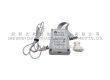
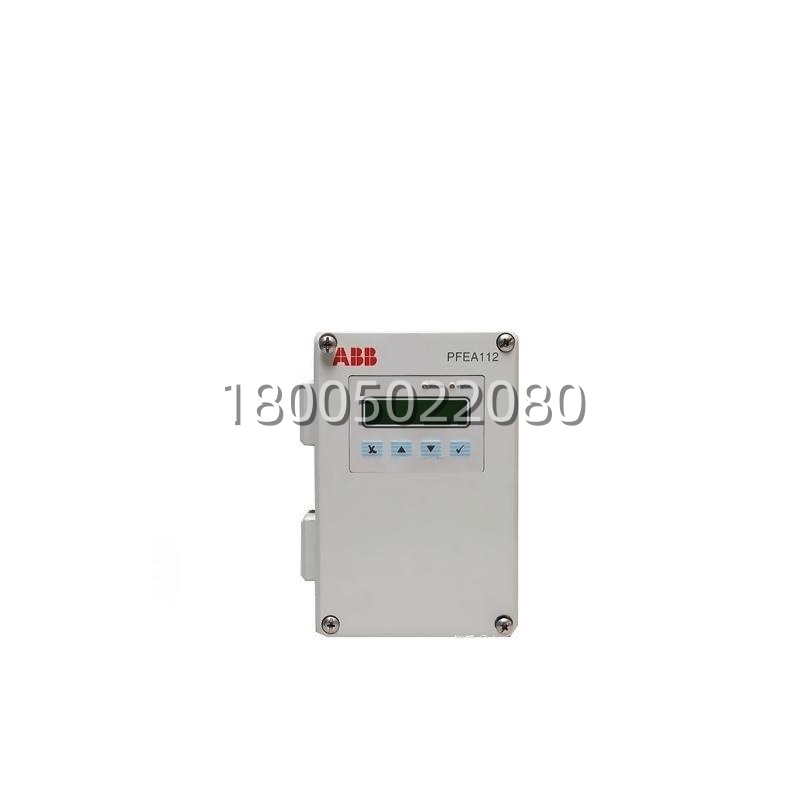
The PDQ22 (order number 1SAJ240200R0050, also referenced as PDQ22-FBP.0) is ABB’s Profibus DP-V0/V1 FieldBusPlug in the Quad configuration — a ready-made Profibus DP interface that lets up to four FBP (FieldBusPlug) terminal devices share a single Profibus DP node on the plant’s Profibus trunk. The FBP architecture is ABB’s Low-Voltage answer to Motor Control Center (MCC) and decentralized motor-starter networking: each intelligent device (UMC22 / UMC22-FBP smart motor controller, AF series FBP-enabled contactors, MMS/MMS100 with FBP adapter, etc.) carries a threaded FBP boss on its front face; the PDQ22 (or its single-device sibling PDP22) screws onto that boss via a bayonet/thread-in action — “click” and it’s seated — and the device’s internal bus (power + data) passes through the PDQ22 to the Profibus network. The “Quad” in PDQ22 means one PDQ22 can aggregate four FBP devices daisy-chained behind it — a 1-to-4 split — so one Profibus DP station address serves four motor starters instead of consuming four addresses. This matters because Profibus DP’s practical node limit per trunk is 32 (without repeater), and a large MCC with 60+ starters would blow past that with single-device plugs — the PDQ22 collapses 4 starters into 1 DP address, freeing headroom.The PDQ22 itself is not a standalone node — it has no station address of its own. The Profibus DP slave identity (DP-V0 cyclic, or DP-V1 acyclic if the host FBP device supports it) lives on the FBP devices behind it; the PDQ22 is the physical/media translator: M12 A-coded 5-pin IN and OUT on the PDQ22 fascia land the Profibus trunk (IN from the upstream repeater/scanner, OUT onward to the next PDQ22 or PDP22 in the “daisy-chain” topology that ABB FBP promotes). Data rate is auto-negotiated up to 12 Mbps. Power is 24 V DC drawn from the host FBP device’s backplane (the UMC22 / AF FBP starter supplies it; typical draw ≤200 mA for the PDQ22 electronics). The head shell is IP65-rated metal (die-cast zinc or aluminum alloy), meaning the PDQ22 survives the MCC environment — oil mist, conductive dust, occasional hose-down near the MCC lineup — while the device behind it (UMC22 in its own IP20/NEMA enclosure inside the MCC drawer) is protected. One diagnostic LED (CM status) on the PDQ22 fascia gives bus-state: green = online, green blinking = data exchange active, red = fault (bus error, GSD mismatch, device not enumerated), off = no 24 V or trunk disconnected.The killer value proposition of the PDQ22 (and FBP architecture generally) is bus-node survival during MCC drawer exchange. In a traditional hard-wired or non-decoupled Profibus MCC, pulling a starter drawer (to replace a burnt contactor or a failed UMC) breaks the Profibus IN→OUT pass-through — the trunk behind that drawer drops, and the DP scanner flags “station lost” for every device downstream. In an FBP MCC, the PDQ22 screws onto the device front, but the Profibus IN/OUT pass-through is physically on the PDQ22 head— when you pull the MCC drawer (UMC22 + starter), the PDQ22 stayson the MCC structure (the FBP boss is on a fixed plate, or the PDQ22 is mounted on a DIN clip that stays with the busbar structure while the drawer slides out — ABB’s FBP mechanicals vary by MCC builder, but the principle holds: the PDQ22 + its M12 IN/OUT tails stay live, the Profibus trunk stays continuous, the DP scanner sees the other three devices behind this PDQ22 (if Quad) and all downstream PDQ22/PDP22 nodes as alive. You swap the UMC drawer, slide the new one in, screw the PDQ22 back onto the new UMC’s FBP boss, and the node re-enumerates — no全线停机. This is why PDQ22 is dense in metals MCCs, crane MCCs, mining conveyor MCCs, and marine switchboards — anywhere a drawer swap shouldn’t kill the bus.
Technical Specifications
| Parameter Name | Parameter Value |
|---|---|
| Product Model | PDQ22 (PDQ22-FBP.0) |
| Manufacturer | ABB (Low Voltage Products – FBP FieldBusPlug series) |
| Order Number | 1SAJ240200R0050 |
| Product Type | FieldBusPlug Quad – Profibus DP-V0/V1 Interface Coupler |
| Protocol | PROFIBUS DP-V0 / DP-V1 (cyclic + acyclic if host FBP device supports DP-V1) |
| Data Rate | 9.6 kbps – 12 Mbps, auto-negotiated |
| Bus Connectors | 2 × M12 A-coded 5-pin (IN / OUT), Profibus standard pinout |
| Channel Capacity | Quad – aggregates up to 4 FBP devices per DP node address |
| Station Addressing | Via host FBP device software (UMC22 parameter / AC500 FBP config); no DIP on PDQ22 |
| Status LED | CM (Communication): green = online, blink = data exchange, red = fault, off = no 24V / trunk disconnected |
| Supply Voltage | 24 V DC (from host FBP device backplane; typical ≤200 mA) |
| Isolation | Bus side to internal ≥500 V DC (per host FBP device spec) |
| Mounting | Thread-in / bayonet onto FBP device front boss; also DIN rail TH35-7.5 / TH35-15 per IEC 60715 (single mounting) |
| Degree of Protection | IP65 (head shell), device-side per host FBP enclosure |
| Dimensions (L × W × H) | 112 mm × 67 mm × 26 mm (package level 1) |
| Net Weight | 443 g |
| Operating Temperature | 0 … +55 °C (MCC cabinet envelope) |
| Storage Temperature | -40 … +85 °C |
| Humidity | 5 … 95 % RH, non-condensing |
| Certifications | CE, cULus, RoHS (no declaration needed per ABB doc) |
| Customs Tariff | 85176200 |
| Container | 1 pc per pack |