WhatsApp:+86 18005022363 WeChat: +86 18005022363
  Email:
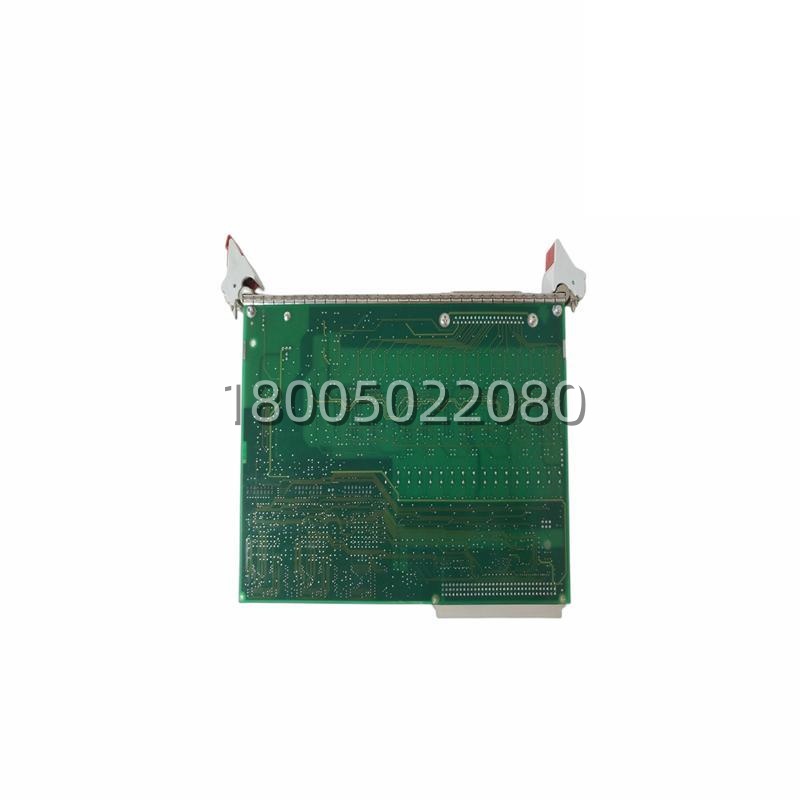
Application ScenariosA Nordic pulp mill running an ABB Advant AC 450 controller with S800 I/O on the digester-pulp-washer train had a classic Saturday-night failure: the ABB PFBK164 3BSE000469R1 in Rack B (serving 32 AO + 48 AI on the washer-drum level control) developed a cold solder on the 24 V DC header after 22 years of 60 °C washer-deck heat cycles. The AC 450 threw “I/O Bus Fault — Rack B” and dropped the washer-drum level loop to manual — the operator held level by hand for 40 minutes until the day-shift E&I arrived. The spare bin had one PFBK164 (original 3BSE000469R1 batch, same firmware rev as the live one — critical: the AC 450 firmware (e.g., AP 3.x / 4.x) expects a specific PFBK164 firmware stepping; a mismatched rev can cause “Board ID Unknown” on the AC 450’s COM port). Swap took 14 minutes: LOTO the S800 rack 24 V / 110 V AC, unplug the ribbon to the S800 slices, undo two Phillips from the DIN clip, rack new PFBK164, re-land, power up — the AC 450 re-enumerated Rack B within two scans, washer-drum level came back auto, no AP download needed (the PFBK164 doesn’t carry the control program; that lives on the AC 450’s CPU card — the PFBK is just the I/O bus interface). Post-incident, the mill standardized “N+2” PFBK164 spares (two per AC 450 node) and added a “ribbon-wiggle” check to annual rack walks — the S800-to-PFBK ribbon (proprietary ABB 20/26-pin) was the second failure mode they discovered: the plastic latch had work-loosened and was adding contact resistance, contributing to the header stress that cracked the solder.
Parameter
| Main Parameters | Value/Description |
|---|---|
| Product Model | ABB PFBK164 (3BSE000469R1) |
| Manufacturer | ABB |
| Product Category | Signal Processing Board / FieldBus Interface (Advant OCS / S800) |
| System Compatibility | ABB Advant Controller AC 410 / AC 450 / AC 460; S800 I/O rack |
| Function | AF100 fieldbus processing + Profibus DP (where configured); S800 I/O data bridging to AC 450 CPU |
| Processor | Onboard communication / signal-processing ASIC + microcontroller (batch-dependent) |
| FieldBus | AF100 (ABB proprietary, 10 Mbps, fiber/electrical) + Profibus DP (config-dependent) |
| Supply Voltage | 24 V DC (from S800 rack PSU / Advant rack PSU) |
| Power Dissipation | ~5 W typical |
| Communication Ports | AF100 (fiber ST or electrical RJ-45/DB9 per batch); Profibus D-sub (where fitted) |
| Mounting | 35 mm DIN rail (inside S800 rack or Advant local I/O cabinet) |
| Indicators | PWR, RUN, ERR, AF100-LINK, PROFIBUS-ACT (LED set batch-dependent) |
| Operating Temperature | 0 °C to +55 °C (typical Advant spec; some batches -20 °C to +60 °C) |
| Certifications | CE / UL / cUL (per ABB Advant OCS cert pack) |
| Dimensions (L×W×H) | Approx. 120 × 80 × 60 mm |
| Weight | Approx. 0.14 kg |
Technical Principles and Innovative Values
- Innovation Point 1: AF100 + Profibus Co-Processing on One DIN Board. The PFBK164 isn’t justa Profibus adapter (that’s the NPBA-80 we covered earlier, which is drive-side). The PFBK164 is DCS-side: it speaks AF100 (ABB’s 10 Mbps deterministic fiber fieldbus that links AC 450 CPU → S800 I/O racks or remote I/O nodes) andcan bridge to Profibus DP for third-party skids (packaged compressors, analyzers, weighing belts) that never learned AF100. The onboard ASIC offloads the telegram framing so the AC 450 CPU doesn’t have to bit-bang Profibus — the PFBK164 presents the Profibus DP slave data as AF100 objects to the AC 450’s AP program. This split is why an AC 450 node can talk to 60 m of S800 slices anda Siemens S7-400 MCC over DP simultaneously.
- Innovation Point 2: S800 Rack Host — No Separate I/O Controller Needed. In a classic Advant node, the AC 450 CPU lives in its own rack (19″ Advant controller rack, 3–4 slots: power, CPU, PFBK164, maybe a second PFBK for redundancy). The PFBK164 DIN-mounts either in the AC 450 rack’s local-I/O DIN section orin the remote S800 rack’s head-end — it’s the same board either way, just different ribbon landing (local: short ribbon to CPU backplane; remote: AF100 fiber to CPU rack + ribbon to S800 slices). This means one spare PFBK164 covers bothlocal-I/O and remote-I/O nodes in the same plant — a logistics win for mills running 20+ AC 450 racks.
- Innovation Point 3: Hot-Swap Capable on AF100 (With Redundancy or Controlled Power-Down). The PFBK164 itself is not officially hot-swap on a live AF100 segment without redundancy (unlike the CEX backplane we saw on P3LC → AC800PEC). Best practice on Advant: if you have dual PFBK164 (redundant AF100 path — AC 450 supports 2× PFBK per CPU for bumpless), you can swap one live (the AC 450 fails over to the other path). If single PFBK, LOTO the 24 V / 110 V AC before extract — the AC 450 will throw I/O Bus Fault the moment the ribbon loses continuity. The 14-minute swap in the pulp-mill story above was single-PFBK, so they LOTO’d — 14 minutes includes the lockout tagout walk.
Application Cases and Industry ValueA mining concentrator running ABB Advant AC 450 on the SAG-mill lubrication train (32 AO for the trunnion-oil-film bearings, 48 AI for pad-temp RTDs, 16 DI for flow-switches) used a dual-PFBK164 config: PFBK-A on AF100 fiber to the S800 rack 40 m away in the lube-skid MCC, PFBK-B as local-I/O in the AC 450 rack (16 DI + 8 DO for local E-stop / oil-pump starter). The redundancy paid off during a lightning strike that took out the fiber path to the MCC (a backhoe had clipped the tray two weeks prior, exposed fiber, lightning found it). The AC 450 detected PFBK-A link loss within 200 ms, rolled all S800 AO to last-value-hold (SAG kept turning, lube-oil film maintained), and the E&I swapped PFBK-A during the next SAG liner-change window (6-hour planned). The mine measured zero unplanned SAG downtime from the lightning event — the dual-PFBK164 config earned its keep that day. The E&I lead noted the PFBK164‘s front LEDs (PWR / RUN / ERR / AF100-LINK) made “which path died?” a 10-second glance at the AC 450 rack door — no DriveWindow / CBF session needed.