WhatsApp:+86 18005022363 WeChat: +86 18005022363
  Email:
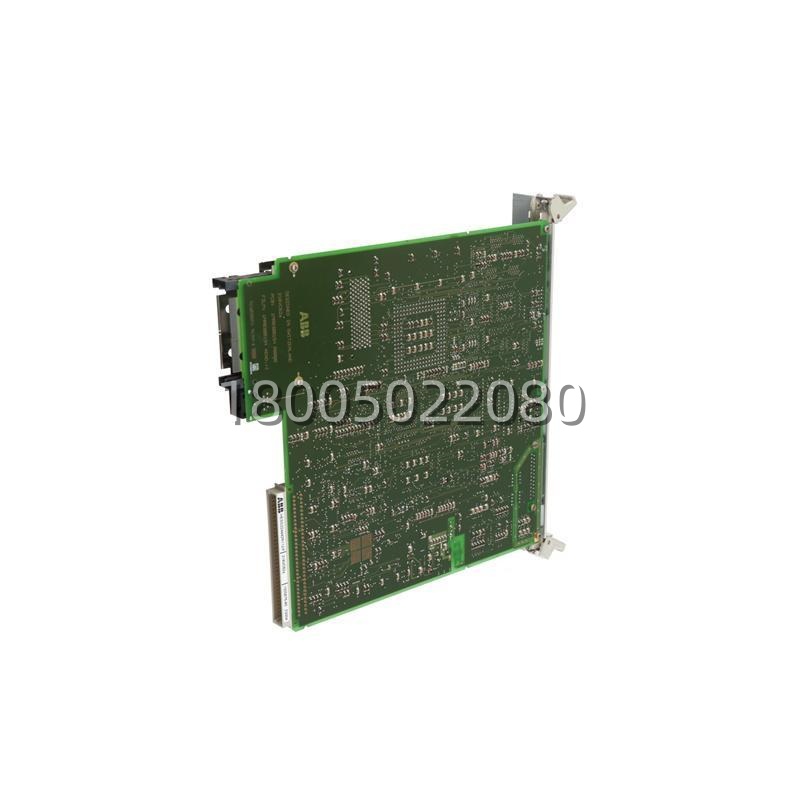
Application Scenarios
On a high-speed blister-packaging line in Switzerland, the pick-and-place robot’s main servo axis is an ABB BSM90 (P60B13120D base) on a MotiFlex e190 amplifier. After 11 years of 6000 cycles/day, the robot started throwing “Position Following Error” spikes during the 170 mm stroke — always at the same 43° cam angle. The drive logs showed the encoder position jumping ~12 counts (0.04°) then recovering — classic Hall/encoder PCB noise, not a mechanical backlash (the gearbox was rebuilt 6 months prior). The integrator pulled the P60B13120DBPD2 from the BSM’s NDE housing (four M3 screws, unplug the Hall/encoder ribbon and the 24 V / motor-thermistor 2-pair, slide the PCB off the NDE boss). The board’s Hall-bias resistors showed slight drift (heat-cycled, the NDE sees 55 °C in that cabinet). A verified P60B13120DBPD2 (W-L01494F rev) went in — same screw torque (0.8 N·m, don’t over-torque the NDE plastic boss), re-seat the ribbons, power up, do a 1-turn home-search. The 43° spike vanished. Total: €210 PCB + 45 min teardown vs. €3100 new BSM90 + 4-hour re-commutation + robot re-teach. The plant’s mechatronics lead: “The BSM winding is good for 80 khours. The P60B13120DBPD2 is the fuse that isn’t a fuse — it ages, you swap it, the motor owes you another 5 years.”
Parameters
| Main Parameters | Value/Description |
|---|---|
| Product Model | P60B13120DBPD2 (W-L01494F works-suffix) |
| Manufacturer | ABB (BSM Series Servo Motors, ex-Baldor-Reliance) |
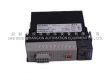
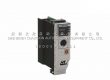
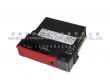
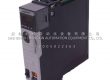
| Product Category | Controller PCB Board (NDE Electronics Assembly) |
| Fits Motor Base | P60B13120D (BSM90 / BSM63 frame servo, verify flange & stack) |
| Functions | Hall-sensor bias & conditioning, encoder/resolver front-end, commutation-phase logic, thermistor interface |
| Supply from Drive | 24 V DC (via motor composite cable, regulated on-PCB to 5 V for encoders/Halls) |
| Feedback Types | Incremental encoder (HTL/TTL), Hall commutating (120° spaced), some builds resolver-ready |
| Mounting | 4 × M3 into NDE end-shield boss; Hall/encoder ribbon + 24 V / thermistor 4-pin plug |
| Operating Temp | -20 °C to +80 °C (NDE cavity, follows motor T-rated) |
| Motor Protection | Thermistor input (KTY84 or PTC, typically 150 °C trip → drive FLT) |
| Weight | ~0.12 kg (PCB only, no NDE cover) |
| Status | Mature / Legacy (BSM still current but P60B PCBs are brownfield spares) |
Technical Principles and Innovative Values
- Innovation Point 1: Motor-Side Intelligence, Not Just a Pigtail. Cheaper servos run the Hall/encoder wires straight out the NDE as a multi-core cable to the drive — every meter of cable is a noise antenna, and a broken wire means opening the motor anyway. The P60B13120DBPD2 puts the bias resistors, RC snubing, and the Hall→logic level-shift on the motor— the composite cable to the drive carries clean 24 V + GND + differential encoder A+/A−/B+/B−/Z+/Z− + Hall U/V/W already conditioned. The drive sees a textbook encoder stream even if the cabinet has three 22 kW VFDs switching 2 kHz. For blister-lines and web-guides where “±1 count = reject,” this NDE intelligence matters.
- Innovation Point 2: Thermistor + 24 V Regulation on the Same 4-Pin. The P60B13120DBPD2 has a 4-pin Molex (or equiv) that carries 24 V DC in (from drive’s logic rail) and thermistor 2-wire out — the PCB regulates 24 → 5 V for the encoder/Halls locally, so the encoder doesn’t see the drive’s 24 V rail sag during regen events. The thermistor (KTY84-130 typical) is NTC/PTC on the motor winding; if the BSM overheats (bearing seize, cooling fan fail), the P60B13120DBPD2 pulls the thermistor line low → drive throws “Motor OT” and coasts. One 4-pin, two jobs.
- Innovation Point 3: D-Rev PCB on a D-Rev Motor Base (Interchange Caution). The “D” in P60B13120DBPD2 is the motor-base design rev; the “BPD2” is the PCB rev. ABB/Baldor used A→B→C→D base revs, and the PCB rev (BPA1, BPA2, BPB1, BPD2 etc.) must matchthe motor’s NDE boss pinout. A BPD2 PCB mightfit a C-base motor mechanically (same 4×M3, same ribbon key), but the Hall bias or thermistor divider could differ — the motor will run but the drive may throw “Hall Sequence Error” on first power-up. Always match the full P60B13120DBPD2 string, not just the P60B13120D motor code.
Application Cases and Industry Value
Case 1 – Converting-Machine Web Guide (Italy): A 6-axis BSM90 servo机架 (P60B13120D motors) drives the dancer-roll and slitter-position axes on a 1200 mm plastic-film line. After 9 years, Axis 4 (slitter X) started hunting ±0.3 mm at 300 m/min — the drive (MicroFlex e150) showed “Encoder CRC Error” counts climbing. The tech swapped the P60B13120DBPD2 (suspected Hall/encoder front-end noise — the NDE cavity sees 60 °C near the drying oven). New PCB, re-home, hunting gone. The OEM’s service note: “BSM90 P60B13120D — if you see encoder CRC > 50/hr on a >8-year motor, swap the BPD2 PCB before condemning the encoder disc. The disc is glass, it doesn’t drift; the PCB bias resistors do.” The plant now stocks two P60B13120DBPD2 per 6-axis line.Case 2 – Rotary Index Table (Automotive Tier-1, Mexico): A 4-station dial index uses a BSM63 (P60B13120D base, smaller frame) on a MotiFlex e100. During a 72-hour marathon run, the dial started “missing index” — the drive threw “Hall State Invalid” at power-up 1 out of 5 cycles. The P60B13120DBPD2‘s Hall-bias pot (some revs have a trim-pot for Hall timing offset) had vibrated to a marginal setting (loose production-line vibratory feeder 2 meters away). Rather than trim (risky on a running line — one turn = 30° electrical = drive won’t commute), they swapped the PCB for a verified P60B13120DBPD2 (W-L01494F, which has fixed Hall timing, no pot — factory-set). Index reliability returned to 100%. The integrator now specifies “BPD2 (no-pot, fixed Hall timing)” on all new BSM63 orders for vibratory environments.
Related Product Combination Solutions
The P60B13120DBPD2 lives on the motor; here’s the BSM + drive ecosystem it plugs into (several we’ve touched indirectly in earlier briefs):
- P60B13120D (motor base) – The BSM90/BSM63 servo motor itself. The P60B13120DBPD2 is the NDE PCB for this motor base. If you’re ordering the PCB, confirm the motor’s nameplate: “P60B13120D” must match; a P60B13110D (different stack/flange) will notaccept the BPD2 PCB (ribbon key and boss spacing differ).
- MicroFlex e150 / e190 / MotiFlex e100 / e190 – ABB’s current BSM-drive amplifiers. The P60B13120DBPD2 talks to these over the composite cable (24 V + encoder diff + Hall + thermistor). Legacy: FlexDrive II (Baldor-era) also compatible.
- NextMove ES / NextMove PC – The motion controller (often ABB NextMove) that sits upstream of the MicroFlex; the P60B13120DBPD2 doesn’t talk to this directly, but the “Position Following Error” alarm the user sees on the NextMove usually traces back to the BPD2 PCB’s encoder front-end.
- BSM63 / BSM90 / BSM112 – The frame family. P60B13120D = BSM90 (90 mm flange, 13120 = winding/speed code). The PCB is frame-specific — a BSM63 PCB won’t fit a BSM90 boss (M3 spacing differs). Don’t cross-frame-swap.
- Mint Workbench / MintMT – ABB’s commissioning software for BSM+MicroFlex. Useful when swapping a P60B13120DBPD2: after swap, do a “Motor ID” + “Hall Phase Align” routine in Mint to confirm the new PCB’s Hall timing matches the winding (even fixed-timing BPD2 can be 1–2° off if the motor’s D-rev stator shifted during rebuild).
- W-L01494F – The works/traceability suffix on this specific BPD2 batch. If your plant’s BSM90 nameplates all show “W-L01494F” on the NDE cover sticker, buy that exact PCB — the next batch (W-L02xxx) may have a BPD3 rev with different Hall bias. ABB/Baldor did silent component subs on the BPD2 line.
Installation, Maintenance, and Full-Cycle Support
Swapping the P60B13120DBPD2 is a motor-teardown job, not a cabinet job. Isolate the drive (lockout the MicroFlex/MotiFlex — the motor composite cable carries 24 V DC and possibly 325 V DC bus if the drive’s brake-hold is active, so don’t just “turn off the key”; kill the drive line voltage). Unplug the composite cable at the motor NDE (usually a circular metal-shell connector, 12–19 pin depending on encoder type). Remove the NDE cover (4× M4 typically, aluminum, don’t drop it into the gearbox). The P60B13120DBPD2 is inside: 4× M3 into the NDE end-shield boss, one ribbon to the Hall/encoder disc (delicate — the Hall ICs are on a tiny PCB piggy-backed to the BPD2, or on a separate Hall-PCB that plugs into the BPD2; depends on BSM sub-type), and the 4-pin Molex for 24 V + thermistor.Unplug the 4-pin first(24 V present even if drive is off, if the drive’s logic PSU is on — check with a DMM: < 1 V on the 24 V pins before touching). Then the ribbon — latch gently, the Hall/encoder ribbon is 0.5 mm pitch, brittle after heat cycles. Then the 4× M3 (0.8 N·m, JIS #1 driver — these are M3 into aluminum boss, over-torque strips the boss and you’re buying a new NDE end-shield). Lift the P60B13120DBPD2 off the boss (it’s keyed, can’t rotate 180° — the boss has a D-locator).Fit the new P60B13120DBPD2: align the D-locator, hand-tighten the 4× M3 (cross pattern, 0.8 N·m), reconnect the ribbon (click — if it doesn’t click, you’re 1 pin off; the BPD2 ribbon header is shrouded but not foolproof), reconnect the 4-pin Molex (polarized, but still: VCC=red, GND=blk, Therm=A=wht, Therm=B=brn typically). Refit NDE cover, torque the cover screws (1.0 N·m, aluminum cover strips easily). Re-plug the composite cable, power up the drive, do a “Hall Phase Test” in Mint Workbench — the drive should report Hall U/V/W sequence valid. Then a 1-turn home-search (if absolute encoder, do the multi-turn home procedure per ABB MN058).Maintenance watch-items: (1) the NDE cover O-ring — if the BSM is in a washdown or high-humidity cell (food/bev converting), the NDE cover O-ring (usually 40×3 mm nitrile) hardens after 5–7 years; the P60B13120DBPD2 sits in a nominally IP23 cavity, but a failed O-ring lets condensation onto the PCB — Hall bias drifts, encoder CRC climbs. Replace the O-ring every 5 years, not just when the PCB fails. (2) The Hall/encoder ribbon — if you’re in a high-vibration cell (index tables, rotary cutters), add a dab of silicone RTV on the ribbon header afterseating, to damp the 2–10 Hz vibration that works the latch loose. (3) The 24 V feed from the drive — if your plant has voltage sags, the P60B13120DBPD2‘s on-board 24→5 V reg can go into dropout (drive logs “Encoder Power Loss”). Add a small 24 V DC UPS at the drive end if the BSM is >50 m cable run (voltage drop + sag = double hit).