WhatsApp:+86 18005022363 WeChat: +86 18005022363
  Email:
Product Overview
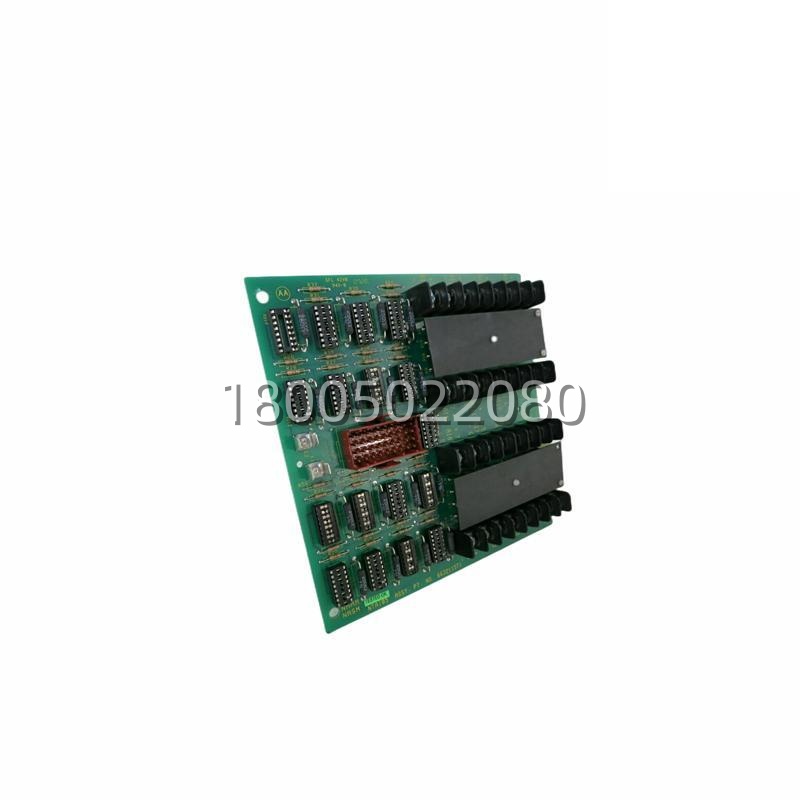
The ABB NTAI05 is an Analog Input Termination Unit — the “field-facing” half of a split I/O architecture in ABB’s Bailey INFI 90 / Symphony Harmony DCS ecosystem, designed to land 16 channels of field analog wiring (4–20 mA transmitter loops, ±10 V signals from drives or transducers) and pass them through a 40-pin ribbon to the companion AI electronic module (typically ICTAI01 or equivalent) that plugs into the INFI 90 rack’s backplane. In ABB’s DCS I/O philosophy, the electronic module (the smart part with A/D conversion, isolation, bus interface) and the termination unit (the passive part with screw terminals, shield drains, and 24 V DC loop-power distribution for 2-wire transmitters) are deliberately separated: the electronic module sits inside the 19-inch DCS rack on the backplane, while the NTAI05 mounts on the rack’s front face (clipped onto the electronic module’s front header) or on 35 mm DIN rail adjacent, with field cables landing on the NTAI05‘s screw terminals and a short ribbon carrying the 16 analog pairs plus commons and 24 V loop-supply to the electronic module. This split is the defining maintenance advantage: when an AI electronic module needs swapping (drift, channel failure, spare rotation), the NTAI05 stays in place with all 16 field wires undisturbed — no re-terminating 32+ shield-twisted pairs at 2 AM.The ABB NTAI05 is specified as 16 channels, each channel a pair (+ signal, – / return) on screw terminals, with dedicated shield-drain terminals per channel or per small group (varies by revision) to give the commissioning tech proper shield-termination practice — drain landed at the NTAI05 side (DCS star), not at the field transmitter side, breaking ground loops on long 4–20 mA runs from a power-gen turbine bearing-temperature rack or a refinery reactor-pressure ring. Signal types are determined by the paired electronic module’s configuration (ICTAI01 typically supports 4–20 mA and ±10 V per channel, 12–16 bit, isolated in groups), so the NTAI05 itself is signal-agnostic — it’s just copper + screw + ribbon — but it’s laid out expecting 4–20 mA (with 24 V DC loop power passed through from the electronic module or from an external 24 V distribution) and ±10 V (high-impedance, no loop power). The 40-pin ribbon carries all 16 +/– pairs, the commons, the 24 V loop-supply feed, and the shield references to the electronic module.Lifecycle-wise, the NTAI05 belongs to the mature INFI 90 / Harmony I/O family — ABB’s current DCS is Symphony Plus on AC 800M, where the I/O architecture is different (S800 remote I/O or local I/O on the controller rack, with its own FTA style). But the installed base of INFI 90 racks globally — power-gen (fossil, hydro, nuclear aux), oil & gas (refineries, LNG, offshore), petchem, metals — is enormous, and the NTAI05 remains an active spare because “swap the termination” is a 10-minute job vs. migrating an I/O station to S+.
Technical Specifications
| Parameter Name | Parameter Value |
|---|---|
| Product Model | NTAI05 |
| Manufacturer | ABB (Bailey / Industrial Automation) |
| Product Type | Analog Input Termination Unit (FTA), INFI 90 / Harmony |
| Compatible System | ABB INFI 90 / Symphony Harmony DCS |
| Number of Channels | 16 (analog input) |
| Signal Types (via paired electronic module) | 4–20 mA (2-wire Tx, loop power pass-through), ±10 V |
| Connector to Electronic Module | 40-pin ribbon (to AI module such as ICTAI01) |
| Termination Type | Screw terminal, 0.2–2.5 mm² |
| Shield Terminals | Per channel / per group (revision-dependent) |
| Loop Power | 24 V DC pass-through from electronic module (for 2-wire 4–20 mA Tx) |
| Mounting | Rack-front clip-on (onto AI electronic module face) or 35 mm DIN rail |
| Operating Temperature | –20 … +70 °C (DCS room / cabinet internal) |
| Protection | IP20 (cabinet internal) |
| Paired Electronic Module | ICTAI01 (16-ch AI, 4–20 mA / ±10 V, INFI 90) and compatible siblings |
| Sibling Variants | NTAI03 (8-ch AI termination), NTRO05 (relay output termination), NTTUxx (thermocouple/RTD variants) |
Main Features and Advantages
Split Architecture = Field Wires Never Disturbed. The biggest selling point of the NTAI05 is the split it creates between “smart” and “dumb” parts of the I/O channel. The electronic module (ICTAI01) contains the A/D converters, isolation amplifiers, INFI 90 bus interface, and diagnostic logic — it’s the part that can fail (channel drift, A/D stuck, bus-interface fault). The NTAI05 is just screw terminals, copper traces, shield drains, and a 40-pin ribbon header. When the ICTAI01 needs swapping, you unclip the NTAI05 ribbon (or lift the NTAI05 with it if rack-front mounted), pull the old ICTAI01 from the backplane, seat the new one, re-clip the NTAI05 ribbon — 16 field wires untouched. On a power-gen turbine-aux DCS with 30 I/O stations, each station maybe 2–3 AI cards (ICTAI01 + NTAI05), this “no re-termination” design saves days over a turnaround. Contrast with monolithic I/O blocks (ET 200, Beckhoff, etc.) where the terminal and the A/D are one unit — swap means re-land 16+ pairs.16-Channel Density + Shield Discipline. The NTAI05 packs 16 AI channels into a compact faceplate that clips onto one electronic module — each channel is a +/– screw pair, and the shield drains have dedicated terminals (per-channel on some revisions, per-4-channel on others). For a DCS-room build, this means a 16-channel AI I/O station (ICTAI01 + NTAI05) occupies one rack slot for the electronic module + the NTAI05 face — no extra DIN space for terminal blocks, because the NTAI05 isthe terminal block, integrated onto the rack front. The shield-drain provision matters: 4–20 mA loops from a 500 MW unit’s bearing-temperature rack or a refinery reactor’s pressure-transmitter ring run 50–200 m, pick up CMV from VFD neighbors and grounding differentials, and the NTAI05‘s drain terminal lets the commissioning tech land shield-at-DCS-only, breaking the ground loop at the point where the ICTAI01’s analog input measures. Done right, this knocks 2–3 LSB of noise off a 12-bit AI reading — visible on the operator’s trend as “PV steadier.”24 V DC Loop-Power Pass-Through for 2-Wire Transmitters. Most 4–20 mA field transmitters in DCS plants are 2-wire (loop-powered): the transmitter steals operating current from the 24 V DC loop, modulating it 4–20 mA to represent PV. The NTAI05 doesn’t generatethe 24 V — that comes from the ICTAI01’s internal 24 V distribution (or from an external 24 V bussed onto the NTAI05‘s loop-power terminals, depending on I/O station build) — but the NTAI05 lays out the +24 V feed and the loop-return/common as dedicated screw pairs that distribute to each of the 16 channels. Wiring pattern: +24 V → NTAI05 loop-power in → each channel’s “+” terminal → field Tx (+) → field Tx (–) → NTAI05 channel “–” → ICTAI01 A/D input. The ICTAI01 typically has a 250 Ω shunt on each channel (inside the electronic module) to convert 4–20 mA → 1–5 V for the A/D; the NTAI05 just passes the loop. For ±10 V signals (drive speed-feedback, position-transducer), the loop-power terminals on those channels stay unused — just signal+/signal– dressed to the field device’s output.Rack-Front or DIN Flexibility. The NTAI05 can clip directly onto the front of the ICTAI01 electronic module (the electronic module has a mating header/guide pins), making the NTAI05 sit flush on the rack face with field wires landing from the front — neat, label-able, door-closable. Alternatively, for retrofits where the rack front is already crowded or the electronic module was swapped to a newer revision with different face geometry, the NTAI05 can DIN-mount adjacent and a short ribbon reaches the electronic module’s front header. This flexibility is why plants with mixed-age INFI 90 racks (some original 1990s builds, some 2000s refreshes) can still standardize on NTAI05 spares — the termination doesn’t care if the rack is an HCU, an IMMFC, or a Harmony-series rack, as long as the electronic module has the 40-pin header.Passive Robustness. No active components on the NTAI05 = almost nothing to fail. No firmware, no EEPROM, no config. The failure modes are mechanical: screw-clamp stress-crack from 20 years of thermal cycling in a +50 °C DCS room, ribbon-header pin oxidation (especially in coastal/refinery environments with Cl⁻ in the air), or a tech crossing 24 V + onto a signal pin during a re-wire and blowing the ribbon trace (which then takes the ICTAI01’s input channel with it — the NTAI05 is sacrificial here, but cheap). This passivity is why NTAI05 spares have long shelf life and why “tested” means continuity + ribbon-header resistance check, not a functional bench run.