WhatsApp:+86 18005022363 WeChat: +86 18005022363
  Email:
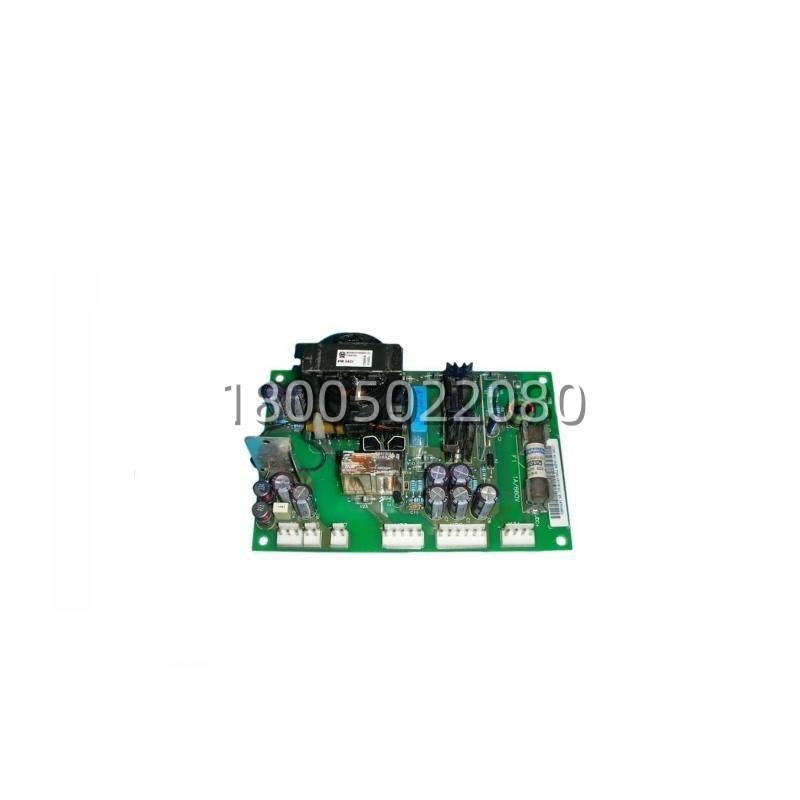
Product Overview
The NPOW-62C (article 58948730, also referenced as 58948730 B 1/2) is ABB’s main control-power supply board for the mid-size frame range of the ACS800 drive family — specifically ACS800-07 cabinet builds in frames R5 through R8, and by cross-compatibility the ACS600, ACS580, and ACS880 drives that share the same control-power architecture. While the drive’s heavy power flow is AC line → rectifier → DC bus → IGBT inverter → motor, the NPOW-62C lives in the control ecosystem: it draws from the DC bus (24–600 V DC input envelope, derived from the line through the pre-charge circuit and the DC-link capacitors) and generates the multiple regulated low-voltage rails that every other control-board in the drive depends on — +5 V DC for the RMIO CPU and digital logic, +12 V / –12 V for analog front-ends, sensor excitation, and op-amp rails, and +24 V for control-side I/O, fans, brake-chopper enable relay, and the door-operate panel. The “C” suffix denotes the conformal-coated PCB — a polyurethane/acrylic lacquer pass that seals solder joints, transformer terminations, and SMT components against moisture, corrosive vapor (Cl₂, H₂S, SOₓ in pulp/chemical plants), and conductive dust (mining, cement, carbon black) — making the NPOW-62C the preferred spare over the uncoated NPOW-62 for any plant where the E-room air isn’t benign.Architecturally, the NPOW-62C is the “parent” PSU in the ACS800 power-section BOM: the NINT-72C (main circuit interface) draws its 24 V from the NPOW-62C, the NGPS-12 (gate-driver PSU, on R12i+ MultiDrive frames) draws its 24 V from the same NPOW-62C, the RMIO control board’s logic rails come from it, and the cabinet’s 24 V loads (fan trays, door keypad, brake-chopper enable relay, external DI sources) all land on the NPOW-62C‘s +24 V output. When the NPOW-62C fails or sags, the drive logs a “POW” fault (Group 30 fault word, 31.xx series) and typically trips — the RMIO loses +5 V, resets, and the drive goes to “STARTUP” hang or “PANEL” then fault. This makes the NPOW-62C one of the top-three spare SKUs for any plant running ACS800 R5–R8 cabinets, alongside NPOW-61 (for smaller R2–R4 frames) and NINT-72C/NGPS-12 for the power-section siblings.One nuance worth flagging: the NPOW-62C article 58948730 also appears in ABB’s DCS world — AC 800M racks and MasterPiece 200 / PROCONTIC T200 systems use an NPOW-62C as the rack-redundant PSU (that variant is 48 V DC / 12 A / 576 W, a different internal BOM under the same top-level article). For drive-context procurement, confirm the NPOW-62C is the drive-version (58948730 B 1/2, multi-rail +5/+12/–12/+24) not the DCS 48 V version — the drive-version is what drops into ACS800-07 R5–R8.
Technical Specifications
| Parameter Name | Parameter Value |
|---|---|
| Product Model | NPOW-62C |
| Manufacturer | ABB |
| Article / Order Number | 58948730 / 58948730 B 1/2 (drive version); DCS 48V version shares article |
| Product Type | Main Control Power Supply Board |
| Platform | ABB ACS800 R5–R8 (primary), ACS600, ACS580, ACS880 (cross-compatible) |
| Input Voltage | DC 24–600 V (from drive DC bus); optional AC 110–230 V 50/60 Hz on some variants |
| Outputs | +5 V DC (2 A), +12 V DC (1.5 A), +24 V DC (1 A), –12 V DC (0.5 A) |
| Output Accuracy | ±2 % |
| Conversion Efficiency | ≥85 % (full load); standby ≤1 W |
| Protection | Overvoltage, overcurrent, short-circuit, overtemperature; fault propagates as “POW” to RMIO |
| Operating Temperature | -25 … +70 °C (drive cabinet envelope) |
| Storage Temperature | -40 … +85 °C |
| Humidity | 5–95 % RH, non-condensing |
| Dimensions (L × W × T) | ~180 × 120 × 30 mm |
| Weight | ~0.6 kg |
| Coating | Conformal coat (C suffix); FR4 UL94 V-0 |
| Mounting | PCB mount in ACS800 power-section bay, screw-to-standoff |
| Protection Class | IP20 (board-level, inside cabinet) |
| EMC / Standards | IEC 61000-6-2 (CMRR ≥80 dB, DMRR ≥60 dB per vendor data) |
Main Features and Advantages
Multi-rail control-power hub for the entire drive control ecosystem. The NPOW-62C is not a single-output brick — it’s a purpose-partitioned PSU that generates four isolated/semi-isolated rails tailored to the ACS800 control-section’s needs. The +5 V / 2 A rail feeds the RMIO CPU, the FBA module (NPBA-12, NDNA-02, NETA-02), and any onboard digital logic — this is the rail that, if it sags below ~4.5 V, causes the RMIO to reset mid-run, which the drive logs as a spurious “POW” or “COMM” fault and trips. The +12 V / –12 V / 1.5 A + 0.5 A pair feeds analog front-ends — current-measurement shunt amplifiers, voltage-divider buffers for DC-bus sensing, temperature-sensor signal conditioning — where rail noise couples directly into torque ripple, so the NPOW-62C is specified to keep ripple tight (vendor data implies <50 mV typical on +5/+12, tighter than a generic SMPS because ABB tuned the magnetic and the LC post-filter for DTC-current-loop cleanliness). The +24 V / 1 A rail feeds the control-side I/O (the drive’s digital-input terminals often source from this, depending on parameter 10.xx configuration), the cabinet fan tray (the ACS800-07 R5–R8 has forced-air through the power-section — the fans are 24 V EC or 24 V brushless, switched by a thermostat, fed from NPOW-62C), the door-operate panel backlight, and the brake-chopper enable relay coil (for externally mounted choppers like NBRA-656C, the enable circuit often keys off the NPOW-62C +24 V). One PSU, four consumer classes — that’s why the NPOW-62C is the single most consequential board in the ACS800 control-power tree.Wide DC-input from the drive’s own DC bus. The NPOW-62C doesn’t hang off the line AC — it hangs off the DC link, which is itself behind the pre-charge contactor and the line reactor/filter. Input range is spec’d 24–600 V DC, which covers the DC-bus envelope from a 230 V line drive (DC bus ~325 V) up to a 690 V line drive (DC bus ~980 V, though the NPOW-62C in 690 V-class ACS800 frames may have a different divider BOM — verify article — but the 24–600 V window covers 400 V and 500 V class comfortably). This architecture means the NPOW-62C inherits the drive’s pre-charge soft-start — no inrush spike on the PSU primary when the line contactor closes, because the DC bus itself ramps via the pre-charge resistor. It also means the NPOW-62C stays alive during line-voltage sags that don’t collapse the DC bus below ~24 V — the drive may trip on “LINE UNDERVOLT” from the RMIO’s line-monitor, but the NPOW-62C itself keeps regulating until the DC bus drops under its minimum, which is a deeper sag than the RMIO’s line-undervolt threshold. Optional AC 110–230 V input on some NPOW-62C variants (per vendor listings) allows standalone bench test or external 24 V feed for commissioning without DC bus present — useful for panel-shop FAT.Conformal coat “C” for harsh-environment plants. Like the NINT-72C and NGPS-12 857804C we covered in earlier entries, the NPOW-62C “C” suffix = PCB lacquer. The uncoated NPOW-62 is fine for clean motor rooms (automotive, water treatment, general manufacturing), but pulp & paper (bleach ClO₂ vapor), mining (conductive crusher dust), marine (salt-air even in “closed” E-rooms), chemical (H₂S/SOₓ), and desalination all accelerate creep corrosion on the primary-switched MOSFET/IGBT driver section and on the secondary rectifier terminations. The NPOW-62C lacquer pass seals these. A plant can standardize on NPOW-62C (58948730) for all ACS800 R5–R8 spares even if the live cabinets currently carry uncoated NPOW-62 — the swap is drop-in, the BOM underneath is the same except the coat, and the coated spare survives longer on a non-climate-controlled storeroom shelf.Protection suite that propagates upstream as “POW” fault. The NPOW-62C monitors its own primary (overcurrent on the DC-bus side if a primary-switch shorts), its secondaries (overvoltage on +5 V if the post-regulator pass FET fails, overcurrent if a secondary is shorted — e.g., a fan motor shorts, or an RMIO board develops a +5 V rail-to-ground), and its own temperature (overtemperature if the drive cabinet ambient climbs past ~70 °C, or if the NPOW-62C‘s own heatsinked primary devices run hot because the cabinet fan failed). Any of these triggers the NPOW-62C to kill its outputs (or fold back) and assert a fault line to the RMIO, which logs “POW” in the 31.xx fault word and trips the drive according to parameter 30.11–30.15 (coast vs ramp-down). This is high-value for triage: if an ACS800 R5–R8 throws “POW” on startup and the DC bus looks healthy (measured at the bus bars — should be ~565 V on 400 V line, ~780 V on 690 V line), the NPOW-62C is the first suspect — swap it, power up, if POW clears → confirmed. The protection is latch-type, not self-clearing — once the NPOW-62C trips, it stays latched until the drive is power-cycled (DC-bus discharge + 24 V control supply off), by design, because control-power anomalies aren’t something you want the drive to silently retry into.Sibling ladder: NPOW-61 → NPOW-62C → (NGPS-12 for gate-driver offload). The NPOW family partitions by frame size and by power-section budget. NPOW-61 serves the smaller ACS800 frames (R2–R4, and ACS600 smaller) — fewer control loads, smaller mechanical form. NPOW-62C serves R5–R8, where the control load grows (more I/O, bigger fan tray, possibly an FBA module, and the NINT-72C + NGDR fiber nest). On R12i+ MultiDrive cabinets, the gate-driver budget outgrows even the NPOW-62C‘s +15/–15 V capability, so ABB adds the NGPS-12 (857803/857804C) to offload gate-driver rails from NPOW-62C — the NPOW-62C still feeds NINT, RMIO, fans, I/O, but the NGDR ±15 V comes from NGPS-12. This three-tier (NPOW-61 → NPOW-62C → NPOW-62C+NGPS-12) is why a plant with mixed ACS800 frames stocks both NPOW-61 and NPOW-62C (and NGPS-12 for the MultiDrive R12i+ population). All are passive/no-firmware boards — swap-and-go.
Application Field
The NPOW-62C (58948730) lives inside ABB ACS800 drives of frames R5 through R8 — that’s roughly the 75 kW to 500 kW / 100–700 HP envelope at 400 V, and proportionally higher at 500 V / 690 V — and cross-populates into ACS600 (legacy), ACS580 (general-purpose successor), and ACS880 (premium successor) cabinets that share the same control-power architecture. The canonical deployments are pumps, fans, compressors, conveyors, crushers, marine thrusters, winches, and paper-machine drive sections in the mid-power band where an ACS800 R5–R8 is the right price/power point. In these drives, the NPOW-62C is the silent workhorse — it powers the RMIO CPU that runs DTC, the NINT-72C that gates the NGDRs, the FBA module (NPBA-12 Profibus, NDNA-02 DeviceNet) that talks to the plant PLC, the cabinet fan tray that cools the IGBTs, and the 24 V control I/O that the panel pushbuttons and the brake-chopper relay land on.A cement plant’s raw-mill exhaust fan at 315 kW on an ACS800 R7, a mine’s conveyor head-drive at 250 kW on an ACS800 R6, a ship’s thruster converter at 400 kW on an ACS800 R8, and a pulp-mill refiner feed-conveyor at 160 kW on an ACS800 R6 all carry a NPOW-62C in the power section. In pulp & paper bleach plants (ClO₂ vapor) and marine E-rooms (salt-air), the NPOW-62C coated version is the default spare — the lacquer protects the primary-switch terminations and the +5 V post-regulator from creep corrosion that would cause intermittent +5 V sag → RMIO reset → spurious trip. In mining conveyor rooms (conductive crusher dust), the conformal coat resists dendrite growth on the secondary rectifier solder joints.Retrofit and spare strategy: the NPOW-62C is an electrolytic-rich board — primary-side bulk cap, auxiliary Vcc caps, output-filter electrolytics on +5/+12/+24 — and those have a 15–20 year service life at 40–50 °C cabinet ambient. After that window, the NPOW-62C starts showing “early warning” symptoms: intermittent “POW” fault on hot afternoons (electrolytic ESR climbed, +5 V ripple grows, RMIO resets), +24 V sag under fan-start surge (fan tray has 3–4 fans in parallel, inrush on each — if the +24 V bulk cap is dried, the sag triggers the RMIO’s 24 V monitor), or the cabinet fans run slow because the +24 V is 21 V under load. These are annoying, not destructive, but they eat hours of triage before someone thinks to swap the NPOW-62C. A plant with 10–15 ACS800 R5–R8 drives justifies 1–2 spare NPOW-62C (58948730, coated) on the shelf. Because ACS800 is transitioning toward “later-support” as ABB pushes ACS880/SINAMICS for greenfield, the NPOW-62C is aftermarket-focused — new-old-stock and refurbished units circulate, and the coated version is the one to prioritize. One caution: confirm the NPOW-62C article is the drive-version (multi-rail +5/+12/–12/+24) not the DCS 48 V version — both share the NPOW-62C top-level name, but the BOM/sub-article differs; the drive-version is 58948730 B 1/2 per .
Related Products
- NPOW-61 — ABB Main Control PSU for smaller ACS800 frames (R2–R4) and ACS600; lower power/rail budget than NPOW-62C; different standoff pattern, not interchangeable with R5–R8 bays.
- NPOW-62 — ABB NPOW-62C uncoated sibling; same BOM minus conformal lacquer; drop-in interchangeable with NPOW-62C but no corrosion protection — suitable for clean E-rooms, cheaper than 58948730.
- NINT-72C (64425552A) — ABB Main Circuit Interface Board for ACS800 R6–R8; draws 24 V from NPOW-62C, fiber-gates NGDRs, aggregates NTC/DC-OV faults back to RMIO — the primary sibling on the NPOW-62C +24 V rail.
- NGPS-12 (857803 / 857804C) — ABB Gate-Driver PSU for R12i+ MultiDrive; on R12i+ builds the NPOW-62C feeds NGPS-12’s 24 V input, NGPS offloads gate-driver ±15 V from NPOW-62C — paired spare in MultiDrive cabinets.
- NGDR — ABB Gate-Driver Board (1 per IGBT, 6 per inverter module); secondary-side load of the power-section PSU chain; often diagnosed alongside NPOW-62C when “POW” or “gate driver fail” trips appear.
- RMIO-01 — ABB ACS800 Control Board (CPU side); the NPOW-62C‘s +5 V rail feeds RMIO; a “POW” fault with +5 V collapsed at the RMIO test points confirms NPOW-62C failure.
- ACS800-07 — ABB cabinet-built drive, R5–R8 frames; the primary host chassis for NPOW-62C (the -07 cabinet has the power-section bay where NPOW-62C, NINT-72C, NPOW-61/NGPS live).
- NBRA-656C — ABB external brake chopper; the enable relay coil often keys off the NPOW-62C +24 V rail in ACS800 cabinets — a NPOW-62C +24 V sag can cause spurious brake-chopper disable even if the chopper itself is fine.
Installation and Maintenance
Pre-installation preparation: The NPOW-62C mounts in the ACS800 power-section bay and shares the cabinet with DC-bus bars (lethal several-hundred to ~1000 V DC on 690 V class) and IGBT modules, so LOTO and DC-bus discharge (≥15 min after disconnect) are mandatory before the drive door opens. The NPOW-62C itself runs on the DC bus (24–600 V input) and generates 5/12/24 V low-voltage secondaries, but the surrounding bus is deadly. Verify the drive frame is R5–R8 (ACS800-07 cabinet or equivalent) — NPOW-62C standoff pattern won’t fit R2–R4 bays (NPOW-61 territory) or R10+ / R12i+ (those may use NPOW-62C still but add NGPS-12). Before unplugging, photograph the multi-connector layout — the NPOW-62C has a DC-bus input header (heavy-gauge, often a stud or blade), a multi-pin ribbon to RMIO/NINT for 24 V distribution, a fan-header (2–3 pins, 24 V to cabinet fan tray), and sometimes a heater header (ACS800-07 R5–R8 cabinets can option a 50 W anti-condensation heater that the NPOW-62C may switch — per , the heater is 110–240 V AC/DC external feed, not from NPOW-62C itself, but some variants land the heater contactor coil on NPOW-62C +24 V). Unscrew the NPOW-62C from its standoffs, lift out, seat the replacement, screw down, reconnect all headers — the DC-bus input header is the one to double-check: a loose bus-input blade overheats under load and can cascade into a PCB burn. Power up — the RMIO should pass “STARTUP” → “PANEL” → “READY”; if it hangs at “STARTUP” or throws 31.xx “POW”, the NPOW-62C 24 V input header isn’t seated, or the DC bus is absent (pre-charge contactor didn’t close — that’s a line-side issue, not NPOW-62C). Verify the article: 58948730 B 1/2 is the drive-version (multi-rail); if the plant accidentally received the DCS 48 V version (same top-level NPOW-62C article but different BOM), the RMIO won’t power — check the label sub-article.Maintenance recommendations: The NPOW-62C is solid-state (primary switcher, transformers, linear post-regs, protection comparators) with electrolytic capacitors as the dominant wear item. Three failure clues help triage. First, intermittent “POW” fault on hot afternoons or after 15+ years in service — DMM on +5 V test point (per ACS800 HW manual) under load shows ripple >100 mV or sag to 4.6–4.8 V — primary bulk cap or +5 V post-reg cap drying; swap NPOW-62C. Second, cabinet fans run slow or don’t start, +24 V measures 20–21 V under fan-surge — +24 V bulk cap ESR climbed; the NPOW-62C is the fix (or re-cap it if the plant has a board-rework shop, but swap is faster). Third, drive logs “POW” on startup, DC bus measures healthy (~565 V on 400 V line), NPOW-62C’s DC-input header measures bus voltage — but +5 V at RMIO test point is 0 V — primary-side fuse on NPOW-62C (some variants carry a primary fuse / MCB) blew, or primary switcher shorted; swap NPOW-62C, and before powering the replacement, check the DC bus for overvoltage (pre-charge bypass contactor welded, bus pumped to >800 V on 400 V line — that blows the NPOW-62C primary, and a replacement will blow again if the root cause isn’t fixed). For spare strategy, keep 1 NPOW-62C (58948730, coated) per 3–4 ACS800 R5–R8 cabinets, bundled with 1 NINT-72C and 1 NPOW-61 (for the smaller-frame cabinets in the same plant) as the “control-power spare kit.” Because ACS800 is mature, verify the NPOW-62C batch/article — 58948730 B 1/2 is the drive multi-rail version; if sourcing aftermarket, confirm it’s not the DCS 48 V BOM (same top-level name, different sub-article, won’t power an RMIO). Store spares in anti-static; the coated 58948730 tolerates storeroom humidity better, but 20-year shelf life still benefits from climate-controlled if the plant’s storeroom sees >80% RH (pulp mills, tropical marine).