WhatsApp:+86 18150087953 WeChat: +86 18150087953
  Email:
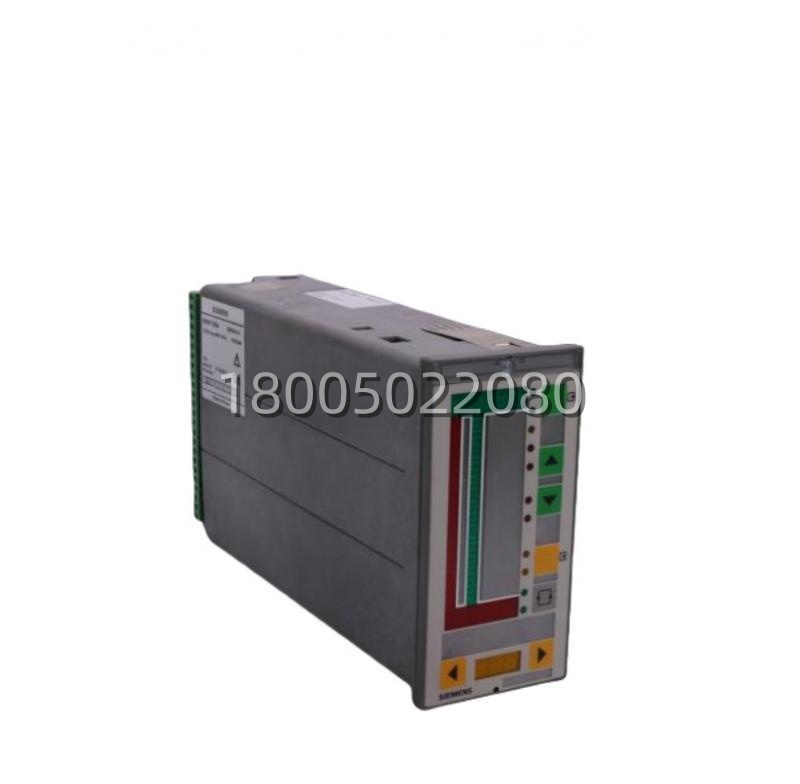
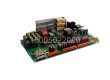
Application Scenarios:In a chemical batch reactor, precise control of temperature and pressure during the reaction phase is critical to product quality and safety. The 353A4F1NNNTNNA4 serves as the local control brain, executing PID control with feedforward for the heating jacket and ratio control for reagent dosing. Its deterministic scan time ensures that process upsets are corrected within milliseconds, while its integration with the APACS+ network allows the central DCS operator station to monitor the entire batch sequence. If a reactor temperature deviates, the controller’s local logic can initiate a safe shutdown before the central system even completes its scan, providing a critical layer of independent safety.
Parameter:
| Main Parameters | Value/Description |
|---|---|
| Product Model | 353A4F1NNNTNNA4 |
| Manufacturer | Siemens (originally Moore Products) |
| Product Series | APACS+ / 353 Series |
| Module Type | Process Automation Controller (PAC) |
| Processor | 32-bit Microprocessor |
| Control Capacity | Configurable for multiple PID loops (e.g., 4-8 loops) |
| Memory | Non-volatile memory for configuration storage |
| I/O Integration | Interfaces with APACS+ analog/digital I/O modules (4-20mA, RTD, etc.) |
| Communication | APACS+ Quad/Rack backplane, RS-232/485 (Modbus RTU) |
| Configuration | Removable configuration board (for program backup) |
| Power Supply | +5V DC (logic), ±15V DC (analog) via APACS+ rack |
| Operating Temp | 0°C to +60°C (typical) |
| Status | Discontinued / Legacy Product |
Technical Principles and Innovative Values:
- Innovation Point 1: Integrated Multi-Loop Process Control Architecture. Unlike generic PLCs that scan logic sequentially, the 353A4F1NNNTNNA4 is optimized for deterministic loop execution. It integrates PID control, advanced algorithms (e.g., cascade, ratio, selector), and sequencing logic in a single module. This “all-in-one” design reduces inter-module communication latency, ensuring that critical process variables are updated and controlled within a guaranteed time frame, which is essential for preventing thermal runaway in reactors or boilers.
- Innovation Point 2: Removable Configuration Board for Zero-Downtime Maintenance. A key innovation is the removable configuration board. In the event of a controller hardware failure, engineers can simply insert the backup configuration board into a spare controller, and the system resumes operation with minimal downtime. This feature is critical for continuous process industries (like refining or power generation) where hours of downtime can cost millions, effectively providing a “hot spare” capability without needing a fully redundant system.
- Innovation Point 3: Seamless DCS Integration via APACS+ Quad Structure. The controller is designed to operate as a node within the APACS+ Quad system. This architecture allows multiple controllers and I/O modules to communicate over a high-speed backplane, creating a distributed control system (DCS) that is more fault-tolerant than a centralized PLC. The module’s ability to function as a peer-to-peer controller while being fully integrated into the operator’s HMI network was a significant advancement in late-90s process automation.