WhatsApp:+86 18005022363 WeChat: +86 18005022363
  Email:
Application Scenarios
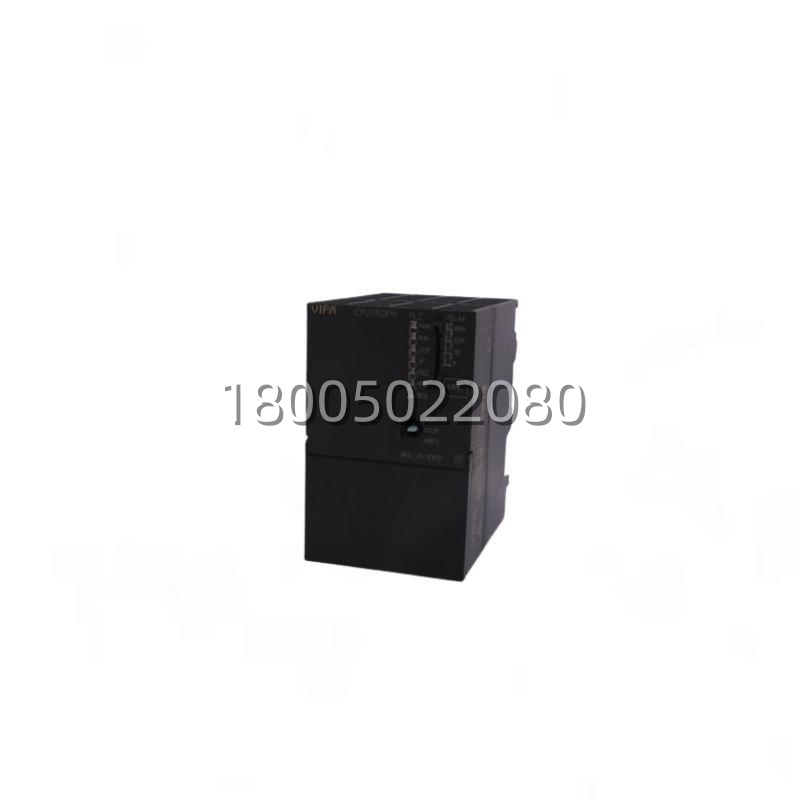
In a packaging machine’s central control cabinet, the 315-2DP01 acts as the master controller. It executes the main sequential logic for film feeding, sealing, and cutting, while its integrated PROFIBUS-DP master interface connects to remote ET200S I/O stations near the sensors/actuators and drives. The CPU’s fast bit processing speed ensures precise timing control for high-speed bagging operations.
Parameter
| Main Parameters | Value/Description |
|---|---|
| Manufacturer / Brand | VIPA GmbH (now part of Yaskawa) |
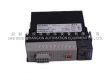
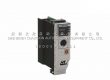
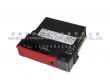
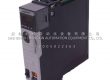
| Full Part Number | 315-2DP01 (Commonly labeled as CPU315DPM) |
| Product Type | PLC Central Processing Unit (CPU) Module |
| Compatibility | 100% Hardware/Software compatible with Siemens S7-300 |
| Work Memory | 128 KB – 384 KB (Varies by source, typically larger than Siemens original) |
| Load Memory | Micro Memory Card (MMC) slot (Supports up to 8 MB) |
| Processing Speed | ~0.01 – 0.05 µs per bit instruction (High-speed RISC, ~266 MHz) |
| Integrated Interfaces | X1 (MPI/PROFIBUS-DP) + X2 (PROFIBUS-DP) • Baud Rate up to 12 Mbps • Supports DP Master/Slave mode |
| I/O Capacity | Max. 2048 byte Input / 2048 byte Output (Process Image) |
| Program Blocks | Supports OB, FB, FC, DB (Nesting depth 16) |
| Power Supply | 24 VDC (via S7-300 backplane bus from PS307 power module) |
| Operating Temperature | 0 °C to +60 °C (Industrial grade) |
| Physical Dimensions | 40 mm × 125 mm × 130 mm (Standard S7-300 form factor) |
Technical Principles and Innovative Values
- Innovation Point 1: “Speed7” High-Speed Architecture. Unlike standard microcontrollers, VIPA utilizes a proprietary RISC-based ASIC processor (often cited as 266 MHz). This provides an order-of-magnitude faster scan time (e.g., 0.01 µs for bit operations vs. Siemens’ ~0.05 µs), significantly reducing the PLC cycle time. This is critical for applications requiring high-speed counting, fast PID loops, or complex data processing without adding a separate high-speed counter module.
- Innovation Point 2: Seamless S7-300 Ecosystem Integration. The key value is “drop-in” compatibility. It uses the exact same S7-300 mounting rail, bus connectors, and I/O modules as Siemens. Critically, it is programmed with standard Siemens STEP 7 (Classic or TIA Portal) using the same LAD/STL/FBD languages and hardware configuration. This allows engineers to leverage existing Siemens knowledge and project libraries without retraining.
- Innovation Point 3: Dual PROFIBUS-DP Master Capability. The module features two independent PROFIBUS-DP interfaces. This allows it to manage two separate DP networks simultaneously—for example, one network for drives (servos/VFDs) and another for remote I/O—without the need for an expensive external communication processor (CP) module. This reduces hardware cost and cabinet space.