WhatsApp:+86 18005022363 WeChat: +86 18005022363
  Email:
Application Scenarios
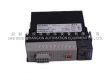
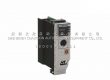
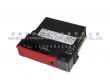
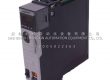
In a large thermal power plant, the boiler feedwater flow measurement is critical for efficiency and safety. The existing system uses turbine flow meters that output a pulse signal proportional to flow rate. However, the plant’s aging ABB INFI 90 DCS lacks the high-speed counting capability to accurately capture these pulses without missing counts during rapid flow changes. Instead of replacing the entire control system, engineers integrate the ABB SPDSM04 pulse input module into the Harmony rack. The SPDSM04 connects directly to the turbine meter outputs, reliably capturing every pulse even at high frequencies. It performs on-board totalization and frequency calculation, providing the master controller with accurate real-time flow data for control loops and historical reporting. This scenario demonstrates the module’s core value: enabling legacy DCS systems to handle precision metering tasks, solving the pain points of data loss, system obsolescence, and the high cost of full system replacement.
Parameter
| Main Parameters | Value/Description |
|---|---|
| Product Model | ABB SPDSM04 |
| Manufacturer | ABB (Bailey Controls) |
| Product Category | Pulse Input / Frequency Input Slave Module |
| Compatible Systems | ABB INFI 90, Symphony, Symphony Plus DCS |
| Input Channels | 8 independent pulse input channels |
| Input Signal Types | Voltage pulse (0-24 VDC), Dry contact pulse |
| Max Input Frequency | 10 kHz (typical per channel) |
| Input Threshold | 5-15 VDC (configurable) |
| Isolation | Optical isolation (channel-to-channel and system) |
| Power Supply | 24 VDC (nominal) via backplane or external |
| Power Consumption | Approx. 5.5 W |
| Operating Temperature | 0°C to +60°C |
| Mounting | DIN rail or module mounting unit (MMU) slot |
| Status Indication | Per-channel LED for pulse activity |
Technical Principles and Innovative Values
The ABB SPDSM04 operates on the principle of hardware-level pulse capture and preprocessing, offloading computational tasks from the main controller.
- Innovation Point 1: Dedicated Slave Processing Architecture. Unlike a standard digital input module that merely reads on/off states, the SPDSM04 acts as an intelligent slave. It contains dedicated counter hardware that continuously accumulates pulses and calculates frequency or period locally. This prevents the main controller’s scan cycle from limiting high-speed signal acquisition, ensuring zero missed counts even at full 10 kHz frequency.
- Innovation Point 2: Broad-Spectrum Signal Conditioning. The module features sophisticated input conditioning circuits that automatically handle a wide range of field signals without external signal converters. It can directly interface with low-level magnetic pickups (via preamplifier-equipped channels), 24V proximity switches, and dry contact outputs. This flexibility drastically reduces the need for intermediate signal conditioning hardware in the cabinet.
- Innovation Point 3: Robust Noise Immunity for Critical Data. Given its common use in electrical substations and noisy industrial plants, the SPDSM04 employs aggressive optical isolation between all field channels and the system backplane. This creates a “moat” that prevents ground loops and transient voltage spikes from corrupting the sensitive counting logic, making it exceptionally reliable for custody transfer and billing-grade metering applications.
Application Cases and Industry Value
Case Study: Petrochemical Plant Custody Transfer System UpgradeA major petrochemical complex needed to upgrade its custody transfer system for ethylene flow between production units. The existing orifice meters with pulse outputs were connected to an aging Bailey INFI 90 system that could not reliably handle the high pulse rates, risking measurement inaccuracies and contractual disputes.The plant deployed ABB SPDSM04 modules across 12 metering stations. The modules were configured for frequency measurement mode, capturing pulses from the turbine meters with microsecond-level timing accuracy. The SPDSM04‘s local processing ensured that even during rapid flow transients, no pulses were lost. The data was then passed to the DCS for volume calculation and archival. The project resulted in a 99.9% data availability rate, eliminated previous discrepancies in inter-company billing, and extended the life of the existing DCS by over 15 years. The plant reported a 60% cost saving compared to installing a separate, standalone flow computer system.