WhatsApp:+86 18005022363 WeChat: +86 18005022363
  Email:
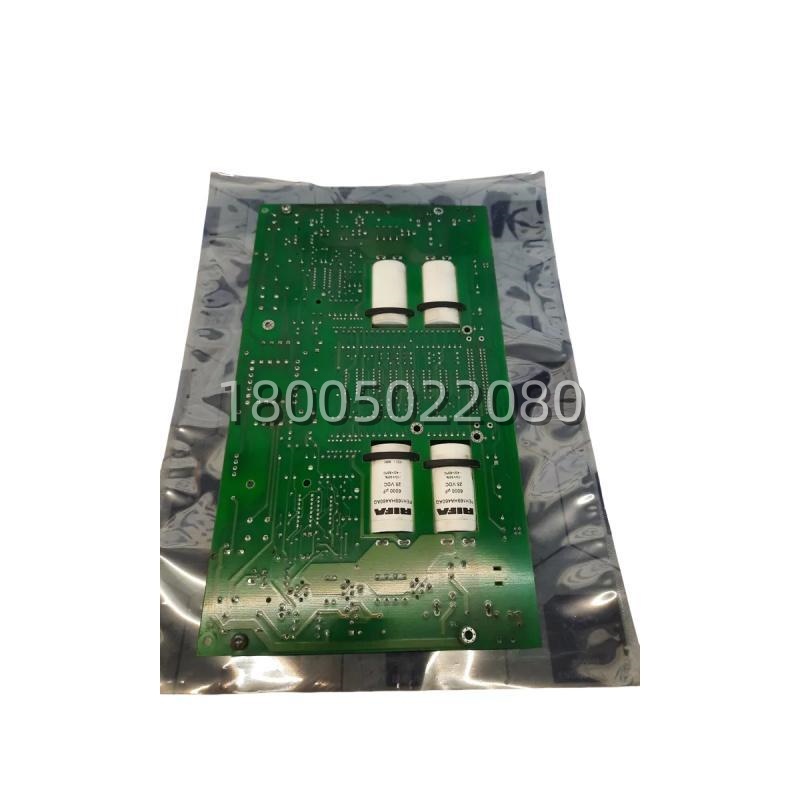
Application Scenarios:In a copper rod rolling mill, inconsistent speed control of the finishing block drives led to variations in product diameter. The root cause was traced to the weak, noise-corrupted encoder signals traveling over 50 meters from the motors to the main drive controller. The signals were being lost in the sea of electromagnetic interference generated by the high-power thyristor stacks. Engineers installed the ABB SNAT632PAC pulse amplifier board as a signal repeater and conditioner directly at the motor junction box. The board’s high-gain, differential-input amplifiers boosted the weak encoder pulses, while its built-in filtering rejected the prevalent electrical noise. This restored a crisp, reliable feedback signal to the SDCS-CON controller, enabling precise closed-loop speed regulation and eliminating the diameter tolerance issues that were causing product rejects and customer complaints.
Parameter:
| Main Parameters | Value/Description |
|---|---|
| Product Model | SNAT632PAC (61049428) |
| Manufacturer | ABB |
| Product Category | Pulse Amplifier / Signal Conditioning PCB |
| Primary Function | Amplification, Shaping & Isolation of Pulse Trains |
| Input Signal Type | Low-voltage pulse (e.g., from encoder, tachogenerator) |
| Output Signal Type | Amplified, isolated pulse (e.g., 24V logic, HTL) |
| Supply Voltage | 24 V DC (Typical for industrial control circuits) |
| Isolation | Opto-isolation or transformer isolation (standard) |
| Bandwidth/Response | High-frequency response suitable for encoder signals |
| Environmental Rating | Designed for industrial control cabinet mounting |
| Mounting | PCB mount (typically on a DIN rail carrier or backplane) |
| Compatibility | ABB DCS/DDC Drives, ACS Drives, SNAT series interfaces |
Note: The SNAT632PAC‘s core value is signal integrity. It acts as a “signal booster” and “noise filter,” ensuring that critical feedback or command pulses are not degraded by long cable runs or electromagnetic interference (EMI), which is common near large motors and drives.Technical Principles and Innovative Values:The ABB SNAT632PAC operates on the principle of active signal regeneration. It receives a potentially weak or noisy digital pulse train and reconstructs it into a clean, powerful output signal.
- Innovation Point 1: Adaptive Signal Thresholding. Unlike simple amplifiers that can amplify noise along with the signal, the SNAT632PAC often incorporates Schmitt-trigger inputs or programmable threshold levels. This allows it to distinguish between a valid signal and background electrical noise, effectively “cleaning” the pulse train before amplification. This is crucial in environments with variable interference levels.
- Innovation Point 2: Differential Line Driver Output. Many configurations of this board provide differential output signals (e.g., RS-422/485 compatible). This balanced transmission technique provides exceptional common-mode noise rejection, allowing the amplified signal to travel long distances from the drive cabinet to a remote controller or PLC without corruption, a significant advantage over single-ended outputs.
- Innovation Point 3: Integrated Power and Signal Isolation. The board typically provides galvanic isolation between its input and output circuits (and often the power supply). This breaks ground loops, which are a primary source of signal distortion and measurement error in industrial systems, protecting sensitive control electronics from transients on the field side.