WhatsApp:+86 18005022363 WeChat: +86 18005022363
  Email:
Application Scenarios
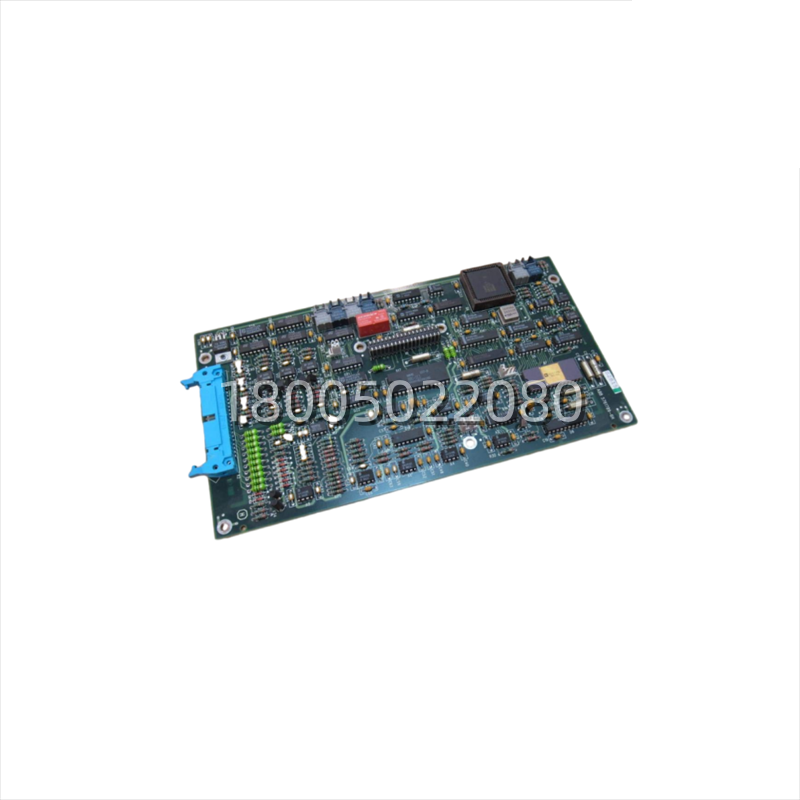
In a large refinery’s Safety Instrumented System (SIS), multiple ABB SNAT609TAI boards are deployed within the control cabinets of critical units like the catalytic cracker. Each board is responsible for continuously monitoring a bank of safety-critical sensors (e.g., pressure transmitters and flame detectors). It processes these signals through pre-programmed logic, such as a 2-out-of-3 (2oo3) voting scheme. If a hazardous condition is detected (e.g., pressure exceeding a safe threshold), the board executes a milli-second-level response, triggering outputs to close emergency shutdown valves and isolate the process unit. This rapid, deterministic action, enabled by the board’s robust processing and I/O capabilities, directly addresses the core industrial pain points of functional safety, system availability, and prevention of catastrophic downtime.
Parameter
| Parameter | Value / Specification |
|---|---|
| Manufacturer / Brand | ABB |
| Product Model | SNAT609TAI |
| Order Code / Article No. | 61073779 (also referenced as 61073779B) |
| Product Type | Industrial Control Board / I/O & Logic Module |
| Typical System Compatibility | ABB AC800M Series, Advant OCS/Mod 300 (related systems) |
| Power Supply | 24 VDC (Standard Industrial Voltage) |
| Power Consumption | Typically < 10 W (estimates range 6W-8W) |
| Communication Protocols | Supports Modbus (RTU/TCP), Profibus, Ethernet (varies by configuration) |
| I/O Capabilities | Mixed Digital & Analog; common refs: 8-16 DI, 8-16 DO, 4 AI, 2 AO |
| Operating Temperature | -20°C to +70°C (Industrial Grade, some sources cite -40°C) |
| Storage Temperature | -40°C to +85°C |
| Safety Standards | Suitable for SIL 2 / SIL 3 applications (Safety Instrumented Systems) |
| Dimensions (Approx.) | ~150mm x 100mm x 30mm (varies by revision) |
| Installation | DIN Rail or Panel Mounting (via screw fixing) |
| Key Features | High-speed processing, onboard diagnostics, galvanic isolation, modular design |
Technical Principles and Innovative Values
- Innovation Point 1: Integrated Safety & Process Control Architecture. Unlike generic I/O cards, the SNAT609TAI is engineered to serve dual roles in both basic process control and high-integrity safety systems (SIS). Its hardware design often incorporates features like dual/triple redundancy support and high diagnostic coverage, allowing it to meet stringent standards like IEC 61508/61511 (SIL2/3). This reduces system complexity by enabling a more unified control architecture without compromising safety.
- Innovation Point 2: Deterministic Signal Processing with High-Fidelity I/O. The board is designed for precision, featuring high-resolution analog input channels (e.g., 16-bit) and isolated digital inputs that ensure accurate data acquisition in electrically noisy industrial environments. Its fast scan times and deterministic response are critical for closed-loop control and emergency shutdown logic, where latency is not an option.
- Innovation Point 3: Advanced Onboard Diagnostics and Maintainability. A key innovation is its self-diagnostic capability. The module continuously monitors its health, checking for channel faults, communication errors, and power anomalies. Status LEDs provide immediate visual feedback, drastically reducing Mean Time To Repair (MTTR). Furthermore, its modular, hot-swappable design (in supported configurations) allows for replacement without a full system shutdown, maximizing plant availability.
Application Cases and Industry Value
Case Study: Power Plant Boiler Protection System RetrofitA coal-fired power plant was experiencing unreliable trips in its legacy burner management system, leading to unplanned outages. The existing control modules were obsolete and prone to failure. The engineering team replaced them with ABB SNAT609TAI boards integrated into the existing ABB DCS framework. The new boards provided enhanced diagnostic visibility, allowing the team to identify and rectify grounding issues that were causing spurious trips. Post-retrofit, the boiler’s availability increased by 5%, and the maintenance team could predict module failures through diagnostic data, shifting from reactive to proactive maintenance. This case underscores the module’s value in extending the life of critical infrastructure while improving operational reliability.