WhatsApp:+86 18005022363 WeChat: +86 18005022363
  Email:
Application Scenarios
In an automotive welding line using an ABB IRB 6640 robot, the DSQC 313 board continuously reads the resolver (or absolute encoder) signals from all six axis motors (J1-J6). When the robot powers on, it is this board that provides the multi-turn absolute position data, allowing the controller to know exactly where each joint is located without needing to perform a “homing” or reference run. This immediate knowledge of position is critical for resuming production after a power outage or emergency stop.
Parameter
| Main Parameters | Value/Description |
|---|---|
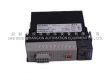
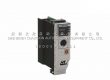
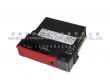
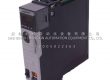
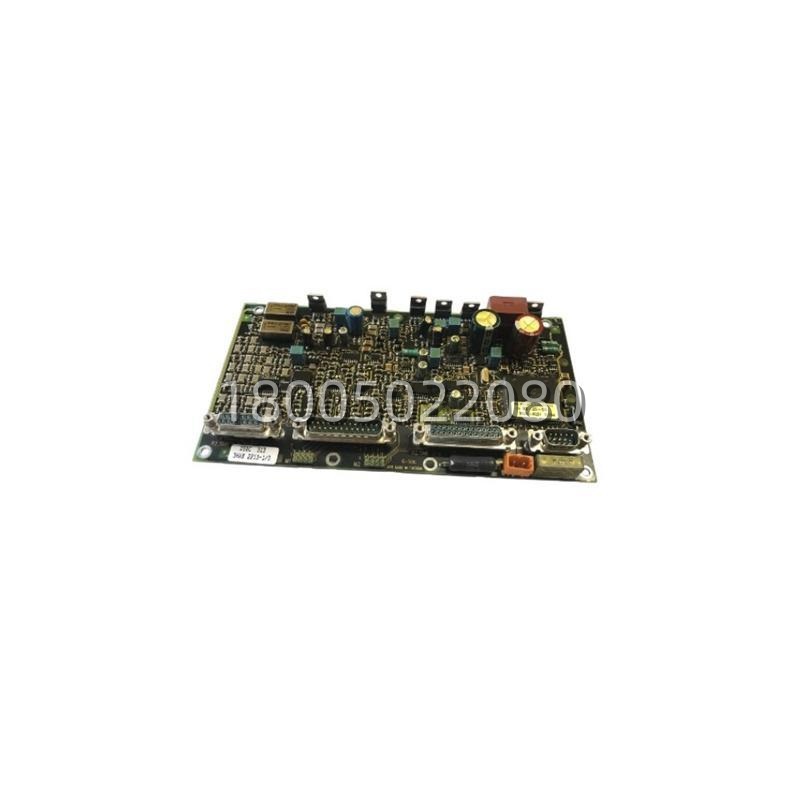
| Product Model | DSQC 313 (SMB – Serial Measurement Board) |
| Alternative P/N | 3HAB2213-1, 3HNP00773-001/00 |
| Manufacturer | ABB |
| Product Category | Robot Controller Measurement Board |
| Primary Function | Multi-Axis Resolver/Encoder Interface, Absolute Position Feedback |
| Compatible Systems | ABB IRC5, S4C+, S4C controllers |
| Supported Axes | Typically 6 axes (standard robot) + additional for external axes |
| Input Signal Type | Resolver (Sin/Cos) or EnDat/HIPERFACE absolute encoder |
| Key Technology | RDC (Resolver-to-Digital Conversion) |
| Power Supply | +24V DC (from controller backplane) |
| Communication | DSQC bus (to main CPU) |
| Operating Temp. | 0°C to +55°C (typical controller environment) |
Technical Principles and Innovative Values
- Innovation Point 1: High-Precision RDC Conversion for Absolute Positioning: Unlike incremental encoders that lose position after a power cycle, the DSQC 313 is designed to work with resolvers or multi-turn absolute encoders. It uses high-resolution RDC (Resolver-to-Digital Conversion) circuits to translate the analog Sin/Cos signals from the motor into a precise digital absolute angle. This innovation eliminates the need for homing routines after every startup, saving valuable production time in 24/7 manufacturing environments.
- Innovation Point 2: Multi-Axis Synchronous Sampling Architecture: The board is engineered to sample the position of all robot axes (J1-J6, often up to 7 axes) synchronously within a single control cycle. This ensures that the controller receives a consistent “snapshot” of the entire robot’s posture at the same moment in time. This temporal consistency is critical for accurate kinematic calculations and high-speed trajectory planning, preventing jitter or lag that could occur if axes were read sequentially.
- Innovation Point 3: Robust Signal Integrity in Electrically Noisy Environments: Robot cabinets are harsh environments with high-frequency noise from servo drives and contactors. The DSQC 313 incorporates reinforced galvanic isolation and differential signal processing on its input channels. This design protects the sensitive low-voltage control electronics from the high-voltage transients and ground loops that can occur on long motor feedback cables, ensuring data integrity and preventing phantom “SMB Faults” or “Axis Computer Errors”.