WhatsApp:+86 18005022363 WeChat: +86 18005022363
  Email:
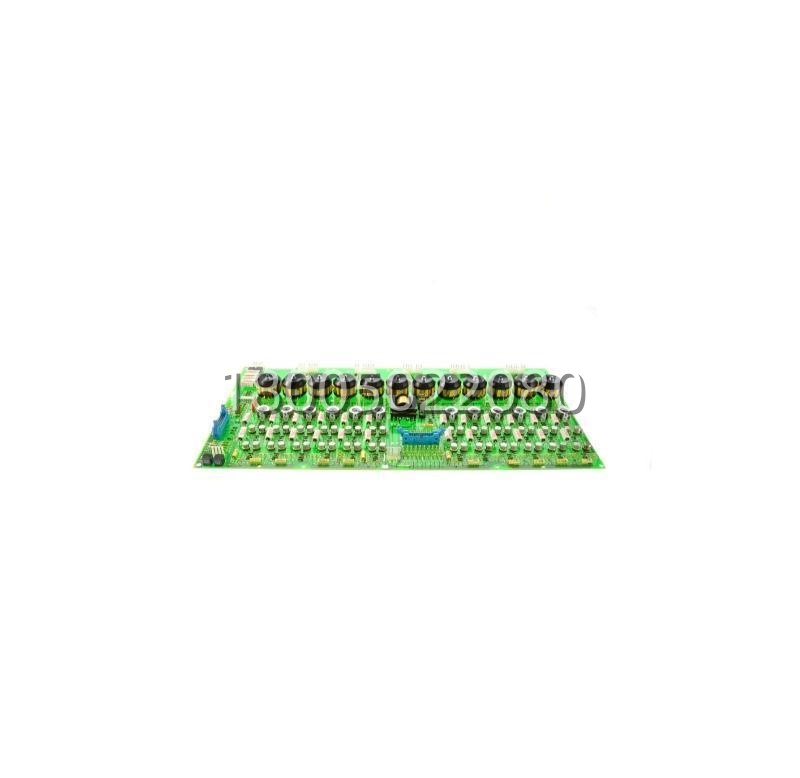
Application Scenarios:
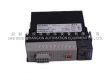
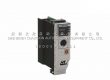
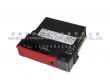
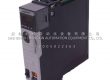
In a precision steel rolling mill, the exact tension on the strip between stands is critical for gauge control and preventing breaks. The tension is measured by a load cell in the looper roll assembly, which outputs a very small millivolt-per-volt (mV/V) signal proportional to the force. This tiny signal is highly susceptible to electrical noise from the powerful main drive motors and thyristor converters. The ABB SAMT11 57211369 amplifier board is installed in the mill’s control rack precisely for this purpose. The load cell’s raw signal is wired directly to the SAMT11‘s differential input. Inside, the board provides excitation voltage to the load cell, amplifies the millivolt-level return signal by a precise, stable gain, filters out the ever-present 50/60 Hz and switching noise, and outputs a clean, robust 0-10V or 4-20mA signal. This conditioned signal is then sent to the DCS’s analog input module for the tension control loop. Without the SAMT11, the tension signal would be buried in noise, causing the control system to see “false” tension variations and jitter violently, leading to poor gauge control and potential strip breaks. The SAMT11 acts as the essential, high-fidelity translator between the delicate physical world and the digital control system.
Parameter:
| Main Parameters | Value/Description |
|---|---|
| Product Model | ABB SAMT11 (Part No. 57211369) |
| Manufacturer | ABB |
| Product Category | Signal Conditioning / Amplifier Board |
| Compatible System | ABB Advant OCS, MOD 300 DCS, and associated drive/control racks. |
| Primary Function | Amplification, isolation, and conditioning of low-level analog signals. |
| Input Signal Types | Low-level DC voltage (mV), current loops, or signals from bridges (strain gauge, load cell). |
| Amplification Gain | Fixed or configurable high gain (e.g., 100, 500, 1000) to boost mV signals to V levels. |
| Output Signal | Standard process signal: 0-10V, ±10V, 4-20mA, etc. |
| Input Impedance | High input impedance to avoid loading the sensor. |
| Common Mode Rejection (CMRR) | Very high CMRR (e.g., >100 dB) to reject noise common to both input wires. |
| Bandwidth | Limited bandwidth optimized for process signals (e.g., DC to ~1 kHz) to filter out high-frequency noise. |
| Isolation | Galvanic isolation between input, output, and power supply for safety and noise immunity. |
| Power Supply | Requires ±15VDC or +24VDC, typically from the system backplane. |
| Accuracy & Stability | High accuracy and low temperature drift for reliable measurement. |
- Note on Gain and CMRR: The high gain and Common Mode Rejection Ratio are critical. They allow the board to amplify the tiny differential signal from a sensor while completely ignoring any noise picked up equally on both signal wires, which is the primary type of noise in industrial environments.
- Note on Isolation: The galvanic isolation breaks ground loops, which are a major source of measurement error and can introduce dangerous potentials into control systems.
Technical Principles and Innovative Values:
The ABB SAMT11 57211369 is engineered around precision instrumentation amplifier topology, designed to extract clean signals from the electrically hostile reality of a factory floor.
- Innovation Point 1: Instrumentation-Grade Amplification with Ultra-High CMRR: The core of the SAMT11 is a precision instrumentation amplifier circuit. Unlike a standard operational amplifier, this topology is specifically designed to amplify the differencebetween two input terminals while rejecting any signal that is common to both. In practice, this means the 60Hz hum induced on both wires of a sensor cable running next to a motor is ignored, while the millivolt-level strain gauge signal is amplified. Achieving CMRR figures over 100 dB at 60Hz is what allows the SAMT11 to deliver usable signals where other methods fail, a key differentiator from simple amplifier modules.