WhatsApp:+86 18005022363 WeChat: +86 18005022363
  Email:
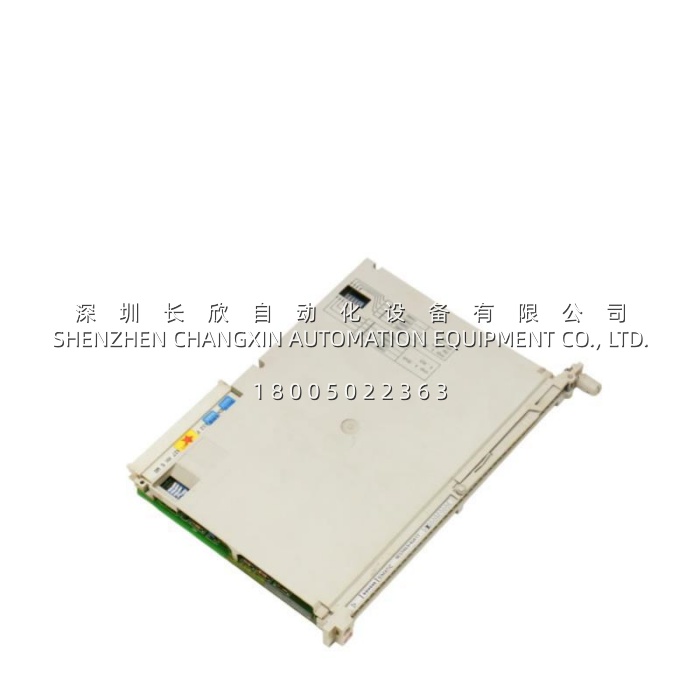
Product Overview
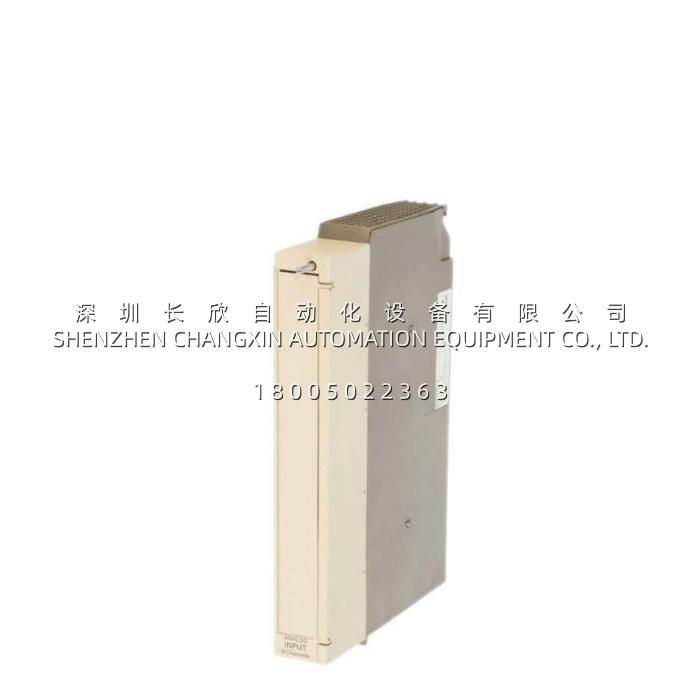
The Siemens 6ES5463-4UA11 is a SIMATIC S5-series analog input module, type AI 463, built in the compact “Version U” single-slot form factor and delivering 4 floating (galvanically isolated) input channels optimized for 50 Hz power-network environments. It is engineered for S5-135U and S5-155U central racks, where it maps four analog process values into the S5 process input image and acquires voltage or current signals directly from 2-wire/4-wire field transmitters without interposing signal conditioners. The 6ES5463-4UA11 supports two voltage brackets—±1 V and ±10 V—and two current brackets—20 mA (fixed) and 4–20 mA—across its four channels, with the module’s internal scaling governed by the S5 CPU’s HW configuration and user program (FC/FB scaling blocks convert raw PW (process word) counts into engineering units such as bar, °C, m³/h).What differentiates the Siemens 6ES5463-4UA11 from the broader AI 460 family is that the 463 sub-type bakes the input range selection into the hardware/front configuration rather than relying on external “measuring range modules” (the 6ES5498 series carriers) that the 8-channel AI 460 demands. This makes the 6ES5463-4UA11 a drop-in, lower-channel-count alternative when a rack has only four analog points to land and the panel designer wants to avoid the two-slot penalty of a 460 + 498 pair. The “4UA11” suffix itself flags the 50 Hz optimization—Siemens offered the 4UA12/4UA13 as 50/60 Hz dual-rated successors—so the Siemens 6ES5463-4UA11 is the version most commonly found in European and Asian plants where the facility supply is 50 Hz and the analog front-end was tuned accordingly for noise rejection on the converter stages.Floating isolation per channel (channel-to-backplane and, within practical limits, channel-to-channel via optocoupler and transformer-isolated A/D staging) suppresses ground-loop current that would otherwise walk error into low-level ±1 V signals—particularly important when the 6ES5463-4UA11 is wired to strain-gauge or potentiometer-style transducers referenced to local skid grounds. Accuracy is quoted at ±0.5 % of full scale, sufficient for the vast majority of S5-era process loops where the transmitter, not the PLC analog front-end, dominates the error budget. For S5-135U/155U operators keeping legacy process lines alive—batch reactors, utility skids, water-treatment MCC-integrated S5 panels—the Siemens 6ES5463-4UA11 remains the canonical 4-channel floating AI building block.
Technical Specifications
| Parameter | Value |
|---|---|
| Product Model | 6ES5463-4UA11 |
| Manufacturer | Siemens |
| Product Type | Analog Input Module (SIMATIC S5 AI 463, Compact Version U) |
| Number of Inputs | 4, floating (galvanically isolated) |
| Input Ranges | ±1 V, ±10 V; 20 mA, 4–20 mA |
| Power Network Optimization | 50 Hz (4UA11 suffix; 4UA12/4UA13 add 60 Hz) |
| Accuracy | ±0.5 % of full scale |
| Compatible Racks | SIMATIC S5-135U, S5-155U (central rack, U-format slot) |
| Backplane Power | From S5 rack 5 V / 24 V bus (no external supply required) |
| Isolation | Channel-to-backplane floating, optocoupler staged |
| Operating Temperature | 0 °C to +60 °C (typical S5 panel envelope) |
| Form Factor | Compact Version U, single-slot |
| Certification | IEC 61131-2 compliant (S5 platform) |
Main Features and Advantages
Floating 4-channel isolation tuned for low-level analog. The Siemens 6ES5463-4UA11 deploys per-channel galvanic isolation between the 4–20 mA / ±10 V front-end and the S5 backplane, with the A/D conversion staged behind an isolating barrier. This is decisive on ±1 V ranges where a few hundred millivolts of ground-loop offset can eat the entire accuracy budget. In plants where the 24 V DC or 115 V AC field supply serving the transmitters is grounded at the skid rather than at the S5 cabinet, the 6ES5463-4UA11‘s floating architecture prevents those reference mismatches from walking error into the PW reading. Compared to non-isolated S5 analog cards, the 6ES5463-4UA11 is the one you spec when the transmitter loop return is not guaranteed to be at S5-frame potential.Fixed-range simplicity vs. the AI 460 + 498 complexity. The broader S5 AI 460 family (e.g., 6ES5460-4UA11/12/13) requires plugging one or two 6ES5498 “measuring range modules” into the carrier to define whether a given channel is ±10 V, 4–20 mA, thermocouple, etc.—a flexible but fiddly approach that consumes extra slot depth and introduces a small parts-count problem in spare holdings. The Siemens 6ES5463-4UA11 hard-defines its four channels to the ±1 V / ±10 V / 20 mA / 4–20 mA bracket set, so a rack that only needs four analog points can land them in one compact-U slot with zero range-module inventory. For S5-135U panels where slot count is under pressure (dense mixes of DO 454 high-current, DI 430, communications CP cards), the 6ES5463-4UA11 preserves space.50 Hz power-network optimization. The “4UA11” suffix pins this module to 50 Hz supply environments—the converter and filtering stages are tuned accordingly, giving marginally better rejection of 50 Hz/100 Hz ripple that can alias into low-level analog if the module’s notch filtering is aligned to the wrong mains frequency. Plants in 60 Hz regions (North America) would typically reach for the 4UA12 or 4UA13 instead, but for European, Asian, African, and Middle Eastern facilities—the bulk of the global S5 install base—the Siemens 6ES5463-4UA11 is the native match. In mixed-mains multinational plants, this detail matters: dropping a 60 Hz-optimized AI into a 50 Hz cabinet won’t fail, but ripple rejection won’t be at spec either.±0.5 % FS accuracy and S5-scaling ecosystem. Each channel on the 6ES5463-4UA11 resolves the input into the standard S5 analog word width (12-bit class typical for S5 AI family), and the user program applies FC 105 (SCALE) or hand-rolled linearization to turn PW counts into engineering units. At ±0.5 % FS, the module is the limiting element only on the tightest loops—most S5-era 4–20 mA transmitters (pressure, differential pressure, magnetic flow) are themselves ±0.1–0.25 %, so the 6ES5463-4UA11 rarely dominates the error chain. For legacy process skids where the loop accuracy was specced to 1–2 % overall anyway, the module is transparent.No external supply overhead. The Siemens 6ES5463-4UA11 draws its analog-front power from the S5 rack bus (5 V logic and 24 V field via the backplane), meaning the panel designer does not need to route a separate ±15 V or 24 V analog supply to the AI slot—one less failure point and one less wire run in cabinets that are already dense. The 4–20 mA loop itself still needs the field-side 24 V DC (typically the same supply that feeds the 6ES5454-4UA12 DO loads on the same rack), but the module electronics are self-powered from the rack.
Application Field
The Siemens 6ES5463-4UA11 is purpose-built for any S5-135U or S5-155U rack that needs to land a small set of 4–20 mA or ±10 V process signals without the two-slot overhead of an AI 460 + 498 range-module pair. In process automation—batch reactors, CIP/SIP skids, fermentation vessels—four analog points typically cover one pressure transmitter, one temperature (via 4–20 mA transmitter, not direct TC), one flow meter, and one level or weigh-cell—exactly the channel count the 6ES5463-4UA11 offers. Wiring a 4–20 mA pressure transmitter from an SITRANS P or Yokogawa EJX family into channel 0, a magnetic flow’s 4–20 mA active output into channel 1, a ±10 V position feedback from a control valve into channel 2, and a 4–20 mA pH/ORP transmitter into channel 3 is a canonical S5-155U configuration that fills one compact-U slot and leaves the rest of the rack for digital I/O and Profibus CP cards.In utility and infrastructure panels—water treatment lift stations, WWTP aeration basins, boiler feedwater skids—the Siemens 6ES5463-4UA11 typically acquires 4–20 mA signals from ultrasonic level transmitters, differential-pressure flow elements, and pressure switches with analog preview. Because the module is floating, it tolerates the typical scenario where the 24 V DC loop supply is grounded at the MCC panel while the S5 rack is grounded at the control building’s star point 30 meters away—a setup that would inject ground-loop error into a non-isolated AI but is benign on the 6ES5463-4UA11.On 50 Hz-region machine builders (Italian bottling lines, German packaging OEMs, Japanese/Korean process skids exported globally), the Siemens 6ES5463-4UA11 was often the OEM-specified AI card because the 50 Hz tuning matched the home-market mains and the compact-U footprint kept the S5-135U rack to 9–12 slots even on dense machines. Retrofit scenarios also apply: when an S5 panel originally deployed with an AI 460 + 498 pair loses the range modules (they’re small, they walk away during maintenance), swapping the two-slot assembly for a Siemens 6ES5463-4UA11 (if the four channels match the needed ranges) recovers a slot and eliminates the range-module as a spare SKU. In phased S5→S7 migrations where an S5-155U is wrapped by an S7-400 via IM 308-C, the 6ES5463-4UA11 often persists because re-terminating four 4–20 mA homeruns from field junction boxes into a new S7 SM 331 card is hard to justify on a turnaround budget—keeping the S5 rack alive with a tested 6ES5463-4UA11 is the economical call.