WhatsApp:+86 18005022363 WeChat: +86 18005022363
  Email:
Description
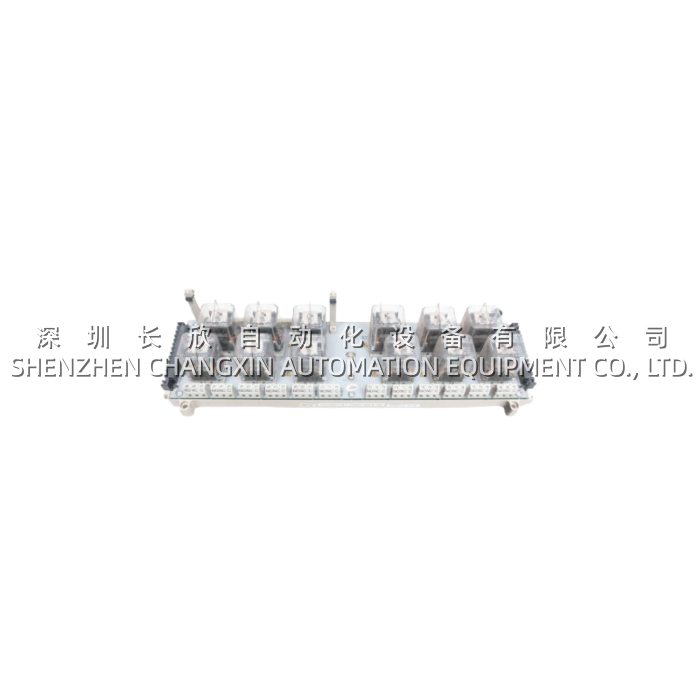
Application Scenarios
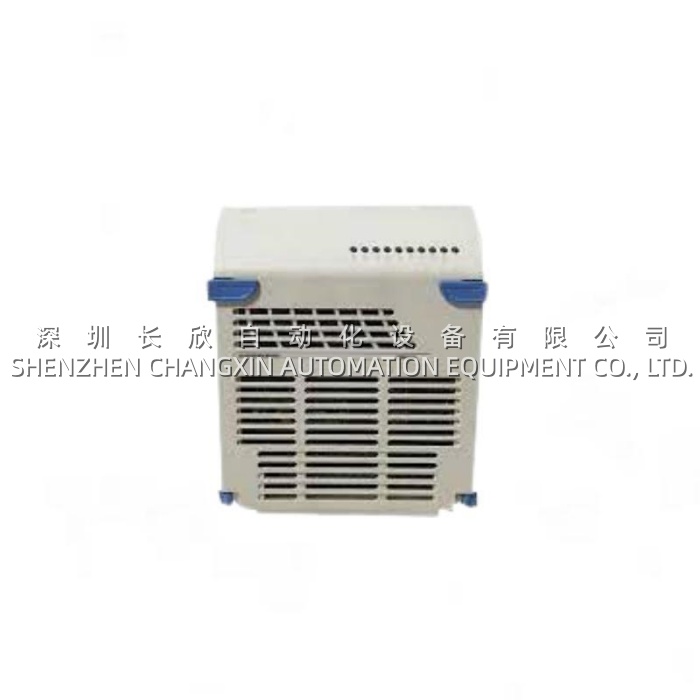
At a 600 MW supercritical coal unit in Northern China, the boiler rear-wall injection dampers and selective catalytic reduction (SCR) ammonia-spray valves sit ~350 m from the main Ovation rack in the unit’s DCS room. Originally spec’d with 4–20 mA home-runs (72 pairs of shielded cable in tray), the E&I team kept fighting ground-loop offsets between the MCC earth and the DCS room earth, and cable-fault troubleshooting meant tracing 350 m of tray. The retrofit swapped the home-runs for a Westinghouse 1C31203G01 RNC in a small 8-slot Ovation remote rack mounted in the boiler rear-wall J-box, with a single multimode fiber pair running back to the main controller. The RNC hosts 1C311xx DO (damper actuators) and 1C312xx AI (position feedback + ammonia flow orifice), and the 1C31203G01‘s local preprocessing filters position-feedback jitter before it hits the Ovation historian — the fiber uplink also killed the ground-loop problem entirely. Commissioning took one shift; the cable bill alone dropped ~$18k. The unit’s DCS engineer: “The RNC is invisible when it’s working. But try running 350 m of 4–20 mA through a 450 MW unit’s cable tray and you’ll remember why it exists.”
Parameter
| Main Parameters | Value / Description |
|---|---|
| Product Model | 1C31203G01 |
| Manufacturer | Westinghouse Electric (Ovation lineage, current supply via Emerson Automation Solutions) |
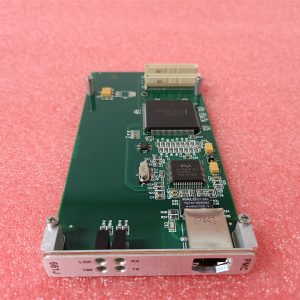
| Product Category | Remote Node Controller (RNC) – Ovation DCS distributed I/O head |
| Processor (current batch) | 32-bit ARM Cortex-A9 |
| Memory (current batch) | Up to 1 GB DDR3 + 16 GB NAND flash |
| Uplink Bus | Ovation proprietary high-speed bus |
| Uplink Media | 75 Ω coaxial cable or multimode fiber (configuration-dependent) |
| Max Uplink Distance | Coax ≤ 500 m / Fiber ≤ 2 km |
| Supported I/O Families | 1C311xx (DI/DO), 1C312xx (AI/AO), 1C313xx (RTD/TC), serial I/O variants |
| Power Supply | +24 V DC (fed from Ovation remote rack / 1X00781H01L-class PSU) |
| Redundancy | 1:1 hot-standby (paired RNCs, seamless failover) |
| Hot-Swap | Supported (when system config permits) |
| Operating Temp. | 0°C to +60°C (classic Westinghouse rating); some refreshed batches quoted –40°C to +85°C — verify label |
| Storage Temp. | –20°C to +70°C (classic) / –40°C to +85°C (refreshed) |
| Mounting | Ovation remote-rack slot (slot 1, head-of-rack) / DIN-rail on refreshed variants |
| Indicators | Power, Run, Fault, Bus OK (LED) |
| Protection | IP20 (cabinet-only) |
| Dimensions / Weight | ~140 × 85 × 30 mm / ~0.2 kg (classic); some distributor listings ~140 × 70 × 70 mm / 0.45 kg — batch-dependent |
Technical Principles and Innovative Values
Innovation Point 1 – Proprietary HS Bus with Coax-or-Fiber Flexibility. The 1C31203G01 speaks the Ovation high-speed bus natively, which means the remote rack’s I/O appears in the Ovation Station engineering environment exactly like local rack I/O — same tag structure, same function blocks, same alarm config. The coax-versus-fiber choice lets you tune for distance and noise: 75 Ω coax for intra-plant (<500 m, cheaper), MM fiber for跨-building or turbine-island-to-MCC (≤2 km, noise-immune). No protocol gateways, no OPC wrappers.Innovation Point 2 – 1:1 Hot-Standby at the Node Level. Two 1C31203G01 units can occupy the redundant RNC slots in a remote rack. If the active RNC loses its fiber uplink or powers off, the standby takes over without dropping the I/O scan — the Ovation main controller sees a “node switch” event in the diag buffer, but the field devices (valves, dampers, transmitters) see continuous scanning. On a supercritical unit or ethylene cracker, that “no-blip” handoff is what keeps a nuisance trip from becoming an ESD.Innovation Point 3 – Local Preprocessing Lightens the Backbone. The ARM-Cortex refresh of the 1C31203G01 adds FFT pre-analysis on vibration or dynamic analog before upload — the RNC can compute spectral peaks locally and upload only the特征值 (peak amplitude, 1X/2X/3X components) instead of the full waveform. On a plant with 40+ vibration points per train, that’s the difference between a congested Ovation HS bus and a bored one.Innovation Point 4 – Unified Ovation Station Engineering. You don’t program the RNC separately. All logic, I/O mapping, and diag thresholds live in Ovation Station and download to the 1C31203G01 automatically when the node is commissioned. One engineering seat, one tag database, one backup file. For plants that already run Ovation, the RNC disappears into the workflow — which is exactly where a remote node belongs.
Application Cases and Industry Value
Case – Offshore Platform Utility Skid (South China Sea). An offshore wellhead platform’s utility DCS (Ovation v3) had the main rack in the MCC room, but the produced-water injection skid sat 800 m away across the topsides — originally 4–20 mA home-runs through cable tray shared with 415V feeder trays, and ground-loop noise on the AI loops was chronic (±1.2% on the orifice-meter DP, which mattered for royalty allocation). The retrofit dropped a 4-slot Ovation remote rack with Westinghouse 1C31203G01 RNC on the skid itself, MM fiber back to MCC (one duplex pair), and moved the AI/AO for the injection skid onto 1C312xx cards in the remote rack. The RNC’s 1:1 hot-standby pair covered the node, and the fiber killed the ground-loop path. Injection-metering std-dev dropped from 1.2% to 0.15%; the production chemist signed off the allocation recalculation with zero pushback. The E&I lead: “One RNC, one fiber pair, and the allocation dispute evaporated.”Case – Ethylene Cracker Turboexpander Island (SE Asia). The turboexpander’s antisurge and speed-control I/O sat 420 m from the unit DCS room. The original design ran coax Ovation HS for the RNC uplink, but EMI from a new VFD lineup on the same tray corrupted the coax intermittently (CRC errors on the Ovation bus, node drop-reconnect every few weeks). During a turnaround, the team swapped the coax SFP/media for MM fiber at both ends (RNC side + main-controller side), kept the same 1C31203G01 RNC (it’s media-agnostic on the Ovation bus side — just change the SFP/module), and the node hasn’t dropped since. Three years running. The control engineer’s RCA write-up closed with: “RNC was fine. Coax wasn’t. Fiber fixed it. Keep a spare SFP next time.”