WhatsApp:+86 18150087953 WeChat: +86 18150087953
  Email:
Description
 Product Overview
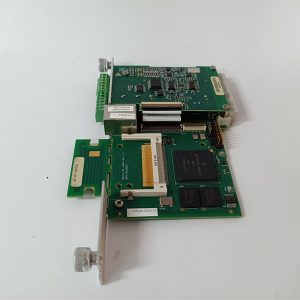
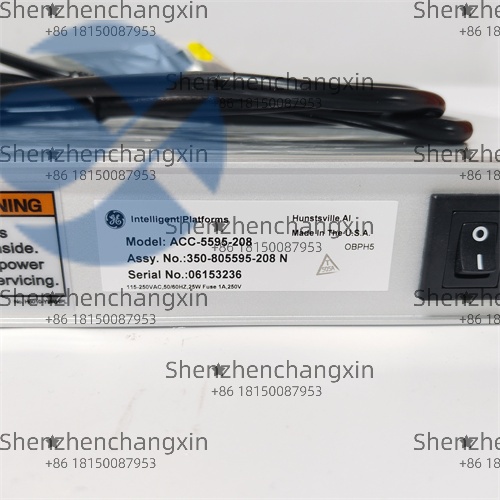
In high-end real-time systems, traditional Ethernet or serial communication often fails to meet the requirements of microsecond-level synchronization and zero packet loss. The VMIC ACC-5595-208 is designed to address this problem – it is a classic example of Reflective Memory technology.
“Reflective Memory” refers to a network of multiple computers, each equipped with a reflective memory card. All cards are connected via a fiber optic ring or star topology. When any node writes data to its local memory, that data is automatically and instantly “reflected” to the corresponding memory addresses of all other nodes, as if sharing a single physical memory. This entire process is performed by dedicated FPGA and ASIC chips, completely bypassing the CPU and operating system, thus providing extremely low latency, high determinism, and strong interference immunity.
The ACC-5595-208 is a high-end version in the VMIC series that supports 256 MB of memory capacity (“208” typically indicates 256MB), suitable for large simulation models or high-sampling-rate data acquisition scenarios.
⚠️ Note: Although some documentation may incorrectly label it as a “PCI” card, the ACC-5595 series is explicitly a VME bus product. Similar products with a PCI interface are typically named RFM55/RFM65 series (e.g., RFM55-208). Technical Specifications
Table
Item | Parameter
Manufacturer | VMIC (GE Fanuc Intelligent Platforms / Emerson)
Complete Model | ACC-5595-208 / 350-805595-208N
Bus Interface | VME64x (6U size, P0-P2 connectors)
Memory Capacity | 256 MB SDRAM
Fiber Optic Interface | ST or SC (multimode, 50/125 μm or 62.5/125 μm)
Transmission Rate | Up to 170 MB/s (full duplex)
Number of Nodes | Up to 256 nodes in a single ring
Transmission Distance | Up to 300 meters with multimode fiber (extendable with repeaters)
Data Latency | Typical < 500 nanoseconds (between nodes)
Operating System Support | VxWorks, Linux, Windows (driver required), QNX, etc.
Operating Temperature | 0°C to +60°C (commercial grade) or -40°C to +70°C (industrial grade, depending on version)
Certifications | CE, FCC, RoHS
Core Advantages and Application Scenarios
✅ Deterministic Real-Time Communication
Suitable for applications requiring extremely high time accuracy, such as flight simulators, hardware-in-the-loop (HIL) testing, power system transient simulation (RTDS), and radar signal processing.
✅ Simplified Software Architecture
Developers only need to read and write local memory addresses, eliminating the need to write complex network protocol stacks, significantly reducing software complexity and debugging difficulty.
✅ High-Reliability Topology
Supports dual-redundant fiber optic ring networks; a single fiber break does not affect system operation, meeting the high availability requirements of the military and energy industries.
✅ Cross-Platform Compatibility
Can be deployed in mixed systems with different backplanes such as VME, CompactPCI, and PXI (corresponding interface cards required), enabling heterogeneous system integration. Typical Application Industries:
Aerospace: Flight control simulation, avionics testing
Power Systems: Relay protection testing, power grid digital twin
Defense Electronics: Radar/sonar data fusion, electronic warfare systems
Industrial Automation: High-speed synchronous control (e.g., multi-axis robot collaboration)
Scientific Research: Particle accelerators, nuclear fusion experiment data acquisition
Installation and Configuration Key Points:
Topology Selection: Dual-ring redundancy configuration is recommended for improved reliability; single-ring is suitable for cost-sensitive scenarios.
Fiber Optic Connection Specifications: Use high-quality multimode fiber optics, avoid excessive bending; clean fiber end faces to prevent signal attenuation.
Drivers and API: Install the RFM API provided by VMIC (e.g., rfmapi.dll or Linux kernel module), supporting C/C++ programming.
Memory Mapping: Applications map the reflective memory area to user space via mmap() or driver interface for direct read and write access.
VME Slot Power Supply: Ensure the VME chassis provides sufficient +5V current (typical power consumption is approximately 10–15W).
Lifecycle and Procurement Recommendations:
Although VMIC reflective memory products have been discontinued for many years, a large number of systems are still in operation worldwide. The ACC-5595-208 is a high-demand model, and the following risks are common in the market:
Prevalence of Refurbished/Repaired Parts: Some suppliers sell repaired faulty cards as “new” products, with no guarantee of stability.
Firmware Mismatch: Different batches of firmware may lead to abnormal multi-card interconnection.
Lack of Test Reports: Modules that have not undergone actual fiber optic ring network stress testing may have hidden defects.
Professional Procurement Recommendations:
Prioritize suppliers who provide full-function test videos (including multi-node data consistency verification).
Require original labels, serial numbers, and power-on self-test (POST) logs.
It is recommended to purchase a quantity of main + backup + 1 to avoid future shortages and difficulties in system upgrades.
We (Shenzhen Changxin) have long focused on the supply and technical support of VMIC/GE reflective memory products. All ACC-5595-208 350-805595-208N modules undergo a 72-hour burn-in test and multi-node ring network stress test to ensure:
Fiber optic transceiver power meets specifications
256MB memory full address read/write without errors
Compatibility with mainstream VxWorks/Linux systems
12-month warranty and free technical consultation are provided to help you seamlessly integrate or replace your existing reflective memory system.
Technical Summary (English):
The VMIC ACC-5595-208 (350-805595-208N) is a high-performance 256MB reflective memory board for VME64x systems, enabling deterministic, low-latency (<500 ns) data sharing across multiple nodes via fiber optic links. Ideal for real-time simulation, HIL testing, and mission-critical control applications, it provides hardware-level memory mirroring without OS overhead. Fully tested and backed by a 12-month warranty.
Contact us today for genuine stock, compatibility verification, or legacy system support!