WhatsApp:+86 18005022363 WeChat: +86 18005022363
  Email:
Description
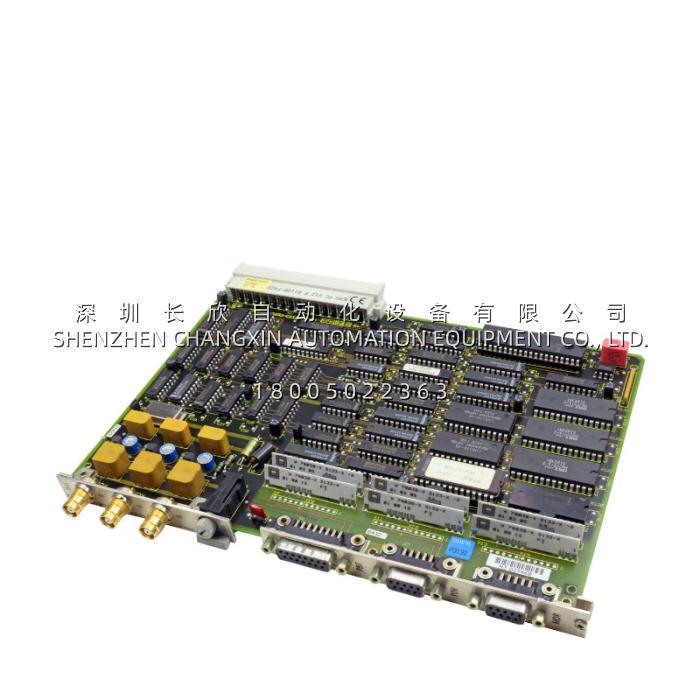
Technical Specifications
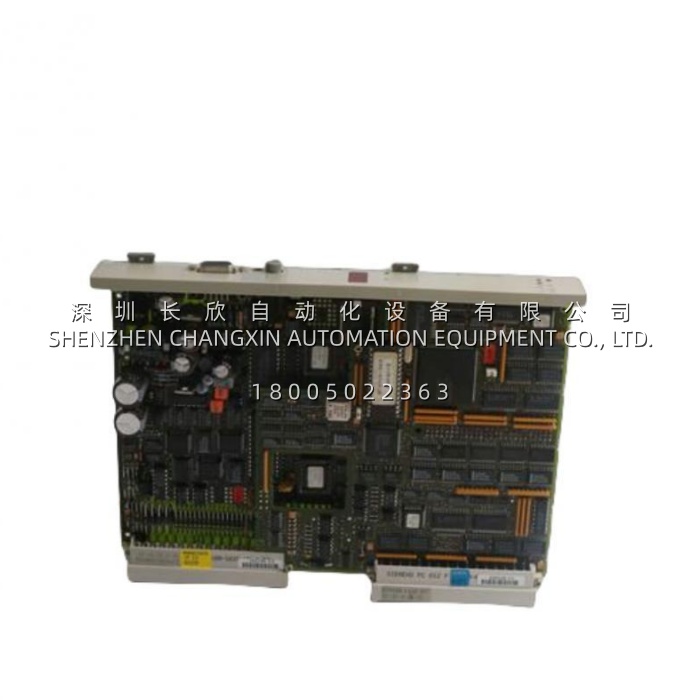
| Product Model | 6DS1315-8AC |
|---|---|
| Manufacturer | Siemens |
| Product Type | Voter 1 I/O Bus Module (DCS Redundancy / Voting) |
| Supply Voltage | 24 V DC (±20%) |
| Operating Temperature | –25 °C … +60 °C |
| Protection Class | IP20 (cabinet installation) |
| Power Consumption | ≤ 2.5 W (typical) |
| Mounting | 6DS rack, backplane bus interface |
| Dimensions (approx.) | 203 × 25 × 102 mm |
| Weight (approx.) | 0.30 kg |
| Status Indication | LEDs: Run / Fault / Com / Vote |
| Isolation | Channel ↔ Backplane, galvanic |
| Bus Interface | 6DS internal I/O backplane bus (proprietary) |
Main Features and Advantages
The 6DS1315-8AC is engineered around one non-negotiable requirement: when three redundant CPU lanes drive the same process loop, the voting layer must never become the weak link. Siemens achieves this by building the 6DS1 315-8AC on a fully duplicated internal datapath with hardware-level comparison latches that execute the 2oo3 or 2oo2 vote in bus-cycle time, well ahead of the next I/O scan. Because the vote is resolved on the module itself rather than in software, a CPU lane that drifts, freezes, or produces a corrupted bitstream is transparently masked by the 6DS1315-8AC while the remaining healthy lanes carry the loop—no controller reconfiguration, no forced manual override, no spurious trip.Diagnostic transparency is another differentiator. The front-panel LEDs on the 6DS1315-8AC expose four distinct health axes—run state, voter-fault flag, backplane communication, and active vote configuration—so a maintenance technician walking the rack can tell at a glance whether Voter 1, Voter 2, or one of the three CPU buses is the offender. This matters during outage windows where every minute of diagnostics time translates into deferred MW or barrel throughput. The module’s channel-to-backplane isolation further contains any surge or ground-loop event to the rack level rather than letting it cascade into the field I/O layers.From a lifecycle standpoint the 6DS1315-8AC benefits from the 6DS platform’s long-term availability philosophy: the card is mechanically and electrically pinned to the 6DS backplane standard, meaning it drops into existing Teleperm M and SPPA-T3000 racks without re-wiring, re-termination, or firmware migration—critical when a plant is running a 15- to 25-year DCS asset and needs like-for-like sparing rather than a full retrofit. When sourced as a tested surplus or refurbished unit with functional verification, the 6DS1315-8AC restores voter-pair redundancy at a fraction of the lead time and cost of a new-old-stock hunt through obsolete channels.
Application Field
The 6DS1315-8AC lives exclusively inside Siemens 6DS-based DCS racks deployed in industries where process continuity and protection-system integrity are both non-negotiable. The most visible footprint is in power generation: SPPA-T3000 turbine control panels for combined-cycle, coal, and nuclear auxiliary systems routinely specify voter pairs across their I/O racks so that the trip/reclose logic, servo positioning loops, and protection interlocks survive a single CPU or bus failure without operator intervention. In these applications the 6DS1315-8AC typically works in tandem with its Voter 2 counterpart and three 6DS CPUs to close the TMR loop.Beyond power, the module sees deployment in large-scale petrochemical and refining DCS clusters—especially FCCU, hydrocracker, and reformer trains where Siemens Teleperm M was widely adopted in the 1990s–2000s and remains in service today under life-extension programs. Here the 6DS1315-8AC protects analog and discrete I/O buses feeding burner-management, ESD tie-ins, and compressor anti-surge loops. Metallurgical and cement plants with long-running Teleperm M installations also use the card wherever the original rack design called for a voter pair.A secondary but important application niche is DCS obsolescence management: system integrators and spare-part specialists routinely stock the 6DS1315-8AC as a strategic sparing item because the 6DS series is now largely out-of-commercial-production. When a Voter 1 card drifts out of spec or fails diagnostics, having a verified-replacement 6DS1315-8AC on the shelf avoids a forced rack migration that could otherwise cost six to seven figures in engineering and downtime. In all of these contexts the module’s value proposition is consistency—drop-in, vote-correct, no re-certification required.