WhatsApp:+86 18005022363 WeChat: +86 18005022363
  Email:
Description
Technical Specifications
| Parameter Name | Parameter Value |
|---|---|
| Product Model | 1746-WS |
| Manufacturer | Hardy Instruments / Rockwell Automation (Allen-Bradley) |
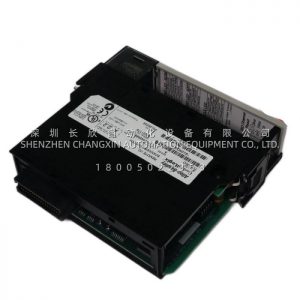
| Product Type | Microprocessor-Based Weight Scale Input Module |
| Compatible Platform | Allen-Bradley SLC 500 Programmable Controller |
| Number of Channels | 2 independent weighing channels |
| Input Signal Type | Strain-gauge / load-cell mV/V signal |
| Full-Scale Input | 2 mV/V |
| Input Resistance | 5 kΩ |
| Analog-to-Digital Conversion | 16-bit ADC |
| Sampling Rate | 10 samples per second |
| Power Supply | 120/240 V AC, 50/60 Hz |
| Isolation | 1500 V DC between field and logic sides |
| Calibration | Onboard microprocessor; calibration data stored in module |
| Signal Processing | Programmable digital filtering, auto-zero, tare |
| Communication | SLC 500 backplane (proprietary) |
| Mounting | SLC 500 chassis slot |
| Terminal Type | Screw terminals, 14–22 AWG field wiring |
| Enclosure Rating | IP20 (indoor cabinet installation) |
| Operating Temperature | 0°C to +60°C |
| Storage Temperature | -40°C to +85°C |
| Relative Humidity | 5% to 95% RH, non-condensing |
| Hot-Swappable | Yes (module can be replaced without chassis power-down) |
| Status Indication | Front-panel LEDs: power, calibration status, signal health |
| Physical Dimensions | Standard SLC 500 single-slot module |
| Country of Origin | USA |
| Lifecycle Status | Legacy / discontinued; available as new surplus or tested take-out |
Main Features and Advantages
Microprocessor-based local signal processing: The standout capability of the 1746-WS is its onboard microprocessor, which performs all signal conditioning, filtering, and scaling locally rather than burdening the SLC 500 CPU. Load-cell signals are notoriously susceptible to mechanical vibration, electrical noise, and thermal drift; the 1746-WS samples at 10 Hz through a 16-bit ADC and applies programmable digital filtering to produce a stable weight value. This allows the SLC 500 to read a clean, scaled weight directly from the module’s data table without dedicating scan time to filtering or scaling math—a significant advantage in high-speed batching applications where the CPU is already occupied with sequencing logic.Dual-channel independent weighing: The 1746-WS supports two completely independent weighing channels on a single SLC 500 slot, effectively providing two dedicated scale inputs for the price and chassis space of one module. Each channel can be calibrated independently with its own zero, span, and filtering parameters. This makes the 1746-WS ideal for applications requiring simultaneous weighing of two ingredients, or separate gross and tare weighments. For machine builders working within the tight chassis-space constraints of the SLC 500 platform, this dual-channel density is a major advantage.Onboard calibration with persistent memory: Unlike passive analog input modules that require the PLC program to store and apply calibration factors, the 1746-WS stores all calibration data internally in non-volatile memory. Zero and span calibration is performed at the module level and survives power cycles without requiring the SLC 500 program to reload calibration constants. The front-panel status indicators provide immediate visual confirmation of calibration status and signal health, allowing maintenance technicians to distinguish between a failed load cell, a broken signal cable, and a module fault without specialized test equipment.Hot-swappable design for minimal downtime: The 1746-WS can be removed and replaced without powering down the SLC 500 chassis. In continuous-process applications where a planned shutdown is difficult to schedule, this hot-swap capability allows a faulty module to be swapped during normal operation, with the SLC 500 automatically recognizing the replacement and resuming normal weighing within seconds. This single feature can mean the difference between a 30-minute maintenance window and an unplanned production halt.