WhatsApp:+86 18150087953 WeChat: +86 18150087953
  Email:
Description

Application Scenarios
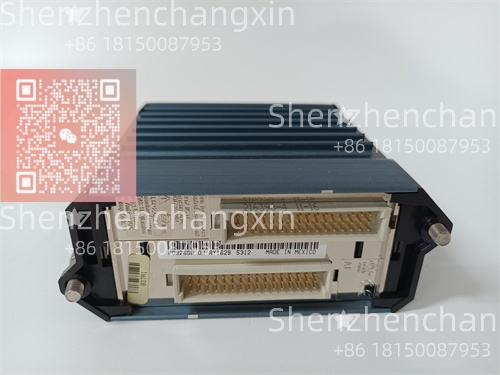
In a chemical plant’s batch reactor system, the automated sequence must precisely open and close numerous valves to control ingredient feed, cooling, and product transfer. A command from the control logic to “open the cooling water valve” is a digital signal. The FOXBORO FBM232 P0926GW module is the component that executes this command. When the controller sends the command, the specific channel on the FBM232 activates, switching 24V DC power to the solenoid on the pneumatic valve actuator, causing it to open. The module’s 16 channels can independently control multiple such devices. Its reliability is paramount; a single channel failure could prevent a critical valve from operating, leading to a runaway reaction or production halt. The FBM232 directly solves the pain point of reliably and safely converting control logic into physical action in the plant.
Technical Principles and Innovative Values
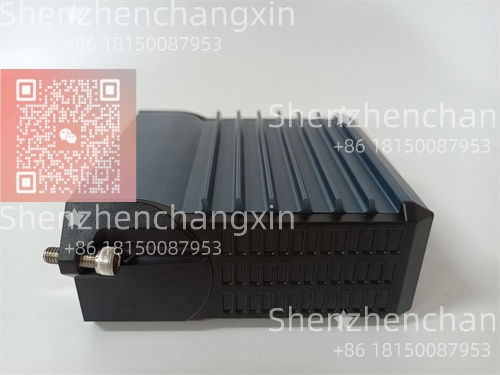
Innovation Point 1: High-Density, Reliable Solid-State Switching. The FBM232 P0926GW consolidates 16 individually controlled output channels into a single, modular package, optimizing control cabinet space. It utilizes solid-state switching elements (like triacs or transistors) rather than electromechanical relays. This provides faster switching speeds, silent operation, and a dramatically longer lifespan due to no moving parts or contact wear, which is critical for applications with frequent cycling. The high density reduces wiring complexity and system footprint.
Innovation Point 2: Comprehensive Electrical Isolation for Safety and Integrity. The module incorporates robust electrical isolation between the control side (connected to the sensitive DCS) and the field side (connected to inductive loads like solenoids). This isolation protects the control system from voltage spikes, noise, and potential faults originating in the harsh plant environment. Channel-to-channel isolation also prevents a fault on one output from affecting adjacent channels, ensuring fault containment and system availability.
Innovation Point 3: Integrated Diagnostics for Predictive Maintenance. The module features intelligent diagnostics that monitor the health of each output channel and the module itself. It can detect conditions such as open load (wire break), short circuit, and overload. These faults are reported back to the control processor and can be displayed on the operator’s console, alerting maintenance personnel to issues before they cause a process failure. This transforms maintenance from reactive (fixing a broken valve) to predictive (replacing a frayed wire), increasing overall plant reliability.
Application Cases and Industry Value
Case 1: Water Treatment Plant Disinfection System. A municipal water treatment plant uses chlorine for disinfection. The precise control of multiple chlorine feed pump starters and valve actuators is critical for safety and dosage accuracy. The plant’s control system, based on Foxboro I/A Series, uses FBM232 P0926GW modules to control these devices. The solid-state reliability of the modules ensures millions of cycles without failure. When a pump failed to start, the module’s diagnostic immediately flagged an “open load” condition on that specific channel, guiding electricians directly to a corroded connection in the field. This quick diagnosis minimized downtime and prevented a potential compliance issue with water quality, showcasing the value of detailed diagnostics.
Case 2: Automotive Manufacturing Paint Shop Ventilation. In a paint booth, large ventilation fans must be staged on and off based on solvent vapor detection to maintain a safe atmosphere. The sequencing logic runs on a Foxboro controller, with FBM232 modules controlling the high-current contactors for the fan motors. The high-density design allowed 16 fan motors to be controlled from a single, compact module, saving significant panel space. The robustness of the solid-state outputs handled the inductive inrush currents of the contactor coils without issue. The plant engineer noted that since upgrading to these modules, they had zero module failures over five years, a significant improvement over the previous relay-based system which required frequent contact replacements.