WhatsApp:+86 18005022363 WeChat: +86 18005022363
  Email:
Description
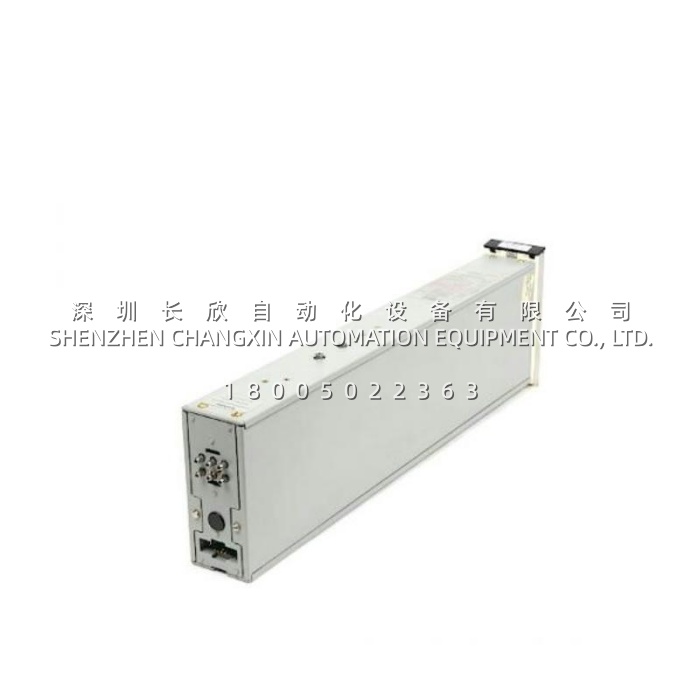
Technical Specifications
| Parameter Name | Parameter Value |
|---|---|
| Product Model | Foxboro 130M-N5 |
| Manufacturer | Foxboro (now part of Schneider Electric) |
| Product Type | Pneumatic Indicating PID Controller |
| Series | Consotrol 130 Series |
| Control Action | Proportional + Reset (Integral) + Rate (Derivative) — full PID |
| Action Direction | Field reversible, direct or reverse |
| Input Signal (Measurement) | 3–15 psi (20–100 kPa / 0.2–1.0 bar) |
| Output Signal | 3–15 psi (20–100 kPa / 0.2–1.0 bar) |
| Set-Point Signal | 3–15 psi — manual set-point adjustment on 130M |
| Air Supply Pressure | 20 psi nominal (140 kPa); typical range 20–22 psi / 140–150 kPa |
| Air Consumption | 0.5 m³/h (0.3 scfm) in automatic; 1.0 m³/h (0.6 scfm) in manual; add 0.08 m³/h with derivative |
| Proportional Band | 5 % to 500 % adjustable (narrow-band, N suffix) |
| Reset (Integral) Time | 0.01 to 50 minutes per repeat |
| Derivative (Rate) Time | 0.01 to 50 minutes (some variants 0.05 to 10 minutes) |
| Display | Vertical transparent ribbon scale with large coloured pointers — PV and set point |
| Auto/Manual Transfer | Integral balancing method — fully balanceless and bumpless, set point preserved |
| Control Unit Construction | Force-balance module with metal bellows and flexure-suspended mechanism |
| Serviceability | Automatic and manual control units independently removable without process disturbance |
| Mounting | Flush panel mounting in Foxboro 101/102 series shelf, up to 10 instruments per shelf |
| Air Connections | Made automatically when the controller is seated in the shelf; 1/4 NPT tapped connections |
| Ambient Temperature Limits | -20 °C to +65 °C (0 °F to +150 °F) |
| Dimensions | Approx. 200 × 150 × 100 mm case |
| Weight | Approx. 3–14 kg depending on configuration and case variant |
| Power Requirement | None — pure pneumatic operation, no electrical supply |
| Certifications | CE, CSA; hazardous-area options available depending on configuration |
| Lifecycle Status | Discontinued by manufacturer — available as new-old-stock, surplus or refurbished tested units |
Main Features and Advantages
Full PID regulation with nothing to burn out: The Foxboro 130M-N5 delivers proportional, integral and derivative action through metal bellows, flexures, tanks and a nozzle-flapper relay. There is no microprocessor to crash, no capacitor to dry out, no firmware to obsolesce and no electrical supply to lose. In an environment where a lightning strike, a welding set or a failed switch-mode supply would silence an electronic controller, the Foxboro 130M-N5 simply keeps computing — which is precisely why so many plants retained pneumatic loops as fail-safe fallback layers after their DCS migration.Intrinsic safety without certification paperwork: Because the Foxboro 130M-N5 contains no electrical energy of any kind, it cannot produce a spark or a hot surface. In classified areas — around crude tanks, gas compression, solvent unloading or any Zone 1 / Division 1 location — that removes the need for purged enclosures, intrinsic-safety barriers and the associated inspection burden. Energy is instrument air at 20 psi, and the only medium leaving the device is more instrument air.Bumpless transfer that protects the process: The 130 Series uses the Foxboro “integral balancing” method for auto/manual transfer. When an operator switches from manual back to automatic, the Foxboro 130M-N5 responds at the reset rate to eliminate any residual error rather than snapping the output, so there is no bump to the process and no upset to a neighbouring loop. Critically, the set point is preserved through the transfer, which removes a common source of operator error during startups and upset recovery.Serviceable under power, without disturbing the loop: The automatic and manual control units of the Foxboro 130M-N5 are physically independent. Either can be slid out of the shelf for service while the other continues to control the process, and the integral air header with per-instrument shut-off valves means no tubing has to be disconnected. For a continuous process where an unplanned shutdown costs far more than the instrument, this is the single most valuable design feature in the entire platform.Readability that set the industry benchmark: A large, vividly coloured pointer travels behind a transparent vertical ribbon scale, giving the operator continuous full-span indication of the measured variable, a direct visual read of deviation from set point, and scale changes that require no tools. Control-room operators could read a panel of these instruments from across the room — a genuinely ergonomic advantage that later digital faceplates did not always match.