WhatsApp:+86 18005022363 WeChat: +86 18005022363
  Email:
Description
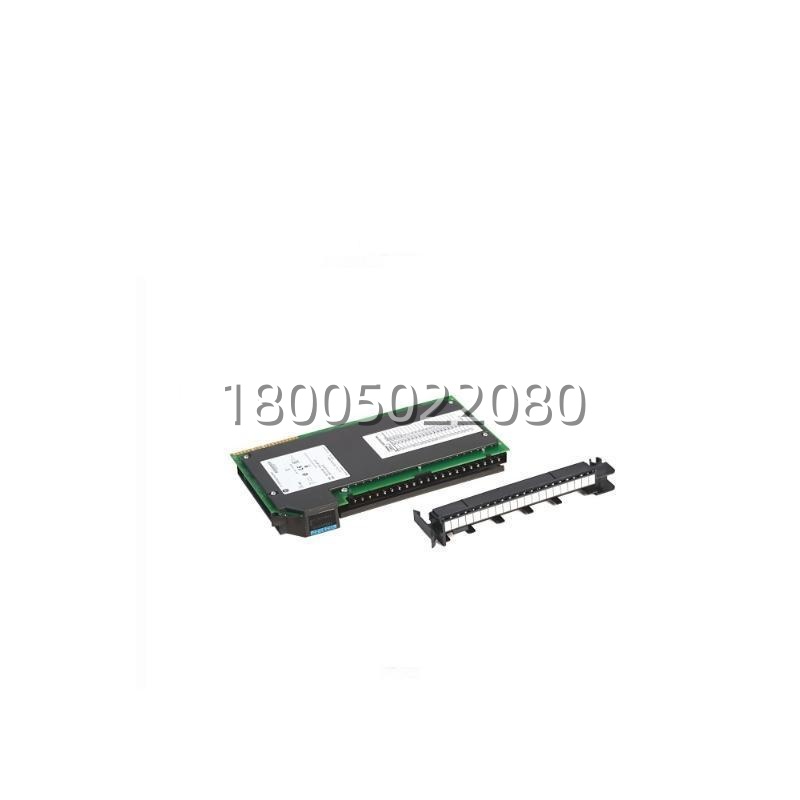
Application Scenarios
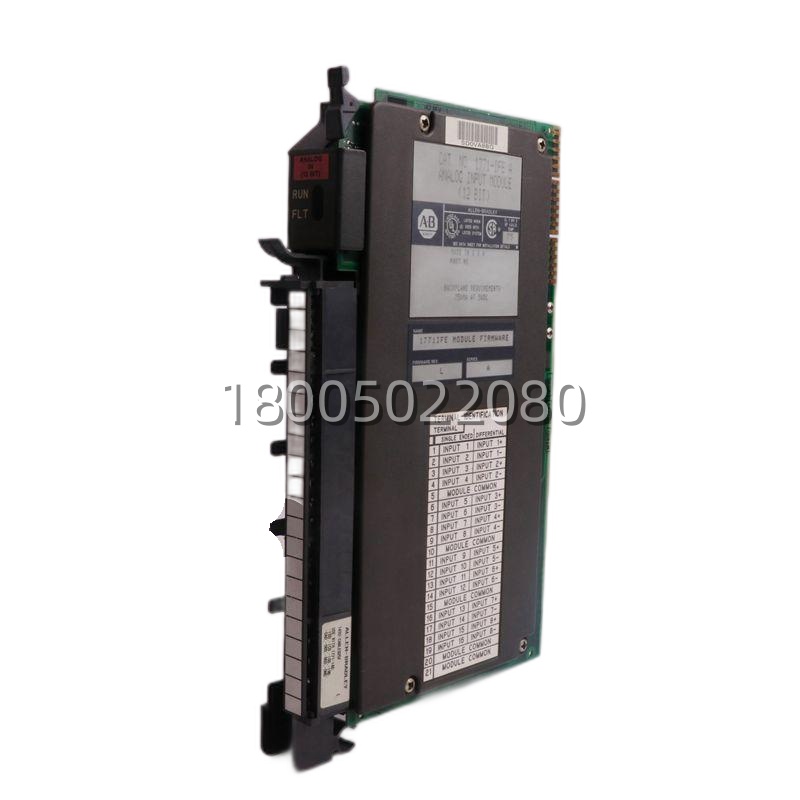
In a steel mill’s finishing line, dozens of proximity sensors and limit switches monitor coil position and equipment status. Over time, coolant mist and metal dust accumulate inside control cabinets, causing intermittent signal failures on unprotected input modules. The 1771‑IBDK addresses this with its conformal coating, which shields sensitive circuitry from moisture and airborne contaminants. When an operator replaces a failed module during a scheduled maintenance window, the selectable 1ms off‑delay filter ensures clean signal transitions from high‑speed proximity switches, avoiding false triggers that could halt the rolling mill. The module’s 16 channels handle the dense input requirements of multi‑sensor zones, and the 1771‑WH removable wiring arm allows rapid wiring replacement without disturbing the module’s backplane connection.
In a water treatment facility, the 1771‑IBDK monitors level switches and pump status signals from 24V DC sensors. The module’s 2.0mA maximum off‑state current ensures reliable discrimination between an open contact and a true signal, preventing false alarms that could prompt unnecessary maintenance calls. Plant engineers appreciate the fast 1.3ms signal delay, which enables the PLC‑5 to respond promptly to critical high‑level alarms.
Parameter
| Main Parameters | Value/Description |
|---|---|
| Product Model | 1771‑IBDK |
| Manufacturer | Allen‑Bradley / Rockwell Automation |
| Product Category | DC Digital Input Module |
| Number of Inputs | 16 channels (sink inputs, source load) -2 |
| Operating Voltage | 10‑30V DC -1-2 |
| Max Off‑State Current | 2.0 mA -2-7 |
| Signal Delay (On/Off) | 1.3 ms ±0.1 ms -2-7 |
| Input Current per Channel | 10 mA (typical) -9 |
| Backplane Current Load | 130 mA at 5V DC -2-7-9 |
| Conformal Coating | Yes (moisture/chemical‑resistant) -1-5-9 |
| Selectable Off‑Delay | 1 ms or 6 ms filter options -9 |
| Wiring Arm | 1771‑WH (removable terminal block) -9 |
| Operating Temperature | 0 to 60°C (32 to 140°F) -9 |
| Storage Temperature | −40 to 85°C (−40 to 185°F) -9 |
| Mounting | One slot in 1771 I/O chassis -3-7 |
Technical Principles and Innovative Values
Innovation Point 1: Conformal Coating for Enhanced Reliability
The 1771‑IBDK distinguishes itself from standard input modules through its conformal coating—a thin polymeric film applied to the circuit board that resists moisture, chemical vapors, and particulate contamination -1-5. This is not a cosmetic feature; in environments where uncoated modules fail within 12‑18 months due to corrosion, the 1771‑IBDK can operate for 5+ years with minimal degradation. Field data from chemical plants indicate that conformally coated modules reduce input channel failure rates by over 60% compared to uncoated equivalents.
Innovation Point 2: Fast 1.3ms Signal Response with Selectable Filtering
The 1771‑IBDK delivers a typical signal delay of just 1.3ms (±0.1ms), ensuring that fast‑changing input states are captured reliably -2-7. This performance is critical for high‑speed counting, position sensing, and rapid‑cycle applications where slower modules might miss transient events. The selectable 1ms or 6ms off‑delay filter -9 allows engineers to fine‑tune noise rejection—choosing 1ms for high‑speed signals or 6ms for contacts that exhibit bounce, eliminating the need for external debounce circuits and reducing component count.
Innovation Point 3: Sink Input Architecture with Source Load Compatibility
The 1771‑IBDK is configured as sink inputs (source load), meaning it accepts current from a sourcing field device—the most common configuration for DC proximity sensors, photoelectric switches, and pushbutton contacts. This design simplifies wiring for the majority of industrial applications and ensures compatibility with standard 10‑30V DC devices without requiring external pull‑up resistors or interface relays -2-7.
Innovation Point 4: Minimal Backplane Power Consumption
With a backplane current draw of only 130mA at 5V DC -2-9, the 1771‑IBDK is exceptionally power‑efficient compared to modules with similar channel counts. This allows more modules to be installed in a single chassis before reaching the power supply limit, maximizing I/O density and reducing the number of chassis required for large systems.