WhatsApp:+86 18005022363 WeChat: +86 18005022363
  Email:
Description
Application Scenarios
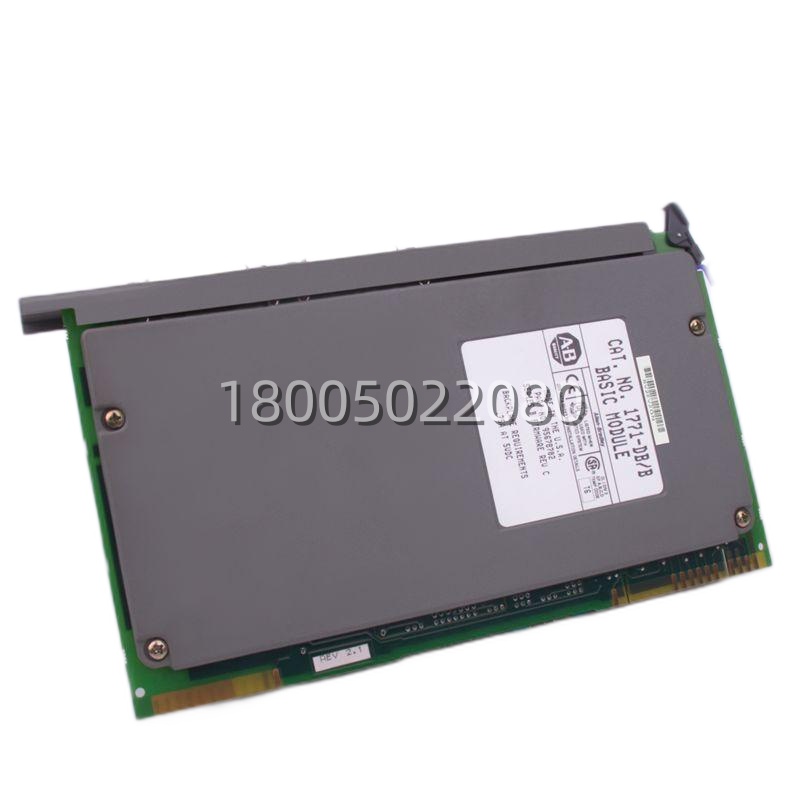
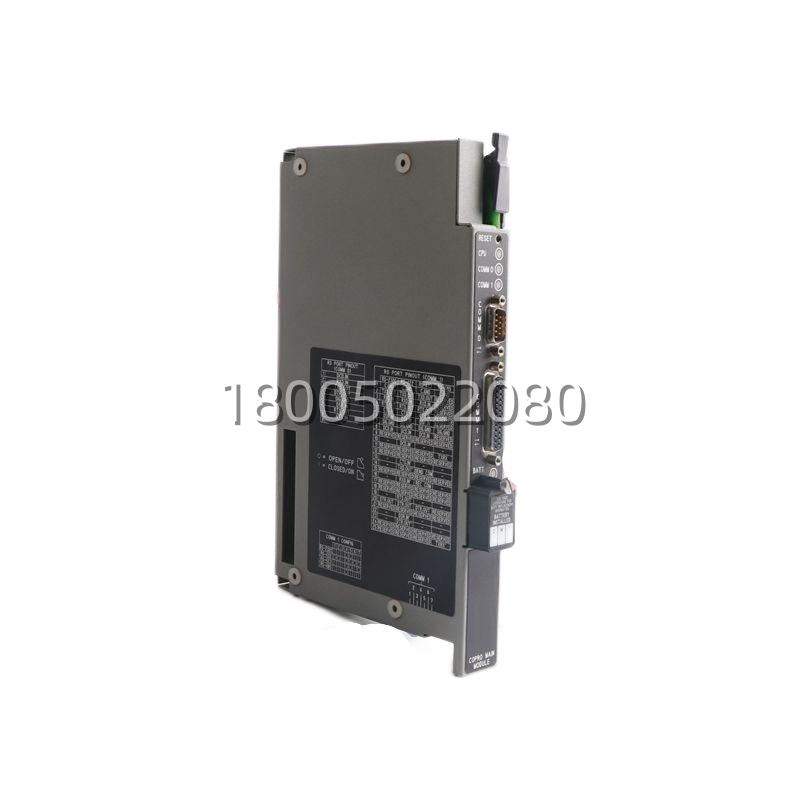
Consider a legacy batch-processing plant running a PLC-5/40 controller that needs to generate formatted shift reports, log setpoint deviations to a line printer, and communicate weight data to a third-party barcode-labeling system via ASCII protocol—none of which can be efficiently coded in ladder logic. The maintenance engineer adds a 1771-DB BASIC Module to an open slot in the existing 1771 rack. Through block-transfer write/read instructions, the PLC-5 passes batch totals and alarm codes to the 1771-DB‘s input/output image table; the BASIC program formats the data, appends timestamps from the module’s real-time clock, and prints a human-readable report while simultaneously sending the record out Port 2 (RS-232) to the label printer. All of this runs asynchronously to the PLC scan, imposing zero burden on the control program. The 1771-DB solves the classic legacy-system pain point: extending a mature PLC-5 installation with sophisticated math, reporting, and serial-device interfacing without replacing the entire control architecture or rewriting the core process logic.
Parameter
| Main Parameters | Value / Description |
|---|---|
| Product Model | 1771-DB (Series B / Series A compatible) |
| Manufacturer | Allen-Bradley (Rockwell Automation) |
| Product Category | PLC-2 / PLC-5 BASIC Language Co-Processor Module for 1771 I/O Chassis |
| User Program Memory | Series B: 24 KB battery-backed CMOS RAM; Series A: 13 KB RAM |
| Non-Volatile Storage | Optional 1771-DBMEM1 EEPROM cartridge (8 KB / 32 KB) or user EPROM (Series B socket) |
| Serial Ports | 2 × 9-pin D-shell (PRT1, PRT2); independently configurable for RS-232C, RS-422, RS-485; baud 110–19,200 bps |
| Supported Protocols | DF1 (Full/Half Duplex), DH-485 (network or point-to-point), ASCII, Modbus RTU (via user BASIC code) |
| Block Transfer Mode | 8-bit or 16-bit image-table mode; reads/writes PLC-5 data table via BTW/BTR instructions |
| Backplane Current Draw | 750 mA max @ 5 V DC (typical 700 mA) |
| Battery Backup | 3 V lithium coin cell (or 1771-BA equivalent) for RAM retention & RTC; >5 years typical life |
| Operating Temp / Humidity | 0 °C to +60 °C (32–140 °F); 5–95% RH non-condensing (IEC 61131-2) |
| Keying / Slot Requirement | Occupies 1 slot in any 1771 I/O chassis; keying between pins 12–14, 26–28 for proper alignment |
| Mounting Method | 1771 chassis backplane (requires 1771-AxB frame with compatible power supply, e.g. 1771-P4S/P6S) |
| Dimensions (H×W×D) | Approx. 330 × 51 × 178 mm (13″ × 2″ × 7″) — standard 1771 single-width module |
| Certifications | UL Listed, cULus, CE Marked, FM approved (Class I Div 2 Groups A-D) |
Technical Principles and Innovative Values
- Innovation Point 1 – Asynchronous BASIC Co-Processing Independent of PLC Scan: The 1771-DB runs a full interpreted BASIC environment (Microsoft BASIC derivative) on its own Z80-family microprocessor. It exchanges data with the PLC-5 host via Block Transfer Write (BTW) and Block Transfer Read (BTR) instructions mapped to its 16-word input/output image table. Because it executes independently, computationally intensive tasks—such as floating-point statistical analysis, multi-variable PID-like calculations, or string parsing—never impact the determinism of the main control program.
- Innovation Point 2 – Dual Independently Configurable Serial Communications Ports: Both PRT1 and PRT2 on the 1771-DB can be set to different protocols, baud rates, and electrical interfaces. A common deployment uses PRT1 for a local VT100 terminal or printer (ASCII) and PRT2 for a modem, barcode reader, or weigh scale (DF1/ASCII). The Series B adds dedicated TX/RX LEDs per port for rapid field diagnosis—a significant advantage over single-port modules.
- Innovation Point 3 – Turbo Execution & Expanded Memory (Series B): The 1771-DB/B executes BASIC programs up to 4× faster than the Series A and provides 24 KB of user RAM versus 13 KB. It also introduces ONERR structured error trapping, floating-point number compatibility with PLC-5 processors, DH-485 network participation, and EEPROM in-circuit programming—features that extend the useful life of legacy installations well beyond what was originally envisioned.
- Innovation Point 4 – Flexible Data Exchange via Block Transfer with Status Bits: The 1771-DB supports both 8-point (8-bit I/O image) and 16-point (16-bit I/O image with comm-status bits 10–17) block-transfer modes. The module’s
CALLsystem functions allow direct read/write of PLC-5 data-table files by file number and element offset, enabling dynamic recipe downloading, alarm-text assembly, or historical data buffering entirely in BASIC—freeing ladder logic from string manipulation duties it was never designed to handle.
Application Cases and Industry Value
Case 1 – Petrochemical Tank Farm Batch Reporting & Label Printing:A Gulf Coast terminal still running PLC-5/30 processors needed to auto-print custody-transfer tickets showing product ID, gross/net volume, API gravity, and timestamp. The site installed a 1771-DB/B in the local 1771-A2B 8-slot rack. The PLC-5 passed measured values via BTR/BTW to the BASIC module’s image table every completed batch. The 1771-DB formatted the ticket using BASIC PRINT USINGstatements, added a date/time stamp from its onboard clock, and output to a dot-matrix line printer on PRT1 while simultaneously echoing the record to a remote terminal server on PRT2 (RS-485, DF1). The solution required zero changes to the validated PLC-5 ladder code and eliminated manual ticket transcription, reducing data-entry errors to near zero.Case 2 – Food Ingredient Weighing System – ASCII Scale Interface:A baker’s ingredient micro-dosing station used an older digital weigh scale that communicated only via RS-232 ASCII sentences (+0012.45 kg CR LF). Rather than adding a costly third-party gateway, the integrator placed a 1771-DB in the PLC-5 rack. The BASIC program opened PRT2 at 9600,N,8,1, captured incoming lines with INPUT#2, parsed the numeric value using VAL()and MID$(), applied a linear calibration offset, and wrote the result to the module’s output image table for the PLC-5 to read via BTR. A simple ONERRtrap handled checksum mismatches. This allowed the legacy PLC-5 to seamlessly integrate a modern weighing peripheral at a fraction of the cost of a new control system.
Related Product Combination Solutions
- 1771-DBMEM1 / 1771-DBMEM2 – EEPROM memory module (8 KB / 32 KB); plugs into the 1771-DB to store non-volatile BASIC programs and retentive data—recommended for all production deployments.
- 1771-P4S / 1771-P6S – 120 V AC / 220 V AC power supply for 1771 chassis; supplies the 5 V DC backplane current required by the 1771-DB (≈750 mA @ 5 V).
- 1771-A2B / 1771-A4B – 8-slot or 16-slot 1771 I/O chassis; the 1771-DB must be installed in a powered 1771 frame with proper keying and terminating resistor (if Remote I/O adapter present).
- 1785-L40E / 1785-L80B – PLC-5 processors (any 1785 series); the 1771-DB communicates with these hosts via BTR/BTW block-transfer instructions—compatible with all PLC-5 firmware revisions supporting block transfer.
- 1771-OFE1 / 1771-IFE – Analog I/O modules often used in the same rack; while the 1771-DB handles math/reporting, these acquire/command analog process values for the PLC-5.
- 1784-CP10 / 1784-U2DHP – Programming cables/adapters; used to connect a PC running RSLogix 5 or a terminal emulator to the PLC-5 DH+ network or directly to the 1771-DB serial port for BASIC program development.
- 1771-BA – 3 V lithium backup battery for 1771-DB RAM retention and real-time clock; should be replaced per site PM schedule.
.jpg)