WhatsApp:+86 18005022363 WeChat: +86 18005022363
  Email:
Description
Technical Specifications
| Parameter Name | Parameter Value |
|---|---|
| Product Model | 1734-IE2C |
| Manufacturer | Allen-Bradley / Rockwell Automation |
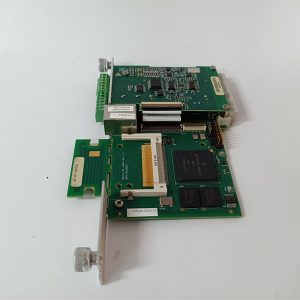
| Product Type | Analog Current Input Module (POINT I/O) |
| Number of Inputs | 2 channels, single-ended, non-isolated |
| Input Signal Range | 4–20 mA or 0–20 mA (user configurable per channel) |
| Resolution | 16 bits over 0…21 mA (0.32 µA per count) |
| Absolute Accuracy | ±0.1% full scale @ 25 °C; drift 30 ppm/°C |
| Conversion Type | Delta-Sigma, factory calibrated |
| Notch Filter / Update Rate | 50/60/250/500 Hz; 120/100/24/12 ms module update |
| POINTBus Current | 75 mA @ 5V DC |
| Field Power Supply | 10–28.8V DC (24V DC nominal), approx. 10 mA |
| Power Dissipation | 0.6 W max @ 28.8V DC (2.0 BTU/hr) |
| Data Format | 16-bit signed integer, unipolar |
| Isolation Voltage | 50V continuous channel-to-backplane; tested 2550V DC for 60 s |
| Keyswitch Position | 3 |
| Terminal Base Compatibility | 1734-TB, 1734-TBS, 1734-TOP, 1734-TOPS |
| Wire Size | 22–14 AWG solid or stranded shielded copper, ≥75 °C rated |
| Dimensions (H×W×D) | 56 × 12 × 75.5 mm (2.2 × 0.47 × 2.97 in.) |
| Weight | Approx. 33–36 g |
| Operating Temperature | −20 °C to +55 °C (storage −40 °C to +85 °C) |
| Humidity / Enclosure | 5–95% non-condensing; open-style, DIN rail mount |
| Communication | EtherNet/IP, ControlNet, DeviceNet via POINT I/O adapter |
| Certifications | UL, CE, ATEX, IECEx, KC, CCC, UKCA, RoHS |
Main Features and Advantages
Measurement precision with flexible signal handling: the 1734-IE2C resolves current input to 16 bits across a 0…21 mA span, which translates to roughly 0.32 µA per count — fine enough to detect small process deviations that coarser 12-bit modules simply cannot see. Each channel is independently configurable for 4–20 mA or 0–20 mA operation, so a single module can serve a mix of modern smart transmitters and legacy zero-based devices. The factory calibration eliminates the time-consuming field calibration step, and the 30 ppm/°C drift coefficient means readings stay trustworthy as cabinet temperature rises during summer production peaks.Noise rejection tuned to your environment: one of the most practical strengths of the 1734-IE2C is its selectable notch filter. Plants running on 50 Hz mains can switch away from the 60 Hz default and immediately suppress hum picked up along long cable runs, while high-speed packaging or test-stand applications can move to 250 Hz or 500 Hz to cut module update time from 100 ms down to 24 ms or 12 ms. This configurability lets one catalog number serve both slow process loops and fast machine sequences.Diagnostic depth at the channel level: the 1734-IE2C reports far more than a raw number. Every channel carries a status byte exposing Fault, Calibration, Low Alarm, High Alarm, Low-Low Alarm, High-High Alarm, Underrange and Overrange conditions, so a drifting transmitter or a broken loop can be caught before it becomes a quality incident. Alarm limits default to 3113 / 16547 / 2867 / 16793 counts and can be latched to capture transient events that would otherwise disappear between scans. Front-panel LEDs for module status, network status and each input give technicians instant visual confirmation during troubleshooting.Engineered for uptime and panel density: at only 12 mm wide, the Allen-Bradley 1734-IE2C lets system builders pack many analog points into a single cabinet segment without thermal derating, whether mounted horizontally or vertically. RIUP allows the module to be swapped while the backplane stays energized, and ADR automatically configures a replacement module from the controller, which turns a hardware failure into a minutes-long event rather than a shift-long outage.