WhatsApp:+86 18005022363 WeChat: +86 18005022363
  Email:
Description
Application Scenarios
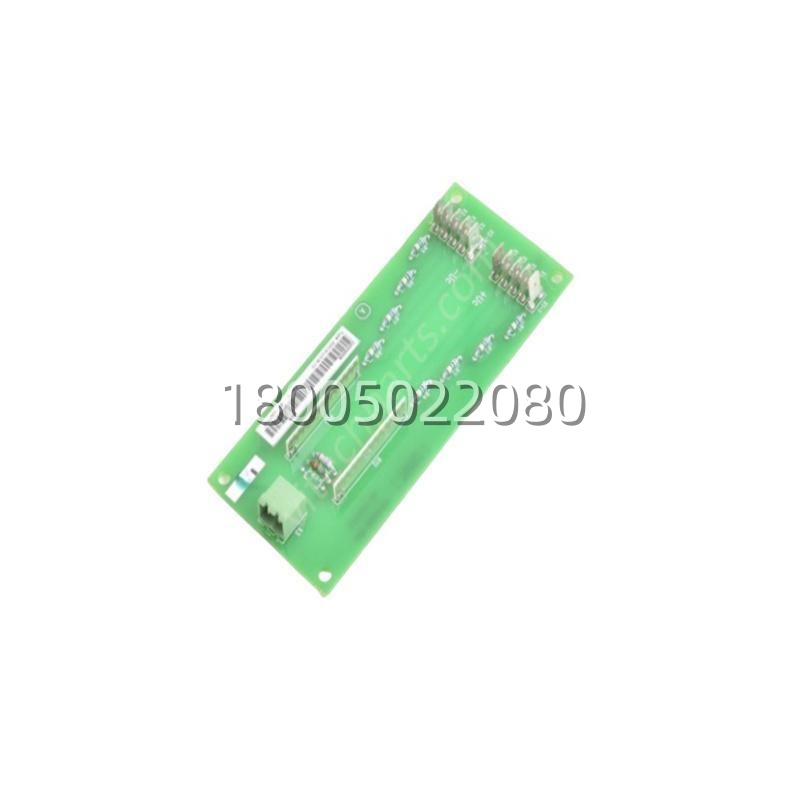
In a 300 MW thermal power plant, the generator’s excitation system must respond within milliseconds to grid voltage dips to prevent unit tripping and ensure Fault Ride-Through (FRT). The ABB SDCS-UCM-1C (3ADT220090R0008) acts as the “brain” of the excitation cabinet. During a simulated grid fault, the board’s high-speed DSP detects the voltage drop, calculates the required field forcing current, and outputs precise firing pulses to the thyristor bridge. This rapid response boosts the generator’s reactive power output, pulling the terminal voltage back to the setpoint and preventing a costly plant shutdown. This scenario highlights its critical role in solving grid stability and equipment protection pain points.
Parameter
| Main Parameters | Value/Description |
|---|---|
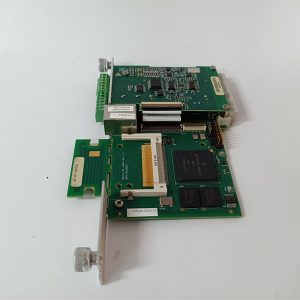
| Product Model | ABB SDCS-UCM-1C (3ADT220090R0008) |
| Manufacturer | ABB |
| Product Category | Excitation Control Board / Generator Control Module |
| Compatible Systems | ABB UNITROL 6000, UNITROL 6800 Static Excitation Systems |
| Primary Function | Automatic Voltage Regulation (AVR), PSS, thyristor firing control |
| Core Processor | High-performance Digital Signal Processor (DSP) |
| Control Cycle | < 1 ms (for fast transient response) |
| Communication Interface | RS-485 (Modbus RTU), Fiber optic for pulse output |
| Operating Voltage | DC 24V (typical for control circuitry) |
| Operating Temperature | -20°C to +70°C (industrial grade) |
| Key I/O Signals | PT/CT inputs (U, I), rotor current measurement, binary inputs/outputs |
| Typical Applications | Hydro and thermal power plants, industrial generators |
Technical Principles and Innovative Values
The ABB SDCS-UCM-1C (3ADT220090R0008) is built on a fully digital control architecture, a significant innovation over older analog regulators.
- Innovation Point 1: High-Speed DSP-Based Control: Unlike analog AVRs prone to drift, the board uses a dedicated DSP for executing complex control algorithms (PID, PSS) with sub-millisecond cycle times. This enables precise voltage regulation (±0.5% typical) and superior dynamic performance during load rejection and faults.
- Innovation Point 2: Fiber-Optic Isolated Firing: The module generates and transmits thyristor firing pulses via fiber-optic cables. This provides complete galvanic isolation between the low-voltage control electronics and the high-voltage thyristor bridge (which can be at several kV potential), eliminating ground loop issues and enhancing noise immunity in harsh substation environments.
- Innovation Point 3: Integrated PSS Functionality: The board natively integrates Power System Stabilizer algorithms that modulate the excitation signal to damp low-frequency oscillations (0.2-2.0 Hz) in the power system. This “smoothing” feature is critical for preventing generator hunting and improving overall grid stability without needing external hardware.
Application Cases and Industry Value
A large hydropower station in Southeast Asia was experiencing persistent low-frequency oscillations on its 150 MW units during peak load periods, risking synchronization loss with the grid. The existing analog excitation regulators lacked the computational power for effective damping. The station retrofitted its units with ABB UNITROL 6800 systems centered on the ABB SDCS-UCM-1C (3ADT220090R0008) boards. Post-retrofit, the PSS function of the new boards was tuned to suppress the 1.5 Hz oscillation mode. The result was a 90% reduction in oscillation amplitude, allowing the plant to safely operate at full capacity. The digital diagnostics also reduced fault-finding time from hours to minutes, showcasing the board’s value in enhancing both grid reliability and operational efficiency.