WhatsApp:+86 18005022363 WeChat: +86 18005022363
 Email:

Description
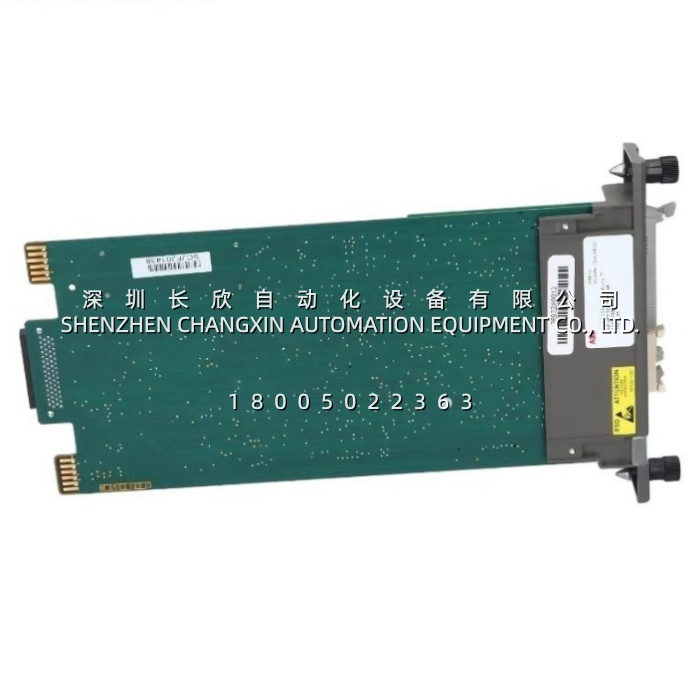
Application Scenarios
A 330 MW coal unit was running Bailey INFI 90 exactly as commissioned in the late nineties: IMMFP multifunction controllers on the INFI-NET ring, INNIS21 slaves terminating the loop, and a pair of aging operator stations fed through an INICT13A-based computer interface. One spring the primary workstation’s SCSI host adapter finally died, and the spare on the shelf was an INICT03A pulled from a decommissioned unit. The instinct was to swap it in — same slot, same faceplate, same connector. It did not come up. The station driver expected the ICT13 point-definition layout, the DIP map was different, and the INNIS21 expander-bus handshake behaved just enough unlike an INNIS01 to stall the ring login. The right answer was a revision-matched INICT13A, landed on the existing INNIS21, with the original switch word photographed and the CIU driver version confirmed first. The operator screens returned inside the shutdown window; the historian, which had been blind for two shifts, picked up the tag stream without a single database change.
Parameter
| Main Parameters | Value / Description |
|---|---|
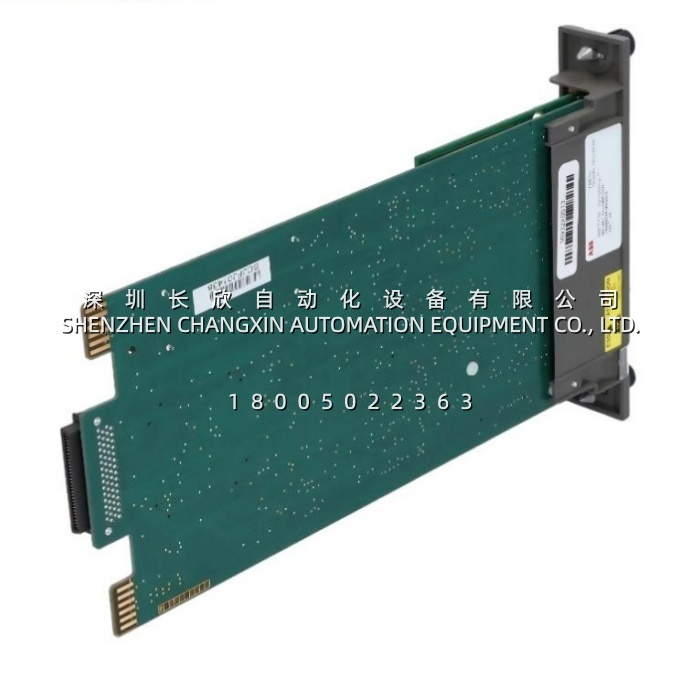
| Product Model | INICT13A (also written ICT13A, INICT 13A, INICT-13A; all refer to the same module) |
| Manufacturer | ABB, originally Bailey Controls / Elsag Bailey; post-1999 ABB Symphony Harmony lineage |
| Product Category | INFI-NET to Computer Transfer Module (ICT) — a gateway/transport card, not an analog or digital I/O module |
| System Family | INFI 90 OPEN, Network 90 heritage, Symphony Harmony; later Symphony Plus migration uses the SPICT13A |
| Network Side | INFI-NET redundant token-passing ring, accessed through the host rack’s INNIS21 Network Interface Slave; ring numbers 0–15, node 1–63 per ring, up to 250 nodes per ring in the architecture |
| Ring Media | Dual counter-rotating fiber (typical) or coaxial copper; both legs carry the same traffic and the survivor leg isolates on a break |
| Host / Computer Side | SCSI high-speed parallel (preferred, 8-bit SCSI-1 style, up to ~4 Mbytes/s) and RS-232-C serial at 50–19,200 baud |
| Tag / Point Capacity | Up to 30,000 point definitions, actual usable count set by point types and the CIU driver revision |
| Memory | 512 KB ROM / 2 MB RAM on the published build — ring frames are buffered here, not in the controller CPU |
| Backplane Power | +5 V DC from the INFI 90 module mounting unit; ~1.1 A typical, 1.4 A maximum (≈7–10 W depending on revision and LED/SCSI activity) |
| Slot Footprint | One standard MMU slot when paired with an INNIS21 in the adjacent partner position; the pair forms one computer-interface node |
| Configuration | DIP switches SW1–SW4 plus on-board jumpers; ring/node identity and the host-port mode are set here, not in software |
| Diagnostics | Front-panel status LED, 16 CPU-state LEDs and a SCSI-status LED; module, INNIS21 and INFI-NET diagnostics are readable through the CIU |
| Host Software Path | CIU driver on the workstation, speaking to OPC90 / semAPI-style interfaces; the INICT13A itself exposes no Ethernet port and no public frame-level protocol |
| Throughput Model | Exception-reporting (on-change) traffic with a periodic heartbeat, so a quiet process stays quiet on the wire and a tag burst hits the SCSI buffer instead of the controller scan |
| Environment | 0 to +70 °C operating (some label revisions state −20 °C floor; verify against the physical label), 20–95 % RH to 55 °C non-condensing, cabinet-only IP20 |
| Physical | Standard INFI 90 module form factor, approx. 360 × 74 × 270 mm class, ~0.6–0.7 kg revision-dependent |
| Lifecycle | Obsolete / no longer in active production; supplied as new-surplus, de-installed or professionally tested refurbished. Documented evolution path is SPICT13A on Symphony Plus |
Technical Principles and Innovative Values
Innovation Point 1 — The work moves out of the controller. An INICT13A does not ask the IMMFP to format datagrams for a Windows box. It receives already-scheduled INFI-NET frames from the INNIS21, reassembles the point data in its own 2 MB RAM, and hands a clean tag stream to the SCSI or RS-232 host adapter. The multifunction controller keeps running PID and sequence blocks; the historian can be hammered with archive reads without stealing control-cycle time. That separation is the reason a 1990s DCS can still feed a 2020s data lake.Innovation Point 2 — It is a one-slot consolidation, not a three-card kludge. Earlier ICT03 builds needed the transfer module, the IMMPI01 and the INNIS01 across two slots plus a ribbon cable. The INICT13A / INNIS21 pairing collapses the role: the transfer logic and the ring termination live as one interface node. Fewer cables, fewer expander-bus handshakes, fewer things to seat wrong at 2 a.m. It is also why the older INICT03A is not a casual drop-in — the partner module and the cable topology are different.Innovation Point 3 — Dual-ring awareness without a re-architecture. INFI-NET is a redundant counter-rotating pair. Under normal running both legs carry the same frame stream, so a single cable cut, a bad splice or a killed fiber leg only raises a network alarm; the surviving leg keeps the tag flow moving to the INICT13A. That behaviour is what makes “the screen froze but the turbine did not” a routine event rather than a trip report.Innovation Point 4 — SCSI was the right call for its era, and it still beats serial for a reason. RS-232 at 19,200 baud is fine for a portable terminal or a printer, but a 30,000-point historian needs bulk moves — tag downloads, SOE buffers, bulk archive snapshots. The on-board SCSI-1 parallel path was specified for that job, and ABB’s own guidance is blunt: use SCSI, keep it on a dedicated SCSI adapter with no other devices sharing the chain, and terminate it properly at both ends. A INICT13A on a clean SCSI cable will move those startup snapshots in a fraction of the time a serial-only link needs.Innovation Point 5 — The DIP switches are part of the asset register. SW1–SW4 select the host-port behaviour, ring/node context and the handshake the CIU driver expects. Change one pole and the module looks healthy on the LEDs while the workstation sees nothing but timeouts. Treat the switch word like a calibrated instrument: photograph it on install, store it with the loop drawing and the CIU .ini, and a replacement becomes a five-minute seating job instead of a two-day protocol argument.
Application Cases and Industry Value
Case 1 — Coal-fired unit, historian blind spot closed in one shift. The plant’s secondary INICT13A had been flagged “fault” for weeks; operations had been running on the primary interface and the on-site spare was the wrong revision. When the primary started dropping SCSI retries during a wet-flue-gas scrubber rebuild, the control room lost trends and SOE correlation just as the startup transient began. The fix was disciplined rather than heroic: pull the module, confirm the INNIS21 partner was still logging ring traffic, match the replacement INICT13A to the failed unit’s label revision and SW4 word (SW4 6–8 left open for SCSI, per the ABB note), reseat, and let the CIU re-establish the tag table. Trends returned before the next shift handover. The value was not the card — it was that no controller, no I/O point and no interlock was touched, so the unit stayed on-line and the compliance log stayed clean.Case 2 — Pulp-mill MES project that did not become a DCS replacement. Corporate wanted tag-level data from the bleach plant for a loss-accounting MES, and the obvious quote was a full Symphony migration. The mill instead kept the INFI 90 controllers exactly as they were and used the existing INICT13A / INNIS21 node as the只读 source: SCSI to a legacy industrial server running the CIU and an OPC90/semAPI layer, then a one-way TCP uplink to the MES staging database. All 30,000 point definitions were never needed — roughly 1,800 tags made the cut — so the INICT13A‘s buffer and the serial fallback were more than adequate. The project spent its budget on data quality and historian licensing instead of a cabinet tear-out, and the maintenance team kept the Bailey fault tree they already knew.