WhatsApp:+86 18005022363 WeChat: +86 18005022363
  Email:
Description
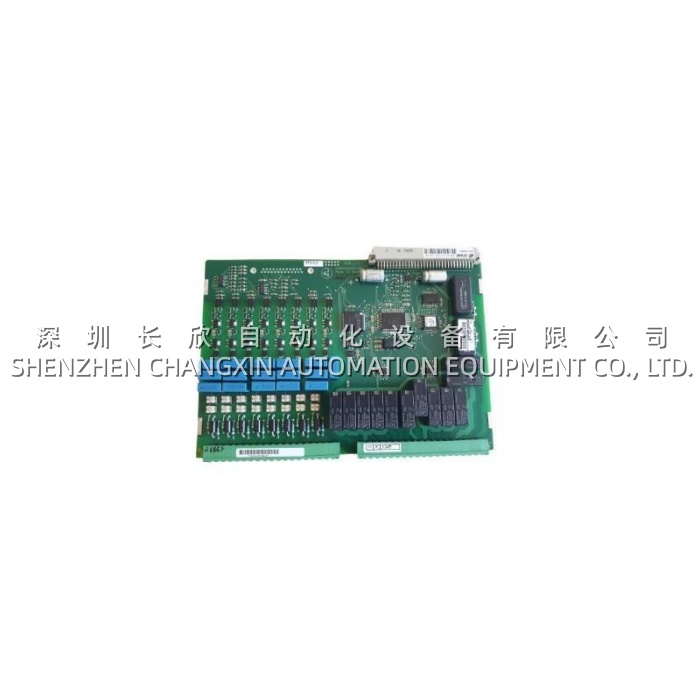
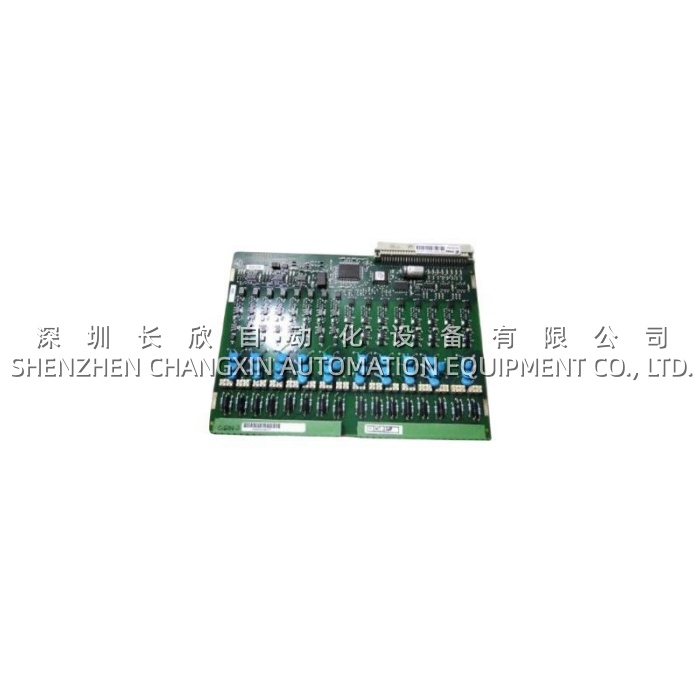
Technical Specifications
| Parameter Name | Parameter Value |
|---|---|
| Product Model | 1MRK000005-63 |
| Manufacturer | ABB Ltd. (Turgi, Switzerland – SPA / Protection heritage) |
| Product Type | Main Control / CPU Board for SPAJ Series Motor Protection Relay |
| Compatible Relay Models | ABB SPAJ 110C, SPAJ 130C, SPAJ 140C (DIN-mount motor protection) |
| Microprocessor | 32-bit (SPA family generation) |
| Memory | Flash (firmware) + EEPROM (motor-nameplate & protection settings, event log) |
| Supply Voltage | Via SPAJ relay internal PSU: 24 V DC or 88–264 V AC/DC (wide-range, depends on SPAJ host variant) |
| Protection Functions (executed on board) | Thermal overload (I²t with motor heating/cooling memory), Stall/Locked rotor, Ground fault (50N/51N), Phase unbalance, Undercurrent, Trip & Alarm logic |
| Communication | RS485 Modbus RTU (via SPAJ rear port; optional Profibus DP via daughter) |
| Event Buffer | ≥ 100 events with time-stamp (SPAJ relay-level spec, stored on ABB 1MRK000005-63 EEPROM) |
| Self-Monitoring | MPU watchdog, EEPROM checksum, RAM test, ADC self-cal — faults reported on SPAJ front LEDs |
| Operating Temperature | -25 °C to +55 °C (inherited from SPAJ host) |
| Storage Temperature | -40 °C to +70 °C |
| Mounting | Plugs into SPAJ relay internal backplane (guided card cage + front screw) |
| Dimensions (board only) | ≈ 100 × 70 × 20 mm (SPAJ internal form factor) |
| Weight | ≈ 0.08 kg |
| Certifications | CE, IEC 60255, UL (inherited from SPAJ host) |
Main Features and Advantages
32-bit MPU running SPA protection library:The ABB 1MRK000005-63 executes ABB’s SPA motor-protection algorithms — not just a thermal bi-metallic emulation, but a true I²t model with motor heating/cooling time-constants, stall detection with definite / inverse time curves, ground-fault sensitivity down to 10 % of FLA, and phase-unbalance tripping. On a 250 kW compressor motor, the ABB 1MRK000005-63 can distinguish a genuine locked-rotor (6× FLA, flat) from a harmless in-rush (6× for 0.2 s then decays) — the thermal memory and stall-curve prevent nuisance trips that a dumb overload relay would throw. The 32-bit MPU also runs the SPAJ’s self-monitoring: watchdog, EEPROM checksum, RAM/ADC self-test — if the ABB 1MRK000005-63 detects an internal fault, it forces the SPAJ’s “Err” LED and the relay’s trip relay can be wired to fail-safe (de-energise the contactor) per the plant’s SIL/PRA requirement.Event logging and time-stamping:The ABB 1MRK000005-63 buffers ≥ 100 protection events (trip, alarm, self-monitor, setting change) with 1 ms resolution time-stamps (clock sourced from the SPAJ’s internal oscillator, sync-able via Modbus if the plant DCS periodically writes the time). When a 1.2 MW feedwater-pump motor trips at 3 AM, the maintenance engineer connects ABB SPAsoft (or reads the SPAJ’s front LED codes) and sees: “Stall — 5.8 × FLA — t = 2.1 s” in the ABB 1MRK000005-63 event buffer — no guessing whether it was a mechanical jam or a voltage sag. For plants still on SPAJ (many WWTPs, CHP aux, marine), this event buffer is the primary forensics tool, and it lives on the ABB 1MRK000005-63 EEPROM.RS485 Modbus + optional Profibus:The ABB 1MRK000005-63 itself carries the RS485 transceiver; the SPAJ relay’s rear Com port is wired to the ABB 1MRK000005-63 header. Baud, parity, slave address are set via the SPAJ front push-buttons (or SPAsoft). For plants on Profibus DP, ABB offers a Profibus daughter that plugs onto the ABB 1MRK000005-63 (or onto the SPAJ backplane alongside it — sub-rev dependent); the ABB 1MRK000005-63 MPU talks to the daughter over the internal bus. This means the same ABB 1MRK000005-63 spare works for both Modbus and Profibus fleets if the daughter is separate — another reason the SKU is high-value in mixed-protocol plants.EEPROM parameter retention:Motor-nameplate data (FLA, service factor, heating time-constant τ₁, cooling τ₂, curve class, trip delays) and the protection enable/disable map live in EEPROM on the ABB 1MRK000005-63. On a board swap, if the EEPROM is a separable tiny daughter (some SPAJ sub-revs have it piggybacked on the ABB 1MRK000005-63, others have it on the backplane — verify per plant’s SPAJ revision), transferring the old EEPROM to the new board preserves the settings — the tech doesn’t spend 20 minutes re-punching 15 parameters on the SPAJ front push-buttons. If the EEPROM is on-board, SPAsoft can upload the .spa file to the new ABB 1MRK000005-63 in <2 minutes via the RS485 port. Either way, the “plug-and-go” story holds — unlike a whole-SPAJ replacement which needs re-terminating CT/VT cores and re-commissioning the trip test.Common across SPAJ 110/130/140:ABB kept the ABB 1MRK000005-63 CPU stable across the SPAJ 110C (basic), 130C (adds differential), 140C (adds voltage/sync elements) — the variant differentiation is via the plugged-in analog daughter (CT/VT input stage) and the optional communication daughter. That means a plant with 20 SPAJ 110Cs on pumps + 5 SPAJ 130Cs on compressors + 2 SPAJ 140Cs on genset-motors can stock ONE ABB 1MRK000005-63 spare for all 27 relays. The analog daughter (e.g., 1MRK000006-xx) and the Com daughter (1MRK000007-xx) are the separate SKUs if those also fail — but the CPU is shared. For spare-parts buyers, that commonality is the economic argument: one SKU covers a heterogeneous SPAJ fleet.Compact, shielded, DIN-envied:The ABB 1MRK000005-63 is a 2-layer (maybe 4-layer) PCB with EMI shield can over the MPU/oscillator, conformal coated for humidity (WWTPs, marine engine rooms). It lives inside the SPAJ’s IP51 (front) / IP20 (back) DIN case, so it never sees washdown directly — but the coating handles the vapor in a pump station switchgear room. The board’s front screw doubles as EMI shield ground to the SPAJ chassis — small detail, but it’s why SPAJs pass the 3 V/m EMC tests that cheaper relays fail.