WhatsApp:+86 18005022363 WeChat: +86 18005022363
  Email:
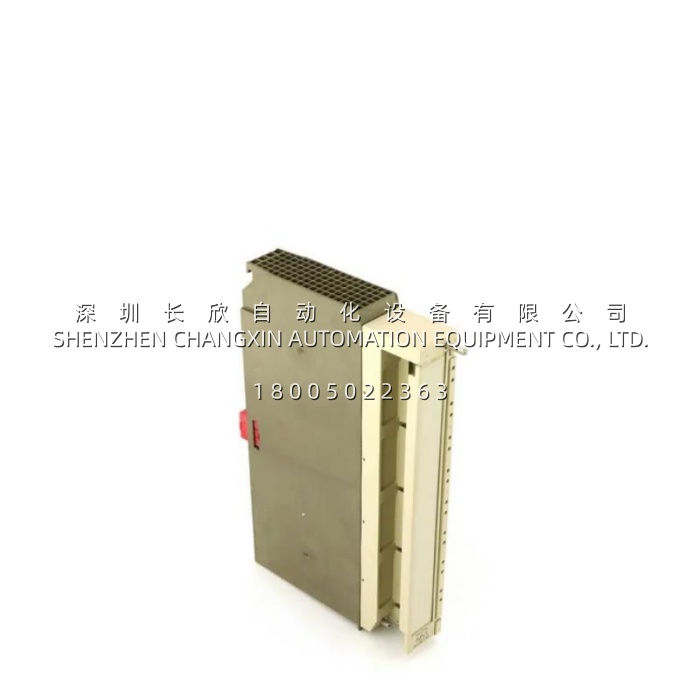
DescriptionThe 6ES5436-7LB11 is a SIMATIC S5 436-series digital input (DI) module manufactured by Siemens, purpose-built for the S5-115U rack to acquire 230 V AC field signals directly — no interposing relays, no 24 V DC conversion. It delivers 16 floating (galvanically isolated) inputs at 230 V AC, split into 8 groups of 2 channels each via optocouplers, with 1500 V AC hi-pot isolation between groups (VDE 0160). While Siemens has long discontinued new production of the 6ES5436-7LB11, it remains the only drop-in for S5-115U racks that were originally engineered to read motor auxiliary contacts, thermal-overload alarms, and 230 V AC float-switch loops straight off the mains-derived field supply.h2 Application ScenariosA regional cement plant in Southern Europe still runs three S5-115U racks from a 1997 upgrade, controlling the raw-mill lift and the bag-filter fans. The original E/I design chose the 6ES5436-7LB11 precisely so that 230 V AC auxiliary contacts from the 400 V motor starters — thermal-alarm NO, trip-coil feedback, local hand-off-auto selector positions — could land directly on the S5 rack without a wall of interposing relays. Twenty-six years later, that decision is still paying: when a competitor’s “modernized”相邻线 went through a relay-panel retrofit and spent three weeks re-terminating 112 field wires to 24 V, this plant’s 6ES5436-7LB11 modules just kept reading 230 V AC as-designed. The only scare came during a 2023 thunderstorm when one module took a surge through a poorly shielded 230 V float-switch loop on the slurry pit — the optocouplers sacrificed themselves, the CPU stayed alive, and a spare 6ES5436-7LB11 went in before the next shift. The plant manager’s note in the annual review: “230 V DI on S5 isn’t elegant, but it’s why we haven’t had to touch that rack in six years.” On S5-115U, the 6ES5436-7LB11 is the reason a 112-point mains-monitoring cabinet fits in three slots instead of a relay panel.h2
Parameter
| Main Parameters | Value/Description |
|---|---|
| Product Model | 6ES5436-7LB11 |
| Manufacturer | Siemens (SIMATIC S5 Series) |
| Product Category | Digital Input Module, Floating (Galvanically Isolated) |
| Number of Inputs | 16 (230 V AC) |
| Input Voltage | 230 V AC rated; 47–63 Hz |
| Signal Thresholds | “0” ≤ 70 V AC; “1” 170–264 V AC |
| Input Current (“1”) | ~15 mA @ 50 Hz AC; ~2.2 mA @ DC |
| Response Time | 0→1: 2–13 ms; 1→0: 10–35 ms |
| Grouping / Isolation | 8 groups × 2 ch; 250 V between groups, hi-pot 1500 V AC (VDE 0160) |
| Max Cable Length | Shielded 1000 m / Unshielded 600 m |
| Power Loss | ~11 W (all 16 channels active @ 264 V) |
| Backplane Draw | ~5 mA from 5 V internal |
| Weight | ~0.7 kg |
| Compatible Rack | S5-115U (primary); also listed for S5-135U I/O expansion |
h2 Technical Principles and Innovative Values
- Innovation Point 1: 230 V AC direct-land eliminates the interposing relay panel. Most S5 DI modules stop at 24/48/115 V; the 6ES5436-7LB11 is one of the few that eats 170–264 V AC “1”-threshold natively. On European/export machinery where the field devices already hang off 230 V AC (motor aux contacts, tower-light feedback, HVAC run-status dry contacts), this saves an entire relay-interposing tier — fewer terminals, fewer failure points, and the 2–13 ms / 10–35 ms response is fast enough for status logging even if it’s too slow for high-speed counting.
- Innovation Point 2: 8 groups × 2 channels with 1500 V AC hi-pot between groups. The -7LB11 suffix differentiates itself from the -7LA11 (which is 4 groups × 4 channels, same 230 V AC). The finer 8×2 split on the 6ES5436-7LB11 means you can land eight different 230 V AC source phases or eight separate feeder-supplys’ aux-contacts without cross-group backfeed — a layout win on MCC-derived signaling where two motors might be on different phases of the same 400 V system.
- Innovation Point 3: 1000 m shielded / 600 m unshielded cable allowance. Large-process plants (cement, water, steel) often run field aux-loops hundreds of meters from the MCC to the S5 rack. The 6ES5436-7LB11 is specified to 1000 m shielded without extra repeaters, and the 170 V “1”-floor rejects the induced voltage you get on long 230 V AC runs parallel to VFD feeders — provided you respect the “no different phases in the same 2-channel group” rule (VDE limitation).
h2 Application Cases and Industry ValueA municipal water-pumping station in the Benelux region runs four S5-115U racks (1999 vintage) for intake, wet-well, and discharge control across three pump houses spread over 800 meters. Each house feeds 230 V AC auxiliary contacts from the 400 V pump-starter cabinets — thermal-alarm NO, CB-auxiliary “tripped,” local/remote selector — back to a central MCC room where two 6ES5436-7LB11 modules per rack sit. When the station’s 2022 CAPEX plan deferred an S7 migration by three years (“no budget until 2026”), the reliability engineer audited the S5 spares and found exactly zero 436-7LB11 on site. We supplied six tested units within 48 hours, each cycled at 170/230/264 V AC across all 16 channels and hi-potted 1500 V AC group-to-group. The station logged zero spurious “1” reads during a subsequent thunderstorm season — the 6ES5436-7LB11‘s 170 V floor rejected the induced ring-down that had previously fooled a cheaper 115 V AC DI on an adjacent rack. For a plant where a missed “thermal trip” on a 355 kW pump means a seized bearing and a €40 k repair, the 6ES5436-7LB11 isn’t high-tech — it’s the margin between a logged alarm and a burnt stator.