WhatsApp:+86 18005022363 WeChat: +86 18005022363
  Email:
Application Scenarios
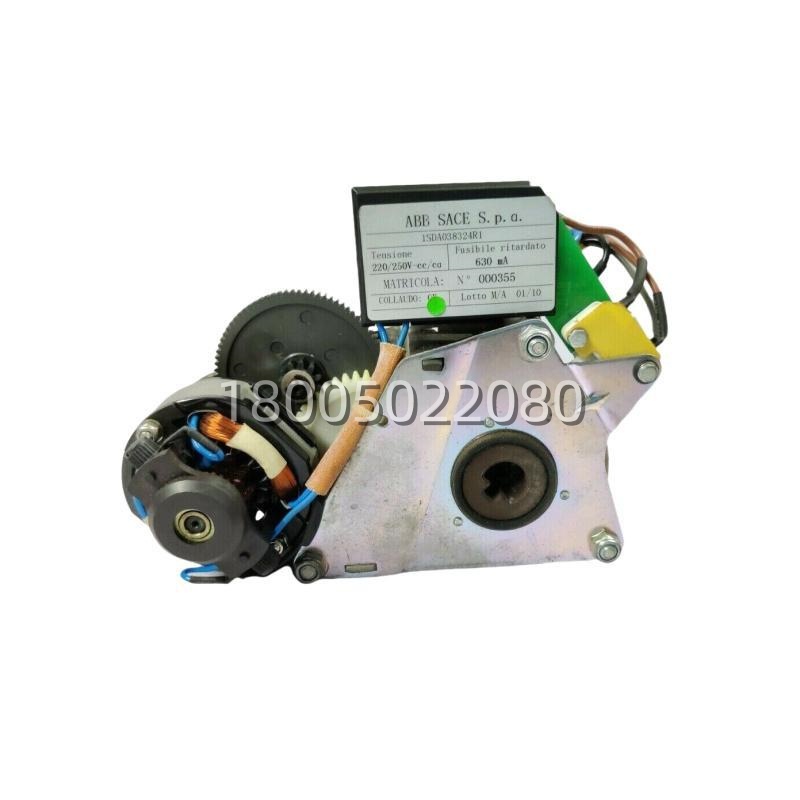
On a data-center PDU lineup in Northern Europe, the facilities lead got paged at 03:00 because the A-side tie (an Emax E4) refused a remote close after a simulated utility-transfer test. Field check: the 1SDA038324R1 on that breaker had finally worn its carbon brushes down — the motor spun, but wouldn’t build enough torque to click the spring home, so the breaker sat “spring discharged” and the control system blocked the close. The site had been running the original motor for 11 years; the fix was a 20-minute swap of the 1SDA038324R1 (plus a quick spin on the manual lever to confirm the spring path wasn’t jammed with dust). Post-swap, the motor charged the spring in 4.2 s flat, and the lead added “one 1SDA038324R1 per 15 Emax frames” to the spare-holding policy. For any facility where “remote close failed — spring not charged” shows up in the event log more than once a year, the math usually points to a worn motor, not a bad breaker — and the 1SDA038324R1 costs a fraction of a full operator replacement.
Parameter
| Main Parameters | Value/Description |
|---|---|
| Product Model | 1SDA038324R1 (also referenced as 1SDA038324R) |
| Manufacturer | ABB SACE S.p.A. |
| Product Category | Spring Charging Motor / Motor Operator (Frame Breaker Accessory) |
| Rated Voltage | 220–250 V AC/DC (operating band 85 %–110 % Un) |
| Rated Current | ~630 mA |
| Rated Power | 200 W (DC) / 200 VA (AC) |
| Inrush Power | 500 W (DC) / 500 VA (AC), ~0.2 s duration |
| Charging Time | 4–5 s (E1–E6 range) |
| Insulation Voltage | 2500 V / 50 Hz / 1 min |
| Compatible Breakers | Emax E1–E6, Emax2, Tmax T8 |
| Mounting | Inside operator housing (drawer or fixed breaker) |
| Net Weight | ~1.9 kg |
| Signaling | Built-in microswitch for “spring charged” remote indication |
Technical Principles and Innovative Values
- Innovation Point 1: Self-Cutting Microswitch Eliminates Continuous Run. The 1SDA038324R1 isn’t just a gear motor bolted in — it carries an integrated limit/microswitch that opens the motor circuit the instant the closing spring reaches full tension. This prevents the “motor hums until someone notices” failure mode that cooks windings on cheap third-party retrofit motors. After every breaker close, the 1SDA038324R1 automatically re-energizes and tops the spring back up.
- Innovation Point 2: 4–5 s Charge Time with Manual-Lever Fallback. In a gen-set or data-center tie bay where the 220 V AC control supply might be lost during a transfer, the 1SDA038324R1 can be bypassed entirely — the operator has a manual lever on the front that lets a tech hand-crank the spring home without any control power. That dual-path (motor + manual) is what lets Emax bays pass “no-control-power closing capability” audits.
- Innovation Point 3: 2500 V Insulation & 630 mA Tight Rating. The 1SDA038324R1 is insulated to 2500 V / 1 min (CEI EN 60947-2), and the 630 mA draw is deliberately tight — it forces the panel designer to put a proper time-delay fuse (also 630 mA) on the motor circuit, which in turn protects the gear train if the spring mechanism jams. Third-party “universal” motors that draw 1 A+ often mask a binding mechanism until the teeth shear.
Application Cases and Industry Value
A municipal wastewater plant in Central Europe ran three Emax E2 breakers on the 400 V bus risers, each with the original 1SDA038324R1 approaching 12 years old. During a storm-season load-shed test, one riser’s breaker refused the auto-reclose after the utility blip — “Spring Discharged” latched in the SCADA. The motor still spun but the gears had worn enough backlash that it couldn’t fully seat the spring latch. Swapping all three 1SDA038324R1 units (15-minute job per breaker, no need to unbolt the ACB from the switchgear) cost roughly 3 % of what a full operator replacement quote would have been. The plant’s electrical lead subsequently wrote a 7-year replacement interval into the PM schedule for all Emax spring motors — cheaper than explaining a failed auto-reclose to the environmental regulator.In a second case, a commercial high-rise in Shanghai retrofitted its basement LV room from legacy molded-case to Emax E1/E3 bays; the consultant specified 1SDA038324R1 across the board (220–250 V AC/DC covers both the normal 230 V AC service and the 220 V DC battery-backed emergency supply) so the same spare travels between the normal and emergency bus panels. The building’s FM audit specifically called out “spring-charged indicator wired to BMS” — the 1SDA038324R1‘s built-in microswitch made that a one-wire job per bay instead of an add-on prox sensor.