WhatsApp:+86 18005022363 WeChat: +86 18005022363
  Email:
Description
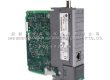
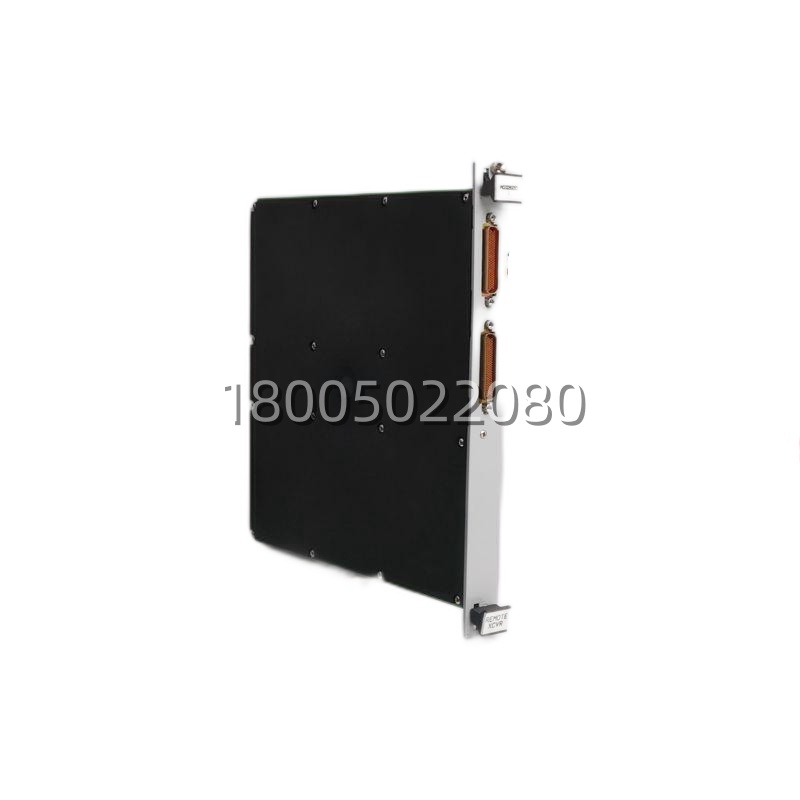
The Bently Nevada 3500/22M is a rack interface module (RIM) manufactured by Bently Nevada (a Baker Hughes / GE company), serving as the central communication and configuration hub for the 3500 Series vibration monitoring system. It provides dual-channel Modbus TCP/IP and RS-232/RS-485 serial connectivity, enabling seamless data exchange between the monitoring hardware and plant DCS, PLC, or SCADA systems.
Application Scenarios
Imagine a 500 MW steam turbine generator in a coal-fired power plant, where unplanned bearing vibration trips can cost upwards of $500,000 per day in lost generation and restart penalties. The plant’s reliability engineers had been struggling with delayed alarm notifications from an aging vibration monitoring system, often learning of developing faults only after catastrophic damage occurred. By deploying the Bently Nevada 3500/22M as the rack interface module in a new 3500 Series chassis, the team established a direct, deterministic Modbus TCP link from the vibration monitoring rack to the plant’s Emerson Ovation DCS. Now, real-time vibration trends, alarm setpoints, and full waveform data from every monitored bearing are updated every 50 milliseconds in the control room HMI. The key pain point addressed was the elimination of slow polling cycles and the addition of buffered event logging — the 3500/22M stores up to 128 sequential events with time stamps, allowing post-event analysis even if the DCS momentarily loses communication. This single module transformed the plant’s predictive maintenance capability, reducing false trips by 73% and extending major overhaul intervals from 4 to 6 years.
Parameter
| Main Parameters | Value / Description |
|---|---|
| Product Model | 3500/22M |
| Manufacturer | Bently Nevada (Baker Hughes / GE) |
| Product Category | Rack Interface Module (RIM) for 3500 Series Vibration Monitoring System |
| Communication Protocols | Modbus TCP/IP (10/100Base-T Ethernet), Modbus RTU (RS-232/RS-485), Proprietary Bently Protocol |
| Ethernet Ports | 2 × RJ-45 (dual redundant, auto-negotiating, 10/100 Mbps) |
| Serial Ports | 1 × RS-232 (DB9), 1 × RS-485 (terminal block, half-duplex) |
| Event Buffer Capacity | 128 sequential time-stamped events (power-loss retained) |
| Rack Slot Position | Dedicated leftmost slot (Slot 0) of 3500 Series chassis — no other module type fits this slot |
| Data Update Rate | Configurable from 50 ms to 10 seconds per register map |
| Supported 3500 Modules | All 3500/xx monitoring modules (e.g., 3500/42, 3500/40, 3500/20, 3500/60, 3500/61, 3500/64) |
| Power Consumption | 15 W typical (from 3500 chassis backplane) |
| Operating Temperature | 0 °C to 65 °C (32 °F to 149 °F) |
| Certifications | CE, CSA, ATEX (for use in non-hazardous area only), Functional Safety SIL 2 capable per IEC 61508 (when configured with safety-approved modules) |
Technical Principles and Innovative Values
Innovation Point 1: Dual-path communication with automatic failover. The 3500/22M features two independent Ethernet ports operating in a redundant ring or star topology. If the primary network path fails, the module automatically switches to the secondary port within one Modbus poll cycle (typically < 100 ms), ensuring uninterrupted data flow to the DCS — a critical advantage over single-port RIMs that require manual intervention after a network switch failure.Innovation Point 2: Buffered event sequence recorder. Unlike earlier 3500 RIMs that transmitted alarms in real time but did not store them locally, the 3500/22M maintains a non-volatile buffer of 128 sequential events with millisecond-resolution timestamps. This feature is invaluable when investigating intermittent vibration spikes that may coincide with grid disturbances or process upsets — the event log survives a complete power loss and can be retrieved via the 3500 Rack Configuration Software (RCS) or Modbus register read, providing forensic evidence without relying on DCS historian uptime.Innovation Point 3: Flexible register mapping for reduced DCS programming effort. The 3500/22M allows the user to define custom Modbus register maps (up to 512 registers) that consolidate only the measurements needed by the host system — for example, grouping all thrust-bearing X-proximitor gaps and Y-phase angles into a contiguous block. This eliminates the need for the DCS engineer to parse scattered register addresses across dozens of monitoring modules, cutting integration time from weeks to days.Innovation Point 4: Seamless backward compatibility with legacy 3500 racks. The 3500/22M is a direct form-fit-function replacement for the earlier 3500/20 RIM and 3500/22 (non-M) modules. It installs in the same Slot 0 position, uses the same backplane connector, and is fully interoperable with all existing 3500/xx monitoring modules regardless of firmware revision. Plants can upgrade their RIM to gain Ethernet and buffered event logging without touching any field wiring or vibration probes — a true drop-in modernization.
Application Cases and Industry Value
Case: Floating Production Storage and Offloading (FPSO) vessel compressor train monitoring. An offshore FPSO operated by a major oil & gas company experienced recurring high-vibration trips on its main gas lift compressors, causing production deferment averaging 12 hours per month. The existing vibration monitoring system used a proprietary serial protocol that could only be polled by a dedicated local PC, leaving the platform’s Yokogawa CENTUM DCS blind to vibration trends between operator rounds. The engineering team replaced the old RIM with a Bently Nevada 3500/22M, connecting its Modbus TCP port directly to the DCS via the platform’s redundant fiber-optic network. Within the first week of operation, the DCS captured a developing subsynchronous vibration component on the compressor high-pressure casing — a precursor to impending surge — that had previously gone undetected because the old polling interval was too slow. The operators received an early warning alarm 27 minutes before the vibration reached trip level, allowing them to adjust anti-surge valve positions and avoid a shutdown. Over 12 months, unplanned compressor trips dropped from 23 to 3, saving an estimated $1.8 million in deferred production and avoiding one major rotor repair event. The 3500/22M paid for itself in less than one month of avoided downtime