WhatsApp:+86 18005022363 WeChat: +86 18005022363
  Email:
Product Overview
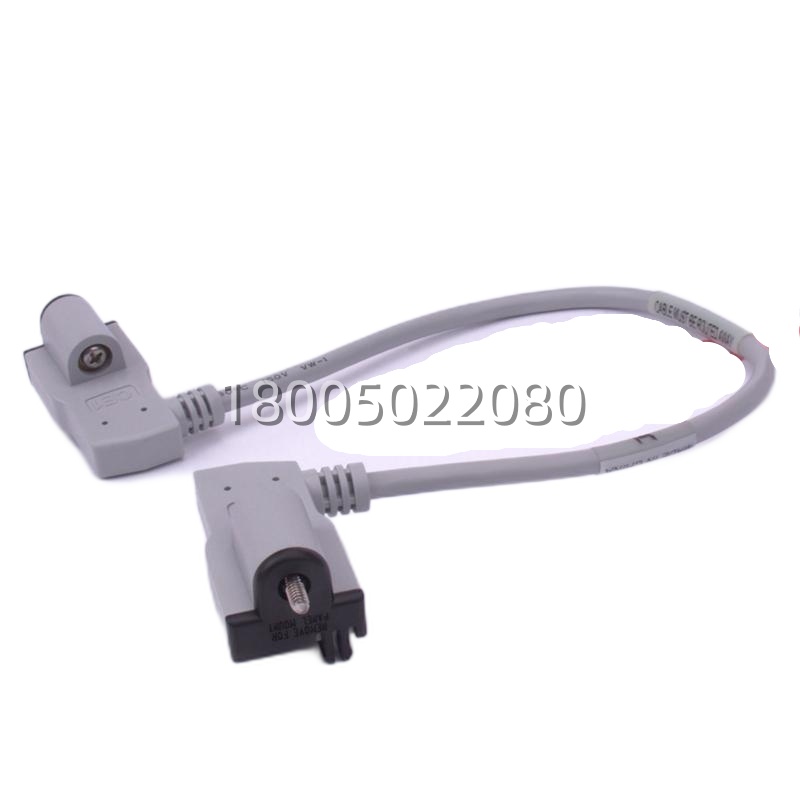
The Allen‑Bradley 1794-CE1, also listed in catalogs as 1794-CE1_A (1 ft / 0.3 m), is a passive local expansion cable designed exclusively for use within Rockwell Automation’s 1794 FLEX I/O system architecture. It provides the physical interconnection between a FLEX I/O adapter module (such as the 1794-AENT, 1794-ADN, or 1794-ASB) and a 1794 terminal base unit (TBU), or between two adjacent terminal bases when extending the FLEX I/O rack locally. The 1794-CE1 carries the low‑voltage 5 VDC backplane bus signals that synchronize I/O module addressing, power distribution, and data communication across the FLEX I/O assembly, ensuring that all mounted digital, analog, specialty, and safety modules are correctly recognized by the adapter and the host controller.Engineered with molded 24‑pin keyed connectors on both ends and an integrated mechanical latch mechanism, the 1794-CE1_A guarantees secure mating even in high‑vibration industrial environments such as automotive assembly lines, material handling conveyors, and process skids. The cable itself is shielded and rated for the industrial temperature range expected in control cabinets, and its compact 1‑foot length is optimized for standard DIN‑rail‑mounted back‑to‑back configurations while minimizing excess cable loom. In FLEX I/O systems where greater separation between the adapter and the first I/O module—or between I/O groups—is required, longer variants (1794-CE3 at 3 ft, 1794-CE10 at 10 ft) are available, but the 1794-CE1 remains the default and most widely stocked interconnect for tight, space‑efficient enclosures.As a critical yet often overlooked accessory in the 1794 platform, the 1794-CE1 enables flexible distributed I/O layouts, supports Rockwell’s RIUP (Removable Under Instrument Power) capability so that modules can be added or replaced without shutting down the control voltage, and maintains signal integrity across the FLEX I/O backplane. It is fully compatible with all current and legacy 1794 series adapters, terminal bases, and I/O modules, making it an essential spare part for maintenance inventories in plants running ControlNet, DeviceNet, EtherNet/IP, or Remote I/O networks through the FLEX I/O family.
Technical Specifications
Product Model | 1794-CE1 (also referenced as 1794-CE1_A)Manufacturer | Rockwell Automation / Allen‑BradleyProduct Type | FLEX I/O Local Expansion / Inter‑Terminal Base CableCable Length | 0.3 m (1 ft)Connector Type | 24‑pin molded keyed male‑to‑male FLEX I/O backplane connectors, both endsLatching Mechanism | Integral positive‑lock latch on each connectorSupported Bus Voltage | 5 VDC backplane signaling (passive cable, no active electronics)Operating Temperature | 0 °C to +60 °C (32 °F to 140 °F)Storage Temperature | -40 °C to +85 °CRelative Humidity | 5% to 95% non‑condensingInstallation Method | Installed between 1794 adapter/TBU and next TBU on DIN rail; no tools required beyond finger‑pressAgency Approvals | UL listed, CSA certified, CE markedCompatible Series | Allen‑Bradley 1794 FLEX I/O (all adapters: 1794-AENT, 1794-ADN, 1794-ASB, 1794-CJK, etc.; all TBUs and I/O modules)
Main Features and Advantages
Direct FLEX I/O backplane interconnect: The 1794-CE1 is purpose‑engineered to carry the 1794 FLEX I/O system’s backplane communication and module address/configuration signals between the adapter (or preceding terminal base) and the next terminal base unit in the rack. Because it is a passive, impedance‑matched interconnect with gold‑plated contacts, the 1794-CE1_A preserves signal integrity and ensures correct auto‑detection of I/O module types and slot addressing without any configuration jumpers or DIP switches.Secure latching design for vibration‑prone areas: Both ends of the 1794-CE1 incorporate a spring‑loaded positive latch that clicks into the terminal base housing. This prevents accidental disengagement due to panel vibration, fork‑lift induced shock, or routine cabinet door opening/closing—a common failure mode with generic ribbon cables. The latches are released by a small thumb tab, allowing tool‑free removal when needed for re‑configuration or module replacement.RIUP (Removable Under Instrument Power) compatibility: When used in a properly wired 1794 system with isolated field power, the 1794-CE1 permits individual I/O modules or even an entire TBU section to be inserted or removed while the 24 VDC field power remains energized, minimizing process downtime during maintenance. The cable itself does not interfere with this capability and is fully rated for repeated mate/demate cycles.Compact 1 ft form factor for standard DIN‑rail spacing: The 1794-CE1_A is sized to neatly bridge adjacent terminal bases mounted side‑by‑side on a 35 mm DIN rail, keeping wireways tidy and avoiding the excess loop length that could otherwise trap heat or obstruct other components. For wider spacing requirements, Rockwell offers the 3 ft 1794-CE3 and 10 ft 1794-CE10, but the 1794-CE1 is the preferred choice for the majority of cabinet layouts.Universal compatibility across the 1794 ecosystem: From legacy DeviceNet adapters (1794-ADN) to modern EtherNet/IP adapters (1794-AENT), the 1794-CE1 works identically. This eliminates the need to stock multiple cable types for mixed‑generation FLEX I/O installations and simplifies spare‑parts management for multinational plants with heterogeneous control networks.