WhatsApp:+86 18005022363 WeChat: +86 18005022363
  Email:
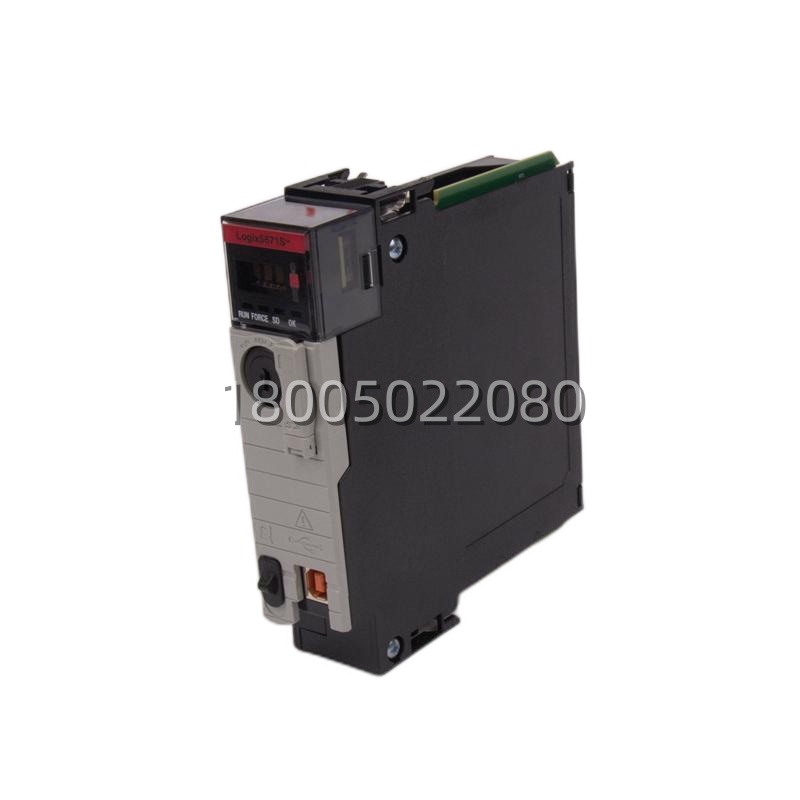
Product Overview
The Allen-Bradley 1784-PCMK (commonly specified as 1784-PCMK/B in its revised production version) is a PCI-bus communication interface card manufactured by Rockwell Automation, designed to provide a personal computer or industrial PC with direct connectivity to Allen-Bradley legacy control networks—specifically Data Highway Plus (DH+ or DH485, also called DH+ / Type A), DH-485, and Allen-Bradley Remote I/O (RIO) protocol networks. The 1784-PCMK installs into a standard 32-bit or 64-bit PCI slot (with 5 V keying; later revisions also support 3.3 V signaling on compliant PCI buses) and appears to RSLinx Classic™ as a configurable driver instance (AB_DF1-1, AB_DH-1, or AB_RIO-1 depending on selected protocol), enabling program upload/download, online monitoring, trending, and forcing on PLC-5®, SLC-500™ (SLC-5/03, 5/04, 5/05), MicroLogix™ 1000/1200/1500 (via DH-485), and PanelView™ terminals configured for DH-485 or DH+.The 1784-PCMK is the de facto standard PC-side interface for maintaining legacy Allen-Bradley networks where Ethernet/IP is not present on older processors. It supports DH+ at baud rates of 57.6 kbps, 115.2 kbps, and 230.4 kbps (230.4 kbps subject to cable length and topology constraints), DH-485 at standard rates (19.2 kbps, 93.75 kbps, 187.5 kbps), and Remote I/O scanning at 57.6 kbps (bit-strobe or polling modes depending on configuration). The card’s single RJ45/DB-9 configurable port (early versions used a 9-pin D-shell; the 1784-PCMK/B typically provides a 9-pin D-sub female connector with included DH+/DH-485 cable adapters such as 1784-CP10 or 1784-U2DHP for USB transitional setups in modern laptops) connects via standard Allen-Bradley DH+ cabling (shielded twisted pair with 1770-CG or equivalent, using 1490A or Belden 9463 for DH+; Belden 3106A or equivalent for DH-485). Front-panel LEDs indicate power, transmit, and receive activity for quick verification of link establishment. Although newer laptops lack PCI slots—leading many users to the USB-to-DH+ alternatives (1784-U2DHP)—the 1784-PCMK remains the preferred in-cabinet engineering station interface and is extensively stocked for MRO, plant retrofit, and archive-preservation purposes in power, process, metals, and discrete manufacturing facilities that continue to operate PLC-5 and SLC-500 based control systems. When paired with RSLinx Classic (versions up to those supporting legacy PCI drivers; check OS compatibility—typically Windows XP, Windows 7 32-bit, and certain Windows 10 32-bit builds with signed driver packages), the 1784-PCMK provides deterministic DH+ token-pass access indistinguishable from the original 1770-KF2/KF3 programming panels, making it an indispensable tool for legacy control system lifecycle support.
Technical Specifications
| Product Model | 1784-PCMK (Revision B: 1784-PCMK/B) |
|---|---|
| Manufacturer | Allen-Bradley / Rockwell Automation |
| Product Type | PCI-Bus DH+ / DH-485 / Remote I/O Communication Interface Card |
| Bus Interface | 32-bit PCI 2.2 compliant; 5 V keying (3.3 V tolerant on later PCB revisions) |
| Supported Protocols | Allen-Bradley Data Highway Plus (DH+ / DH485), DH-485 (also called DH485 or DH-485), Allen-Bradley Remote I/O (Scanner mode optional via RSLinx) |
| Physical Port | 1 × 9-pin D-sub (DE-9 female) RS-485/RS-232 selectable per protocol; typically wired for DH+ (RS-485 differential) or DH-485 (half-duplex RS-485) |
| DH+ Baud Rates | 57.6 kbps, 115.2 kbps, 230.4 kbps (node address 0–77 octal; max 64 nodes per DH+ segment) |
| DH-485 Baud Rates | 19.2 kbps, 57.6 kbps, 93.75 kbps, 187.5 kbps (master or slave emulation) |
| Remote I/O Baud Rate | 57.6 kbps (bit-strobe mode scanner emulation via RSLinx RIO driver) |
| Node Address Configuration | Set via RSLinx driver properties (DH+ node) or via DIP-less software assignment; DH-485 node set in RSLinx |
| Indicators | PWR (Power – green), TX (Transmit – yellow), RX (Receive – yellow) |
| Operating Systems Supported | Windows NT 4.0, Windows 2000, Windows XP (32-bit), Windows 7 (32-bit); limited support on some Windows 10 32-bit builds with legacy driver packages |
| Dimensions | Standard PCI short-card format: approx. 107 mm × 175 mm (4.2″ × 6.9″) |
| Power Drawn from PCI Bus | +5 V DC @ approx. 1.5–2.0 A (typical 7.5–10 W) |
| Certifications | FCC Part 15 Class A, CE Mark, UL 1950 / EN 60950, C-Tick |
| Included Accessories (typical) | 1784-CAB (DH+ cable adapter) or 1784-CP10 reference in kit; driver CD or downloadable from Rockwell Knowledgebase |
Main Features and Advantages
The Allen-Bradley 1784-PCMK is purpose-built to give engineering workstations a reliable, driver-level connection to Allen-Bradley’s legacy serial/ token-pass networks, offering several decisive advantages over generic serial converters or obsolete KF2/KF3 programming panels.Native DH+ token-pass participation: Unlike USB-to-serial adapters that can only emulate DF1 point-to-point, the 1784-PCMK implements the full DH+ (Allen-Bradley Type A) link-layer protocol in hardware/firmware, allowing the PC to become a fully participating DH+ node—capable of initiating message instructions (MSG), browsing the DH+ network for attached PLC-5 and SLC-5/04 processors, uploading from any node on the segment, and running RSLinxtrend charts with minimal jitter. This true multidrop capability is essential when troubleshooting cross-node messaging or when the DH+ network spans multiple control cabinets.Tri-protocol flexibility in one card: The 1784-PCMK supports DH+, DH-485, and Remote I/O scanner emulation from the same hardware—selected by loading the appropriate RSLinx driver (AB_DH-1 for DH+, AB_DH485-1 for DH-485, AB_RIO-1 for Remote I/O). This means a single 1784-PCMK card in an engineering PC can be used to commission a PLC-5 on DH+ in the morning, connect to a MicroLogix 1200 panel network on DH-485 in the afternoon, and perform RIO node testing against a PowerFlex drive configured as a 1771-RIO adapter—eliminating the need for multiple interface cards or dongles.Seamless RSLinx Classic integration and node addressing: Once the 1784-PCMK driver is configured in RSLinx, the card’s DH+ node address (0–77 octal, typically set to an unused address such as 77 octal = 63 decimal to avoid conflicts) is entered in the driver properties. The Who Active command immediately discovers all active DH+ nodes, displaying their processor type, firmware revision, and mode (Run/Prog/Test). This tight integration accelerates backup creation, online edits, and cross-reference searches during unplanned downtime events.Deterministic performance and diagnostics: The hardware UART and protocol engine on the 1784-PCMK offload DH+ token management from the host PC’s CPU, resulting in stable token rotation times even on loaded DH+ segments. Front-panel TX/RX LEDs let technicians confirm physical-layer activity before launching software—a quick way to differentiate “no communication” caused by cabling faults from driver configuration issues. Error counters accessible through RSLinx diagnostics help identify excessive retries or CRC errors indicative of improper termination, ground loops, or excessive drop length.Legacy system life-cycle support: For plants committed to running PLC-5 and SLC-500 systems for another decade or more, the 1784-PCMK (and its USB successor 1784-U2DHP for laptops without PCI slots) represents the only Rockwell-endorsed method for reliable DH+ PC connectivity. The 1784-PCMK continues to be specified for new in-cabinet engineering stations, spares for existing FAT/SAT benches, and retained in MRO stores to ensure uninterrupted access to legacy control program archives and online diagnostics. Its long-standing driver maturity and broad RSLinx version compatibility make it the lowest-risk choice for mission-critical legacy network access.