WhatsApp:+86 18005022363 WeChat: +86 18005022363
  Email:
Application Scenarios
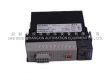
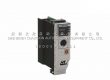
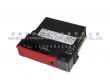
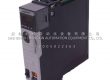
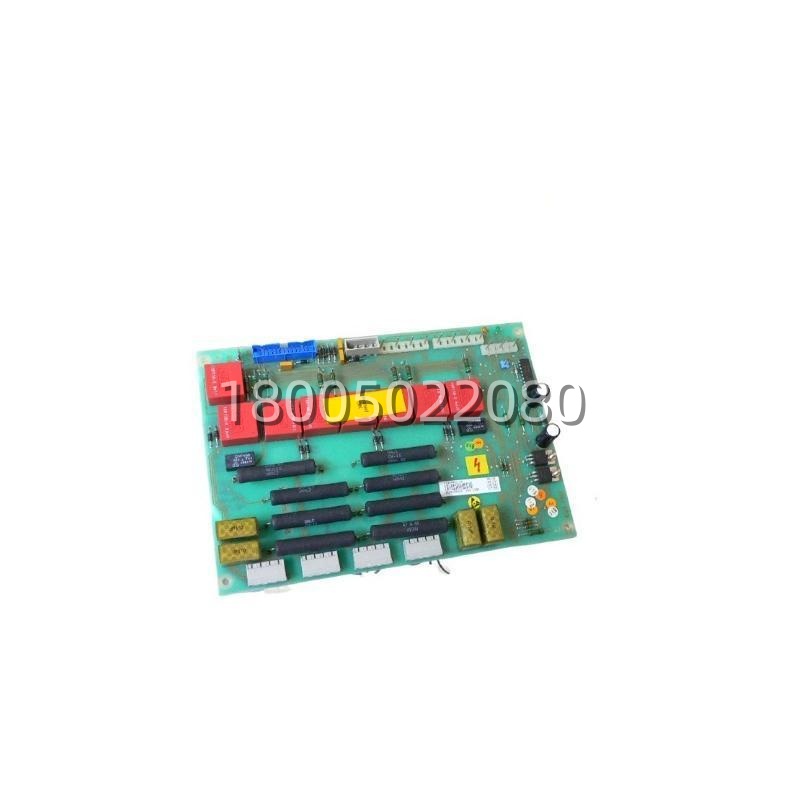
In an automotive welding line, a robot suddenly stops. The operator, from several meters away, sees a solid red “FAULT” LED and a flashing “DRIVE” indicator on the YXU173E board mounted on the cabinet door. This immediate visual cue indicates a drive unit overload rather than a safety door issue, allowing them to dispatch the correct electrical technician instead of a mechanical team, saving critical minutes in Mean Time To Repair (MTTR).
Parameter
| Main Parameters | Value/Description |
|---|---|
| ABB Designation | YXU173E |
| Complete Part Number | YT204001-JK |
| Functional Role | System Status Indicator Board / Front Panel LED Module |
| Compatible Systems | IRC5, S4C+, S4C (for IRB 6600, IRB 6650, etc.) |
| Power Supply | 24 V DC (typically sourced from controller backplane) |
| Display Elements | Multi-color LEDs (Red/Green/Yellow/Orange) |
| Indicated States | Power, Run, Fault, Motors On, Safety Stop, System Bus Status |
| Physical Interface | Ribbon cable or multi-pin connector to main computer board |
| Mounting Location | Control cabinet front panel or drive module cover |
| Operating Temp | 0°C to +55°C (standard industrial cabinet environment) |
Technical Principles and Innovative Values
- Innovation Point 1: Unified Visual Language for Robot Health. Unlike generic indicator lights, the YXU173E is specifically mapped to ABB’s robot control state machine. It consolidates signals from the main computer, drive system, and safety circuits into a single, standardized panel. This design eliminates the need for operators to interpret multiple disparate LEDs or dig into software logs for basic status checks, providing a “at-a-glance” health assessment of the entire robotic cell.
- Innovation Point 2: Safety and Mode Indication Integration. A key innovation is its integration of Safety Stop and Operational Mode (Auto/Manual) indicators directly from the safety PLC or ASIC. This provides an immediate, hardware-level visual confirmation of the safety chain status. For example, a red “Safety Stop” LED illuminated while the “Motors On” LED is off gives a clear, unambiguous signal that it is safe to enter the workcell, enhancing personnel safety.
- Innovation Point 3: Field-Replaceable FRU Design. The board is designed as a Field Replaceable Unit (FRU). If the indicator board itself fails (e.g., LEDs die), it can be swapped without replacing the expensive main computer or drive modules. Its passive nature (acting as a slave display) means replacement is a simple power-off and connector-swap procedure, minimizing downtime for a non-critical component failure.
Application Cases and Industry Value
- Case 1: High-Volume Assembly Line Diagnostics. A consumer electronics manufacturer experienced intermittent “Bus Communication” faults on their IRC5 robots, causing random stops. The YXU173E board consistently showed a specific pattern (e.g., “S-ERR” LED flashing) before the fault escalated. This allowed maintenance to preemptively check network terminators and replace a failing DSQC module during planned breaks, preventing a full production line stoppage and saving an estimated $50k in lost production per incident.
- Case 2: Legacy S4C+ System Modernization. A foundry using older S4C+ controllers for material handling lacked modern HMI diagnostics. By ensuring the YXU173E indicator boards were functional, they created a standardized visual protocol for their operators. A green “RUN” and “MOTORS ON” light meant the robot was actively palletizing, while a yellow “FAULT” light directed operators to check for part jams. This reduced the dependency on the often-unreliable teach pendant displays in a dusty environment.