WhatsApp:+86 18150087953 WeChat: +86 18150087953
  Email:
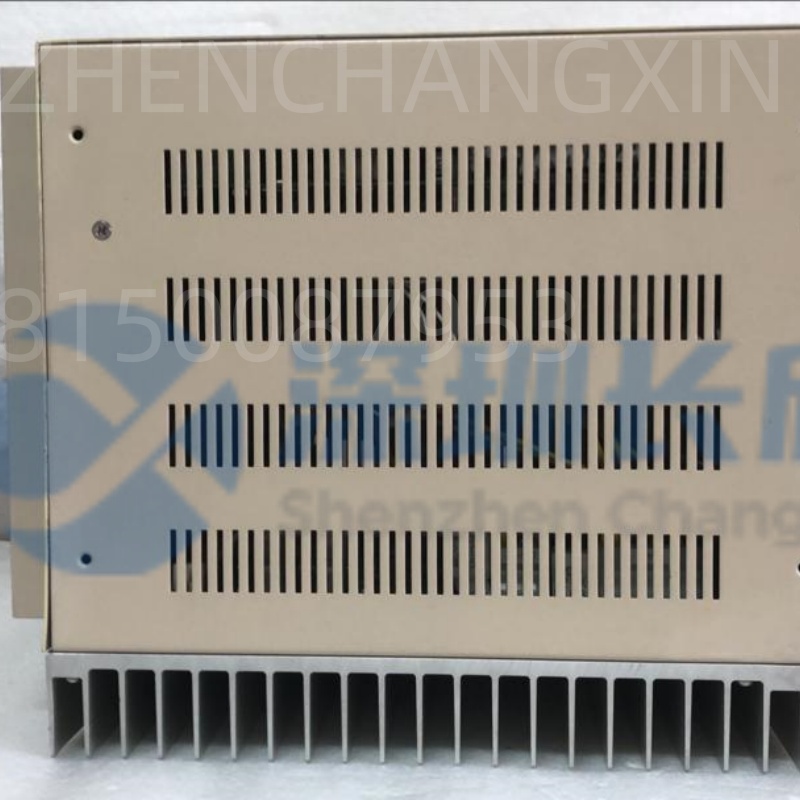
In the rapidly evolving landscape of high-precision manufacturing—where tolerances shrink to microns and material diversity expands from silicon wafers to biocompatible polymers—the demand for flexible, reliable, and repeatable laser processing systems has never been greater. The HITACHI LPP100A stands out as a sophisticated, turnkey laser micromachining platform engineered for R&D laboratories and pilot production lines in semiconductor, medical device, and electronics industries. Combining a high-stability optical layout, advanced motion control, and intuitive software integration, the LPP100A enables clean ablation, precise drilling, fine cutting, and surface structuring with minimal thermal impact. This article explores its core capabilities, technical architecture, real-world applications, and why it has become a trusted tool for engineers pushing the boundaries of micro-scale fabrication.
Engineered for Micron-Level Accuracy and Repeatability
At its heart, the LPP100A is not merely a laser system—it is an integrated mechatronic platform designed around process stability and spatial precision. Built on a granite base for vibration damping and thermal stability, the system features:
High-Resolution Galvanometer Scanning: Equipped with servo-controlled galvos offering positioning repeatability of ±1 µm, enabling consistent feature placement across large substrates.
Optional Precision XY Stage: For applications requiring stitching or large-area processing, a motorized stage with linear encoders provides travel up to 100 × 100 mm and resolution down to 0.1 µm.
Integrated Vision System: A high-magnification CCD camera with coaxial illumination allows real-time alignment to fiducials, edges, or pre-patterned structures—critical for multi-step processes.
Environmental Enclosure: Standard models include a sealed chamber with optional fume extraction and inert gas purge (N₂ or Ar), minimizing oxidation and contamination during sensitive operations.
The platform supports multiple laser sources (typically UV nanosecond or picosecond lasers, though configurable), with wavelengths optimized for cold ablation—minimizing heat-affected zones (HAZ) in polymers, ceramics, and thin metals.
“We switched from manual dicing to the LPP100A for cutting polyimide flex circuits,” says a process engineer at a medical electronics firm. “Our edge chipping dropped from 15 µm to under 3 µm, and throughput doubled.”
Seamless Workflow Integration via HITACHI’s Control Ecosystem
Unlike generic laser workstations, the LPP100A is tightly integrated with HITACHI’s proprietary Laser Process Manager (LPM) software, which bridges CAD design, process parameter optimization, and machine execution:
Direct CAD Import: Supports DXF, Gerber, and G-code, allowing rapid transition from design to processing.
Parameter Libraries: Users can store and recall laser settings (power, frequency, scan speed, hatch density) per material type, ensuring consistency across operators and shifts.
Real-Time Monitoring: The system logs pulse energy, galvo position error, and stage coordinates during each job—enabling full traceability for quality audits.
Remote Operation & Diagnostics: Ethernet connectivity allows remote start/stop, status checks, and error logging—ideal for cleanroom or hazardous environments.
This software-hardware synergy reduces setup time by up to 70% compared to legacy systems requiring manual alignment and trial-and-error tuning.
Real-World Applications Across High-Tech Industries
Semiconductor Packaging: Via Drilling in Build-Up Substrates
In advanced IC packaging, the LPP100A drills micro-vias (20–50 µm diameter) in ABF (Ajinomoto Build-up Film) with < 2 µm taper and no delamination. One OSAT (Outsourced Semiconductor Assembly and Test) provider reported a 40% yield improvement after replacing mechanical drilling with UV laser processing on the LPP100A.
Medical Device Manufacturing: Stent Cutting and Marking
For nitinol cardiovascular stents, the platform’s picosecond option enables burr-free cutting with negligible recast layer. Additionally, it performs permanent UDI (Unique Device Identification) marking compliant with FDA 21 CFR Part 801—without compromising fatigue life.
Flexible Electronics: Patterning Transparent Conductive Oxides
In R&D labs developing next-gen touch sensors, the LPP100A selectively removes ITO (indium tin oxide) from PET films with line widths down to 10 µm, preserving substrate transparency while achieving sheet resistance uniformity within ±3%.
Operational Best Practices for Peak Performance
To maximize uptime and process fidelity, experienced users recommend:
Regular Optics Inspection: Clean or replace field lenses and protective windows every 500 operating hours to prevent focus drift.
Laser Calibration Schedule: Perform beam profiling and power calibration monthly using HITACHI’s diagnostic tools.
Material-Specific Parameter Validation: Even within the same polymer family, additives can alter ablation thresholds—always validate on actual production stock.
Cleanroom Compliance: Maintain ISO Class 5 (Class 100) or better environment to prevent particulate redeposition during processing.
Expert Insight: “The LPP100A’s strength isn’t just precision—it’s repeatability over time,” notes a senior applications scientist. “If you run the same job today and six months from now, the results should be statistically indistinguishable.”
User Feedback and Industry Recognition
“The LPP100A gave us the confidence to bring laser processing in-house instead of outsourcing,” states a CTO at a microfluidics startup. “Now we iterate designs in days, not weeks.”
Users consistently praise its mechanical rigidity, software intuitiveness, and low maintenance burden—particularly compared to modular, third-party laser integrations that require constant alignment.
Conclusion: Enabling Innovation at the Microscale
The HITACHI LPP100A transcends the role of a mere fabrication tool; it serves as a catalyst for innovation in fields where dimensional control defines product viability. By delivering sub-micron accuracy, material versatility, and workflow efficiency in a single platform, it empowers engineers to explore new geometries, materials, and functionalities that were previously impractical or cost-prohibitive. In an era where miniaturization, customization, and reliability converge, the LPP100A stands as a benchmark for industrial-grade laser micromachining—proving that sometimes, the most impactful technologies are those that disappear into the precision of the final product.