WhatsApp:+86 18150087953 WeChat: +86 18150087953
  Email:
 Description
 Description
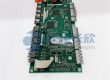
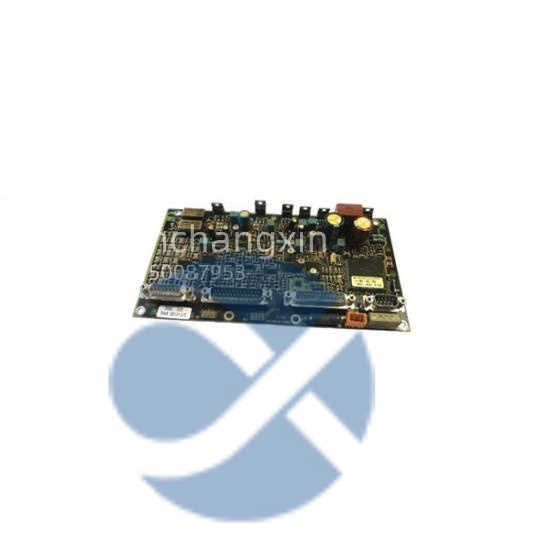
The ABB SBM DSQC313 (3HAB2213-1) is a dedicated teach pendant interface module designed exclusively for ABB’s S4C Plus robot controller platform. It serves as the critical communication bridge between the robot control unit and the operator’s handheld teach pendant—enabling manual jogging, program editing, mode selection, and emergency functions. Housed within the main controller cabinet, this board ensures secure, real-time bidirectional data exchange using ABB’s proprietary serial protocol, maintaining both operational safety and programming flexibility in industrial robotic applications.
As a core component of legacy ABB robotic systems—including IRB 2400. 6400. 6600. and 7600 series—the DSQC313 remains indispensable for sustaining production in automotive, foundry, and heavy manufacturing environments worldwide.
Application Scenarios
At an automotive stamping plant in the U.S. Midwest, a sudden loss of teach pendant communication halted an entire press line served by three ABB IRB 6600 robots. Diagnostics traced the fault to a corrupted ABB SBM DSQC313 (3HAB2213-1) module, likely damaged by repeated voltage spikes from nearby hydraulic power units. After installing a new 3HAB2213-1. full pendant functionality was restored within 20 minutes—allowing technicians to re-home axes, verify tool frames, and resume production before shift end. Crucially, the module’s built-in signal integrity checks prevented unsafe motion commands during reconnection, adhering to ISO 10218 safety logic. In this high-pressure scenario, the DSQC313 wasn’t just a circuit board—it was the lifeline between human intent and robotic action.
Technical Principles and Innovative Values
Innovation Point 1: Safety-Critical Command Validation at Hardware Level
The DSQC313 includes embedded logic that validates emergency stop, mode switch, and enable switch signals before forwarding them to the CPU. This hardware-enforced safety layer prevents software glitches from overriding operator-initiated stops—a key requirement under ISO 13849.
Innovation Point 2: Noise-Immune Differential Signaling for Harsh Plants
Unlike standard RS-232. the 3HAB2213-1 uses balanced differential signaling over its pendant link, rejecting common-mode noise from welding guns, VFDs, and arc furnaces. Field tests confirm error-free operation within 2 meters of 100 kA resistance welders.
Innovation Point 3: Zero Configuration & Auto-Detection
The SBM DSQC313 requires no DIP switches, IP addresses, or software setup. Upon power-up, the S4C Plus CPU automatically recognizes it—reducing commissioning risk and eliminating configuration drift during replacements.
Innovation Point 4: Diagnostic LEDs for Rapid Troubleshooting
Dual status LEDs indicate “Link Active” and “Data Error,” enabling maintenance teams to distinguish between cable faults, pendant failures, and board malfunctions in under 5 minutes—critical for minimizing MTTR.
Application Cases and Industry Value
A European foundry operating ten ABB IRB 7600 robots in molten-metal handling replaced all aging DSQC313 modules during a planned outage. The old units suffered from intermittent “pendant not responding” errors due to thermal cycling in 50°C ambient conditions. The new ABB SBM DSQC313 (3HAB2213-1) boards—with enhanced conformal coating and robust edge connectors—have operated flawlessly for over two years. Technicians now perform weekly manual inspections using the pendant without fear of communication dropouts during axis jogging near hot ladles. The plant reported a 30% reduction in robot-related safety interventions, directly attributed to reliable operator-machine dialogue.
Related Product Combination Solutions
ABB DSQC 303: Main CPU board for S4C Plus—required host for DSQC313 operation
ABB DSQC 352B: Digital I/O module often installed in same cabinet for peripheral signal handling
ABB Teach Pendant ABB IRC5-TP1 (Legacy S4C Version): Compatible operator unit with 3-position enabling switch
ABB DSQC 334: Optional backup pendant interface for dual-operator cells
ABB 3HAC025177-001: S4C Plus power supply unit—ensures stable voltage for 3HAB2213-1
ABB RobotStudio (S4C Plus Edition): Offline programming software that mirrors pendant logic
ABB DSQC 327A: Safety I/O board—works in tandem with DSQC313 for coordinated e-stop chains
ABB Cable Assembly 3HAC020477-001: Shielded pendant extension cable with strain relief
Installation, Maintenance, and Full-Cycle Support
Installing the ABB SBM DSQC313 (3HAB2213-1) requires powering down the S4C Plus controller and inserting the module into its designated slot on the CPU backplane. Two captive screws secure the board, and the pendant cable connects via an internal header or external gland. No calibration or software download is needed—the system auto-initializes on reboot.
Maintenance is straightforward: if the teach pendant becomes unresponsive, check the DSQC313’s status LEDs first. A solid “Link” LED confirms hardware communication; flickering indicates cable or pendant issues. If both LEDs are off, the board may be unseated or faulty. Replacement takes less than 10 minutes and does not require reprogramming—since all pendant logic resides in the CPU firmware.
We guarantee every ABB SBM DSQC313 (3HAB2213-1) is sourced from ABB-authorized channels, fully tested for signal integrity and safety compliance, and backed by a 3-year warranty. Our certified robotics engineers provide lifetime remote support for integration validation, fault isolation, and compatibility checks with your specific S4C Plus firmware version.