WhatsApp:+86 18150087953 WeChat: +86 18150087953
  Email:
 Product Description
 Product Description
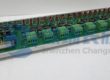
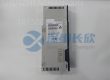
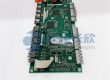
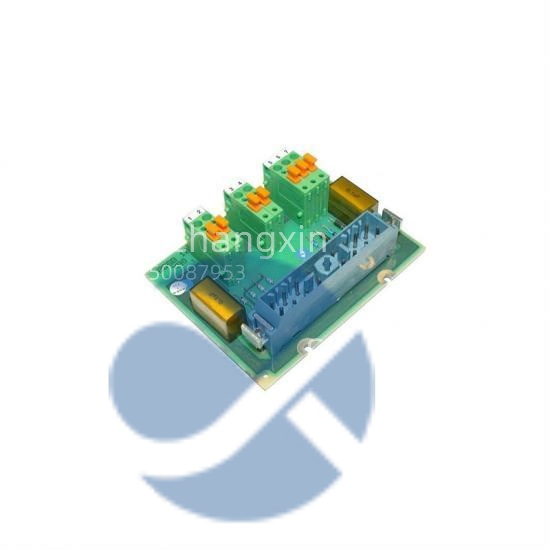
The ABB YB161102-BF/1 (also referenced as YB161102-BF_1) is a robust industrial control circuit board and connection unit manufactured by ABB, a global leader in robotics and industrial automation. This module is a critical component within ABB’s DSQC (Drive System Quality Control) series, specifically identified as the DSQC119 S2 Connection Unit . It serves as a fundamental I/O (Input/Output) and communication interface board, designed to be installed inside ABB robot controllers (like the IRC5). Its primary function is to provide a reliable hardware interface for connecting a wide array of field devices—such as sensors, grippers, welding equipment, and safety interlocks—directly to the robot’s main computer, enabling precise control and real-time feedback.
Application Scenarios
In a high-volume automotive welding line, a six-axis ABB robot performs thousands of spot welds per hour. Each weld cycle requires perfect synchronization: the robot must position itself, receive a “part-in-place” signal from a sensor, close the welding gun, fire the weld, verify quality, and then move on. A failure in any of these external signals can cause a crash or a defective part. The ABB YB161102-BF/1 board is the unsung hero in this process. Mounted inside the robot controller cabinet, it acts as the central nervous system for all these peripheral devices. Digital inputs on the board receive signals from the part sensors and safety gates, while digital outputs command the weld gun to close and the weld timer to start. Its robust design ensures that amidst the electrical noise generated by powerful welding transformers, every signal remains clean and reliable. This scenario highlights the board’s core value: it directly addresses the pain point of integrating diverse and critical field devices with the high-speed robot controller, ensuring flawless, synchronized, and safe automation in demanding production environments.
Note: Discrepancies in dimensions, weight, and voltage may indicate different hardware revisions, mounting configurations, or sourcing from various product listings. The core specifications regarding its role as a DSQC119 I/O board, communication protocols, and environmental ratings are consistent.
Technical Principles and Innovative Values
The ABB YB161102-BF/1 is engineered as a modular, real-time I/O subsystem that extends the robot controller’s reach to the factory floor.
Innovation Point 1: Real-Time, Deterministic Communication for Synchronized Motion Control. The board’s support for high-speed fieldbus protocols like EtherCAT and CANopen is its cornerstone innovation . Unlike standard Ethernet, EtherCAT enables deterministic, sub-millisecond communication cycles. This allows the robot’s motion planner to receive sensor inputs (e.g., a vision system’s coordinates) and issue output commands (e.g., to a gripper) in perfect lockstep with its own high-speed trajectory calculations. This eliminates communication jitter, which is critical for applications like precision assembly or synchronized welding where timing errors of a few milliseconds can lead to defects.
Innovation Point 2: Modular and Scalable I/O Architecture within the DSQC Ecosystem. As part of the DSQC119 series, the YB161102-BF/1 is designed for a modular rack or panel-mount system inside the controller . This allows engineers to mix and match different specialized DSQC boards (e.g., for analog I/O, safe I/O, or specific fieldbus masters) alongside this general-purpose digital I/O board. This modularity provides immense flexibility, enabling a single robot controller platform to be customized for tasks ranging from simple material handling (using mostly digital I/O) to complex process applications like dispensing or machining (requiring analog control).
Innovation Point 3: Industrial Hardening for Uninterrupted Operation in Hostile Environments. The board is built to survive on the factory floor. Its IP67 protection rating ensures it is completely sealed against dust and can withstand temporary immersion, protecting it from coolant splashes or washdowns . The wide operating temperature range (-20°C to +60°C) guarantees reliable performance in unheated warehouses or near heat-generating processes . This ruggedness minimizes downtime due to environmental factors, a critical consideration for continuous production lines where every minute of stoppage is costly.
Application Cases and Industry Value
Case Study: Automated Palletizing and Warehousing System
A large e-commerce fulfillment center deployed a fleet of ABB robots for palletizing boxes of varying sizes and weights. The system’s intelligence relied on a network of barcode scanners, weight scales, and photoelectric sensors to identify each box and determine its optimal placement on the pallet. The critical challenge was integrating these dozens of asynchronous sensor signals with the robot’s fast-paced pick-and-place cycle.
The solution centered on the robot’s IRC5 controller equipped with the ABB YB161102-BF/1 board. All sensor outputs were wired to the board’s digital inputs. A master PLC communicated the palletizing pattern to the robot via EtherCAT, which was processed by the YB161102-BF/1. The board’s fast response ensured that the moment a sensor confirmed a box was in the pickup position, the robot could immediately execute its grip and move command without waiting for a scan cycle from a slower, centralized PLC.
The logistics manager reported: “The reliability of the YB161102-BF/1 I/O system was a game-changer. In our 24/7 operation, we’ve had zero communication failures attributed to the board itself. Its ability to handle the electrical noise from conveyor motors and sorters has been flawless. It transformed our robots from simple arms into intelligent, sensor-driven units, increasing our throughput by 35% while drastically reducing mis-picks.”
Related Product Combination Solutions
A complete robotic workcell utilizing the ABB YB161102-BF/1 typically involves these synergistic components from the ABB ecosystem:
ABB IRC5 Robot Controller: The main control cabinet that houses the YB161102-BF/1 and other DSQC boards, executing the robot program.
ABB RobotWare OS & Software: The operating system and programming environment (e.g., RobotStudio) used to configure the I/O signals mapped to the YB161102-BF/1.
Other DSQC Series I/O Modules: Such as the DSQC 1000 series for additional digital I/O, DSQC 1032 for analog I/O, or DSQC 679 for SafeMove2 safety I/O, which can be installed alongside the YB161102-BF/1.
ABB Teach Pendant (FlexPendant): The handheld interface used by operators to jog the robot, run programs, and monitor the status of I/O points on the YB161102-BF/1.
ABB M98/M99 Fieldbus Adapters: External communication modules that can extend the EtherCAT or PROFINET network from the controller to remote I/O stations, often managed through configurations on the main I/O board.
ABB SMB (Serial Measurement Board) & RDC (Resolver Digital Converter) Boards: Like the YB161102-AD , these are specialized boards for reading motor encoders, which work in concert with the general I/O provided by the YB161102-BF/1.
Industrial Ethernet Switch (e.g., ABB CEX-B.001): To create a robust network backbone for the EtherCAT communication managed by the controller and its I/O boards.
Installation, Maintenance, and Full-Cycle Support
Installation of the ABB YB161102-BF/1 is performed by qualified personnel as part of the robot controller assembly or during an upgrade. The board is typically installed into a dedicated slot on the backplane within the IRC5 controller cabinet. Power (24VDC) is connected via the controller’s internal power supply. Field device wiring (sensors, actuators) is landed on the board’s terminal blocks or connected via its M12 ports . Crucially, the I/O configuration must be mapped and defined within the ABB RobotWare software using the teach pendant or RobotStudio. Each digital and analog channel on the YB161102-BF/1 is assigned a unique signal name (e.g., di1_PartPresent, do1_GripperClose) that the robot program can read from or write to.
Routine maintenance primarily involves ensuring the integrity of connections and the operating environment. Periodically check that all M12 connectors are securely fastened and free of corrosion. Verify that the controller cabinet’s cooling system is functioning to keep internal temperatures within the board’s specified range. The board itself has no user-serviceable parts. Diagnostics are performed through the robot’s teach pendant, where the status of all I/O signals can be monitored in real-time, and faults can be traced.
We provide comprehensive support for the ABB YB161102-BF/1 and related DSQC components. From verifying compatibility with your specific IRC5 controller generation to supplying guaranteed, tested replacement boards, we ensure minimal downtime. Our technical team can assist with I/O configuration, signal troubleshooting, and integration best practices. For legacy systems where this board may be discontinued, we can also source reliable refurbished units. Contact us for a compatibility check or to discuss your specific robotic I/O and control challenges.