WhatsApp:+86 18150087953 WeChat: +86 18150087953
  Email:

Description:
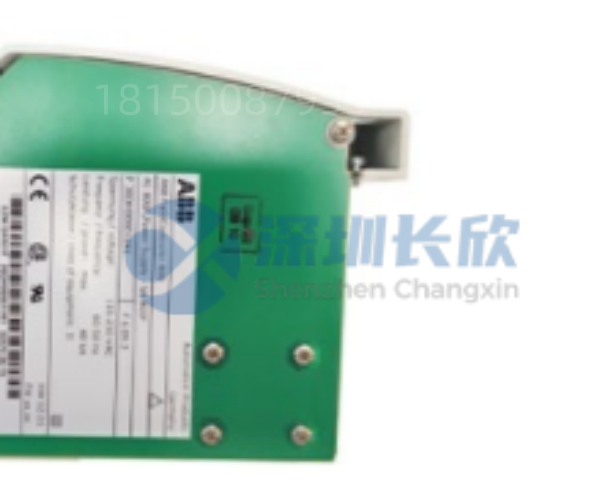
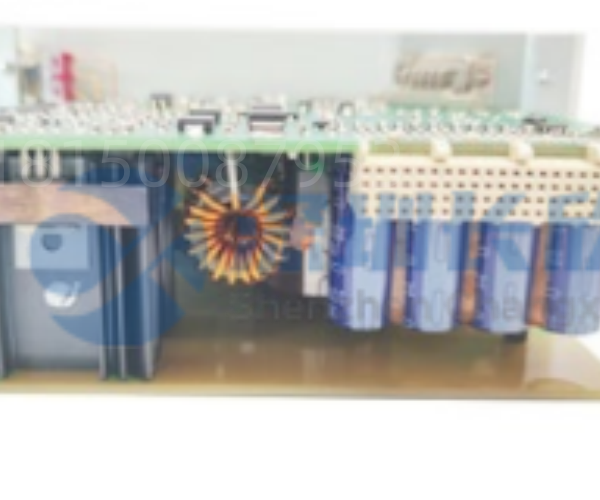
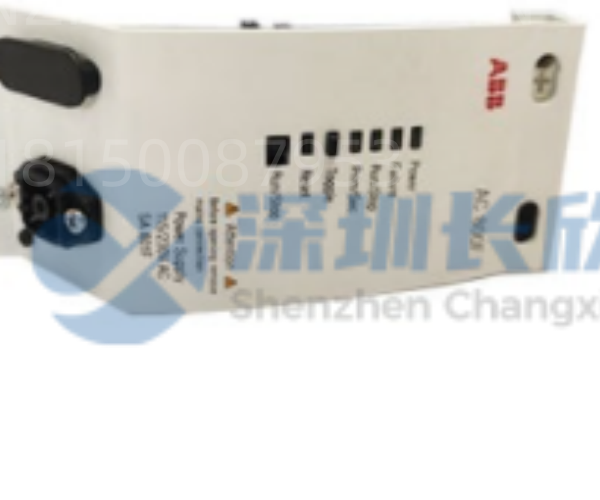
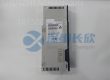
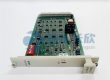
The ABB SA801F is a high-integrity functional safety controller module, designed to implement safety functions up to Safety Integrity Level (SIL) 3 according to IEC 61508 and Performance Level (PL) e according to ISO 13849-1. It serves as the core processing unit within ABB’s safety automation system, enabling the integration of safety and standard control within a unified architecture.
Application Scenarios:
In an automated automotive assembly line, a robotic cell performs high-speed welding operations. Protecting personnel during maintenance interventions is paramount. A safety system monitors guard doors, light curtains, and emergency stops. The ABB SA801F module is the brain of this system. When a safety sensor signals a breach, the SA801F processes this input via its certified safety logic. Within milliseconds, it issues a Safe Torque Off (STO) command to the robot drives and opens a safety relay to cut power, all while logging the event. Unlike a separate safety relay cabinet, the SA801F resides in the same rack as the standard PLC, allowing seamless data exchange. The standard controller can receive a signal that a safety stop occurred due to a specific door, enabling precise diagnostic messages on the HMI, reducing machine downtime by guiding technicians directly to the source of the interruption.
Technical Principles and Innovative Values:
The ABB SA801F represents a convergence of standard automation and functional safety, moving beyond standalone safety relays to a programmable, integrated solution.
Innovation Point 1: Unified Safety and Standard Control Platform. The most significant innovation of the SA801F is its integration into the standard AC 500 PLC platform. It shares the same rack, backplane, and engineering environment as standard CPUs. This eliminates the need for separate hardware, complex wiring between systems, and dual engineering tool sets. Safety logic and standard logic can exchange data seamlessly, enabling advanced diagnostic functions and coordinated machine responses that are impossible with isolated safety relays.
Innovation Point 2: High Diagnostic Coverage and Flexible Safety Programming. The module employs hardware and software techniques like two-channel processing, cross-comparison, and cyclic redundancy checks (CRC) to achieve a high diagnostic coverage, which is essential for reaching SIL 3 / PL e ratings. Unlike hard-wired relay systems, it is programmed using ABB’s certified Safe Editor 2. which uses function block diagrams (FBD) or ladder logic (LD) tailored for safety. This allows for implementing complex safety functions like muting, restart interdependencies, and zone control with much greater flexibility and simpler validation.
Innovation Point 3: Certified Networked Safety Communication. The SA801F supports safety protocols like PROFIsafe or CIP Safety. This allows safety devices (e.g., laser scanners, door locks, E-Stop buttons) and drives with safety functionality to be connected via a standard fieldbus network instead of point-to-point wiring. It drastically reduces installation cost and complexity while providing detailed diagnostic information from each safety device directly to the controller.
Application Cases and Industry Value:
Case Study: Modernizing a Pharmaceutical Packaging Line’s Safety System
A pharmaceutical company needed to upgrade an aging packaging line to improve safety, flexibility, and diagnostics. The old system used a maze of safety relays, making troubleshooting slow and modifications nearly impossible. The goal was to add new guarded zones and safety-rated speed monitoring for conveyor access points.
The solution centered on an AC 500 PLC with an ABB SA801F safety module. The new safety devices, including interlock switches and safe speed monitors, were connected via a PROFINET network with PROFIsafe. All safety logic, from E-Stops to zone control, was programmed in the SA801F. During commissioning, the ability to simulate and test logic software saved weeks. In operation, when a guard door was opened, the SA801F not only safely stopped the corresponding zone but also sent a specific message to the standard PLC, which displayed “Zone 2 Access Door Open” on the main HMI. This precise diagnostics cut average fault-finding time from 45 minutes to under 2 minutes. The project engineer stated, “The ABB SA801F gave us a future-proof safety architecture. Adding a new safety function is now a software change and network configuration, not a week of rewiring. The integration and diagnostics have transformed how we maintain the line.”
Related Product Combination Solutions:
ABB PM581 or PM584: Standard AC 500 PLC processors that can be installed in the same rack as the SA801F, handling the non-safety machine control.
ABB SD521 DI823: A digital input module that can be configured for standard or safe input use, providing signals to the SA801F.
ABB SD522 DQ822: A digital output module with safety capability, used to execute safe commands (like STO) to contactors or drives as directed by the SA801F.
ABB CSM01: A communication interface module for connecting safety-related sensors and actuators via safe communication protocols.
ABB Safe Editor 2: The dedicated, certified software tool for programming, configuring, and documenting the safety logic within the SA801F.
ABB XSeries Safe I/O Modules: Decentralized I/O modules with safety certification that can be networked to the SA801F via PROFIsafe.
ABB Drives with Safety Option (e.g., ACS880 with Safe Move): Variable speed drives that can receive Safe Torque Off or Safe Speed commands directly from the SA801F over the network.
Installation, Maintenance, and Full-Cycle Support:
Installation involves inserting the ABB SA801F module into a designated slot of an AC 500 PLC rack, following the specific slot rules for safety CPUs outlined in the hardware manual. Electrical installation focuses on the proper wiring of the sensors and actuators to the associated safe I/O modules. The critical step is the software configuration and programming using the certified Safe Editor 2 tool, where the safety application logic is developed, tested, and validated. A full validation report, as required by safety standards, must be generated.
Routine maintenance involves checking the system status LEDs on the module and reviewing the diagnostic buffers in the engineering software. The SA801F provides detailed fault information, which aids in quick troubleshooting. Any changes to the safety application logic require a strict management-of-change process, including impact analysis, modification in Safe Editor 2. thorough testing, and updating of the validation documentation. Replacement of the module itself requires uploading the certified safety program from a secure archive and downloading it to the new unit.
We provide comprehensive support for the ABB SA801F and the associated safety system, from initial concept and safety requirement specification to software development, validation support, and training. We supply genuine ABB components and certified software tools, ensuring your safety system is built on a reliable and compliant foundation. Our experts can help you navigate the complexities of functional safety to create a machine safety solution that protects people, productivity, and your investment.