WhatsApp:+86 18150087953 WeChat: +86 18150087953
  Email:

Description
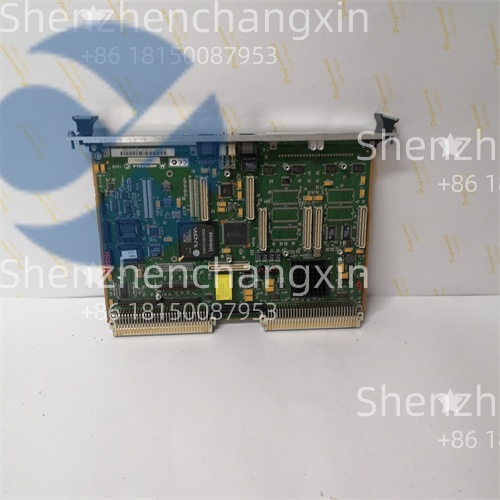
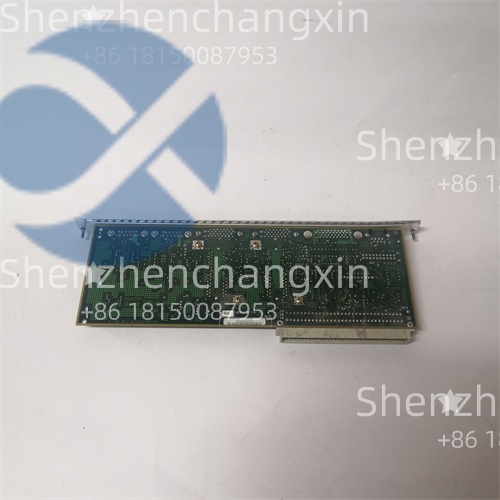
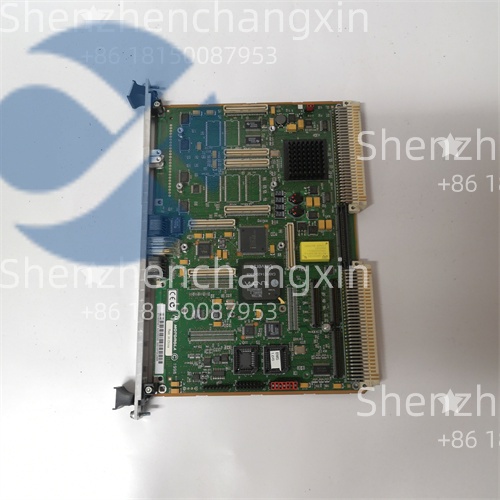
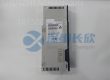
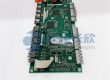
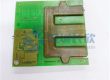
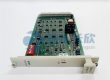
The MOTOROLA MVME374is a high-performance,7U form factor VMEbus Single Board Computer(SBC)developed by the Motorola Computer Group(now part of Emerson).It is designed as a central processor module for demanding,real-time embedded computing systems,providing substantial processing power,memory,and I/O capabilities for critical applications in telecommunications,defense,and industrial automation.
Application Scenarios
In a military command and control vehicle,the computing system must process vast amounts of radar and sensor data in real-time,operate reliably under extreme vibration and temperature,and have a long,stable lifecycle.A generic commercial server would fail under these conditions.Here,the MOTOROLA MVME374SBC is deployed as the main processing node within a ruggedized VME chassis.Its ruggedized design handles harsh environments,while its PowerPC processor and real-time operating system(e.g.,VxWorks)guarantee deterministic performance for data fusion algorithms.The board’s PMC(PCI Mezzanine Card)site allows for the addition of a custom graphics or interface card,enabling a tailored solution.The value of the MVME374is its blend of commercial off-the-shelf(COTS)availability and military-grade reliability,providing a scalable,maintainable computing core for systems where failure is not an option.
Parameter
Main Parameters
Value/Description
Product Model
MVME374
Manufacturer
Motorola Computer Group(Emerson Network Power)
Product Category
VMEbus Single Board Computer(SBC)
Form Factor
7U VME(Standard 7U x 160mm VME board).[Standard size for high-performance VME systems]
Processor
High-performance PowerPC CPU(e.g.,MPC74xx or similar G4 series).[Provides strong compute performance]
Memory
Typically features onboard SDRAM(soldered or socketed)and L2 cache.Supports substantial DRAM via onboard DIMM slots.
VMEbus Interface
Full VME64(or VME64x)master/slave interface.[Provides high-bandwidth system interconnect]
Onboard I/O
Includes dual Fast Ethernet(10/100 Mbps)ports,serial ports(RS-232),USB,and SCSI interfaces.
Expansion
Features one or more PMC(PCI Mezzanine Card)sites.[Critical for adding application-specific I/O like graphics,comms,or drives]
Storage
Includes onboard flash memory(DiskOnChip)for OS/boot and support for IDE devices.
Real-Time Clock
Battery-backed RTC for timekeeping.
Operating Support
Compatible with real-time operating systems(RTOS)like VxWorks,LynxOS,and Linux.
Technical Principles and Innovative Values
Innovation Point 1:Optimized for Deterministic,Real-Time Performance:Unlike standard PCs,the MVME374’s architecture—combining a high-performance PowerPC RISC processor with a carefully engineered memory controller and local bus—is designed for low-latency,predictable response.This is critical in embedded applications where missing a processing deadline can mean a system failure.The board’s design minimizes non-deterministic elements,making it ideal for real-time operating systems.
Innovation Point 2:Ruggedized COTS Design for Harsh Environments:The MVME374is built to commercial off-the-shelf standards but with components and construction techniques(conformal coating,ruggedized connectors)that provide enhanced reliability in environments with extended temperature ranges,shock,and vibration.This delivers military-grade robustness without the extreme cost and lead times of full mil-spec components,offering an excellent balance for aerospace,defense,and industrial applications.
Innovation Point 3:High-Bandwidth,Modular Expansion via PMC:One of the board’s most powerful features is the inclusion of PCI Mezzanine Card(PMC)sites.This standardized mezzanine format allows system integrators to customize the MVME374for a specific application by adding specialized PMC cards for functions like fiber channel,additional serial ports,graphics processing,or custom digital I/O.This modularity extends the board’s utility and lifecycle,protecting the core computing investment.
Application Cases and Industry Value
Case Study:Telecommunications Base Station Controller Upgrade
A telecommunications equipment manufacturer needed to upgrade the processing hardware in their existing base station controllers to handle increased 3G data traffic and new network management features.The legacy system was based on the VMEbus architecture,requiring a processor card upgrade that was electrically,mechanically,and software-compatible.
Solution&Implementation:
The manufacturer selected the MOTOROLA MVME374as a drop-in upgrade for older processor cards.Its higher clock speed PowerPC CPU and increased memory capacity provided the necessary headroom.A custom PMC card with additional T1/E1 interface lines was developed and added to the MVME374’s PMC site.The existing VxWorks application software was recompiled for the new board with minimal modification due to architectural similarity.
Results and Value Delivered:
Extended System Lifespan and Performance Boost:The upgrade path using the MVME374allowed the telecom company to avoid a complete,costly system redesign.The new controllers saw a 60%increase in call processing capacity and could support new data services.
Reduced Development Risk and Time:Leveraging the established VMEbus ecosystem and software compatibility significantly shortened the development and validation cycle for the new controller unit,getting it to market faster.
Maintained Reliability:The MVME374’s proven design and robust construction maintained the high mean-time-between-failures(MTBF)required for carrier-grade telecom equipment.
Related Product Combination Solutions
MVME712:A related transition or companion board in the Motorola VME line,potentially offering different processor or I/O configurations for varying performance needs within the same mechanical family.
PMCPPC255:An example of a Motorola-branded PMC module,such as a PowerPC-based compute or I/O card,that could be used to augment the capabilities of the MVME374in its PMC slot.
VME Chassis(e.g.,from Emerson/Artesyn,Kontron):A rugged 6U or 7U VME subrack,backplane,and power supply required to house and operate the MVME374SBC and other VME modules.
Transition Boards(e.g.,TSI148):Critical interconnect boards that adapt the VME P0/J0 connectors to bring rear panel I/O(like Ethernet,USB,serial)out to the chassis connectors for the MVME374.
Memory DIMMs:Compatible PC100 or PC133 SDRAM DIMM modules used to populate the MVME374’s memory sockets,directly impacting system performance.
Real-Time Operating System(VxWorks,LynxOS):The system software that turns the MVME374hardware into a deterministic,reliable application platform.Board Support Packages(BSPs)are essential.
Emerson MVME2500 Series:Successor product lines to the MVME374,often based on more recent PowerPC or Intel processors,providing a potential technology refresh path.
Installation,Maintenance,and Full-Cycle Support
Installation and commissioning of the MOTOROLA MVME374involves careful handling as an electrostatic-sensitive device.It is installed into a compatible VME chassis by aligning it with the guide rails and firmly seating it into the VME backplane connectors.Proper installation of any required transition module for rear I/O is critical.Commissioning requires a host development system running the appropriate tools(e.g.,Wind River Workbench for VxWorks)to download the boot firmware,RTOS kernel,and application software onto the board’s flash memory or hard drive.
Routine maintenance primarily involves monitoring the system’s health via software and ensuring adequate cooling in the chassis.The most common corrective action is board replacement.Due to the complexity of these systems,having a known-good configuration backup of all firmware and software is paramount.When replacing a suspect MVME374,technicians must ensure compatibility of the revision level,firmware,and any installed mezzanine cards.The modular nature of VME systems allows for relatively swift board-level swap-out to restore function.
We provide dedicated lifecycle support for legacy embedded components like the MOTOROLA MVME374.We understand the challenges of maintaining long-lifecycle systems.Our services include sourcing genuine,factory-pulled modules that undergo rigorous functional testing in a simulated VME environment.We can also assist with compatibility verification,firmware version management,and identifying suitable alternative or equivalent boards from the product migration path.Our goal is to be your partner in sustaining your critical embedded systems.
For reliable supply and expert support for your Motorola VME system,contact us regarding the MVME374 or other legacy embedded components.