WhatsApp:+86 18005022363 WeChat: +86 18005022363
 Email:

Technical Specifications
| Parameter | Value |
|---|---|
| Product Model | 1756-IT6I |
| Manufacturer | Rockwell Automation / Allen-Bradley |
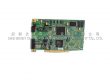
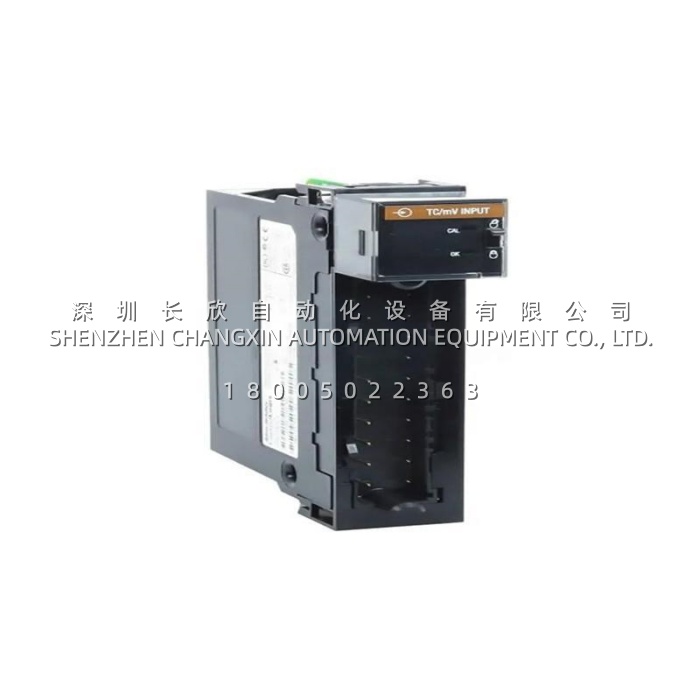
| Product Type | ControlLogix Isolated Thermocouple / mV Analog Input Module |
| Number of Inputs | 6 individually isolated differential inputs |
| CJC Inputs | 1 (built-in cold junction compensation) |
| Input Ranges | −12…+78 mV; −12…+30 mV (high resolution) |
| Resolution | 16-bit; 1.4 µV/bit (−12…+78 mV); 0.7 µV/bit (high res.) |
| Supported TC Types | B, E, J, K, R, S, T, N, C, D, L (TXK/XK) |
| Linearization | ITS-90 standard |
| Conversion Method | Sigma-delta |
| Data Formats | Integer, left-justified 2’s complement; IEEE 32-bit floating point |
| Module Scan Time | 10 ms min, integer (mV); 25 ms min, float (mV); 50 ms min, float (TC) |
| Calibrated Accuracy @ 25°C | Better than 0.1% of range |
| Module Error | 0.5% of range |
| CJC Accuracy, Local | ±0.3…3.2°C (depending on channel and TC type) |
| CJC Accuracy, Remote | ±0.3°C |
| Recommended Calibration Interval | 6 months |
| Input Impedance | >10 MΩ |
| Overvoltage Protection | 120V AC/DC maximum |
| Channel Bandwidth | 15 Hz (−3 dB) |
| Settling Time | <80 ms to 5% of full scale |
| Isolation Voltage | 250V continuous (basic insulation); 1350V AC for 2 s test |
| Normal Mode Rejection | 60 dB @ 60 Hz |
| Common Mode Rejection | 120 dB @ 60 Hz; 100 dB @ 50 Hz |
| Open-Circuit Detection | Positive full scale within 2 s |
| Backplane Current Draw | 250 mA @ 5.1V DC; 125 mA @ 24V DC |
| Power Dissipation | 4.3 W maximum (14.66 BTU/hr) |
| Offset Drift | 0.5 µV/°C |
| Gain Drift | 65 ppm/°C nominal; 80 ppm/°C maximum |
| Connection Type | 20-pin removable terminal block |
| Terminal Blocks | 1756-TBNH, 1756-TBSH |
| Indicators | Module status, I/O status, channel fault LEDs |
| Operating Temperature | 0°C to 60°C |
| Storage Temperature | −40°C to 85°C |
| Relative Humidity | 5% to 95%, non-condensing |
| Shock / Vibration | 30 G operating; 2 G @ 10–500 Hz |
| Enclosure Rating | Open style (none) |
| Temperature Code | T4A (North America); T4 (IEC) |
| Certifications | UL, CSA, CE, ATEX, C-Tick, FM, GOST, KC, RCM, ABS, DNV, GL, LR |
| Lifecycle Status | Discontinued (effective 31 March 2017) |
| Warranty | 1 year |
Main Features and Advantages
Per-channel isolation removes ground loops: The six inputs of the Allen-Bradley 1756-IT6I are isolated from each other as well as from the backplane, with 250V continuous rating. In a furnace or reactor application where thermocouples are distributed across grounded metalwork at different potentials, this is the difference between a stable reading and a drifting one. Shared-common input cards cannot be used in that situation without external isolation barriers; the Allen-Bradley 1756-IT6I provides it in one slot.High-resolution range for base-metal thermocouples: Selecting the −12…+30 mV range gives 0.7 µV/bit resolution, twice the definition of the standard range. For a Type K thermocouple this improves the temperature resolution available to the controller and lets slow processes such as annealing ovens and heat-soak cycles be controlled on finer increments. The range is selected per channel in software, so the decision costs nothing in hardware.Mixed signal types in one module: Because every channel is configured independently, the Allen-Bradley 1756-IT6I can accept a Type R on one channel, a Type J on the next, and a direct millivolt input on a third. This is particularly useful in research and test cells, skid-mounted equipment, and pilot plants where the instrument list is not homogeneous and where a separate card for each signal type would waste rack space.Built-in CJC and ITS-90 linearization: The cold-junction compensation is performed by the module rather than by the program, and the thermocouple EMF is linearized against the current ITS-90 tables. The local CJC is accurate to within ±0.3…3.2°C depending on channel and thermocouple type, while a remote CJC reference tightens that to ±0.3°C. The result is that the value arriving in the controller tag is already a temperature in degrees, not a raw millivolt count that the programmer must maintain a linearization routine for.Fault detection that fails safe: Open-circuit detection drives the channel to positive full scale within two seconds. A broken thermocouple therefore reads as an over-temperature condition rather than as a plausible process value, and the control strategy can be written to trip or to flag the fault. Combined with under-range, over-range, process and rate alarms, the Allen-Bradley 1756-IT6I gives the operator both the measurement and the confidence to act on it.Noise performance for electrically hostile environments: With 120 dB common-mode rejection at 60 Hz, 100 dB at 50 Hz, and 60 dB normal-mode rejection, the Allen-Bradley 1756-IT6I reads cleanly in panels where thyristor-fired heaters, contactors, and variable-frequency drives share the same enclosure. The 15 Hz channel bandwidth and the configurable digital and notch filtering remove the remaining ripple.