WhatsApp:+86 18005022363 WeChat: +86 18005022363
 Email:

Technical Specifications
| Parameter Name | Parameter Value |
|---|---|
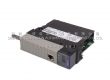
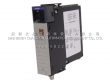
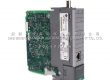
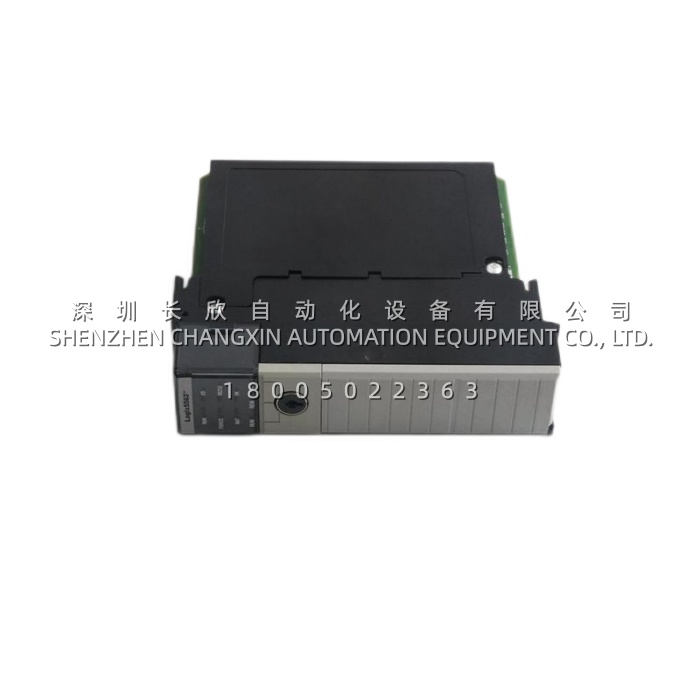
| Product Model | 1756-IA32 |
| Manufacturer | Allen-Bradley (Rockwell Automation) |
| Product Type | Digital AC Input Module |
| Input Channels | 32 (two groups of 16, each group with a common) |
| Nominal Input Voltage | 120V AC |
| On-State Voltage Range | 74–132V AC, 47–63 Hz |
| Off-State Voltage | 20V AC maximum |
| On-State Current | 5 mA minimum at 74V AC; 15 mA maximum at 132V AC |
| Off-State Current | 2.5 mA AC maximum |
| Input Impedance | 14.0 kΩ at 60 Hz maximum |
| Backplane Current (5.1V DC) | 165 mA |
| Backplane Current (24V DC) | 2.0 mA |
| Backplane Power | 0.9 W |
| Maximum Power Dissipation | 6.1 W at 60°C |
| Thermal Dissipation | 20.8 BTU/hr |
| Isolation Voltage | 250V continuous (group-to-group and user-to-system) |
| Input Filter Time (OFF to ON) | User-selectable: 1 ms or 2 ms (plus hardware delay) |
| Input Filter Time (ON to OFF) | User-selectable: 9 ms or 18 ms (plus hardware delay) |
| Timestamp Accuracy | ±200 μs |
| Terminal Block | 1756-TBCH (cage clamp) or 1756-TBS6H (spring clamp), 36-position |
| Operating Temperature | 0°C to 60°C (32°F to 140°F) |
| Lifecycle Status | Active |
Main Features and Advantages
High-Density 32-Channel Architecture with Grouped Commons: The 1756-IA32 packs 32 AC input channels into a single ControlLogix slot, a density that reduces the number of modules required for installations with extensive field device counts. The inputs are divided into two groups of 16, each with its own common terminal, providing a practical balance between wiring simplicity and electrical segmentation. This grouped-common arrangement allows a single module to monitor devices that may be powered from separate control transformers or distribution circuits, while maintaining the 250V continuous group-to-group isolation that prevents cross-group interference .
Software-Configurable Input Filtering for Application Flexibility: The 1756-IA32 allows engineers to select input filter times through the programming software rather than through hardware jumpers or external components. OFF-to-ON transitions can be filtered at 1 ms or 2 ms, while ON-to-OFF transitions can be filtered at 9 ms or 18 ms, in addition to the module’s inherent hardware delays . This configurability is valuable in applications where electrical noise or contact bounce varies across different field devices: a fast filter can be selected for responsive inputs like limit switches, while a slower filter can be applied to noisy circuits without requiring external filter components.
Change-of-State Detection and Timestamping: The 1756-IA32 supports change-of-state (COS) detection, which allows the module to report input transitions to the controller as events rather than relying solely on the requested packet interval (RPI) for data updates. The module can also timestamp input transitions with ±200 μs accuracy, enabling sequence-of-events recording across distributed inputs . In troubleshooting scenarios, timestamped COS data helps engineers determine the precise order in which field devices actuated, a capability that is particularly useful for diagnosing cause-and-effect relationships in interlocked systems or for validating the timing of safety-adjacent control sequences.
Removable Terminal Block Design for Maintainability: The 1756-IA32 uses a separately ordered 36-position removable terminal block (RTB), available in cage clamp (1756-TBCH) or spring clamp (1756-TBS6H) versions . This architecture allows field wiring to be terminated on the RTB before the module is installed, and in the event of module replacement, the RTB can be removed from the failed module and transferred to the replacement without disturbing field connections. The RTB also supports user-defined mechanical keying, which prevents accidental insertion of the terminal block into the wrong module slot—a safeguard against wiring errors during maintenance in densely populated chassis .