WhatsApp:+86 18005022363 WeChat: +86 18005022363
  Email:
Description
Application Scenarios
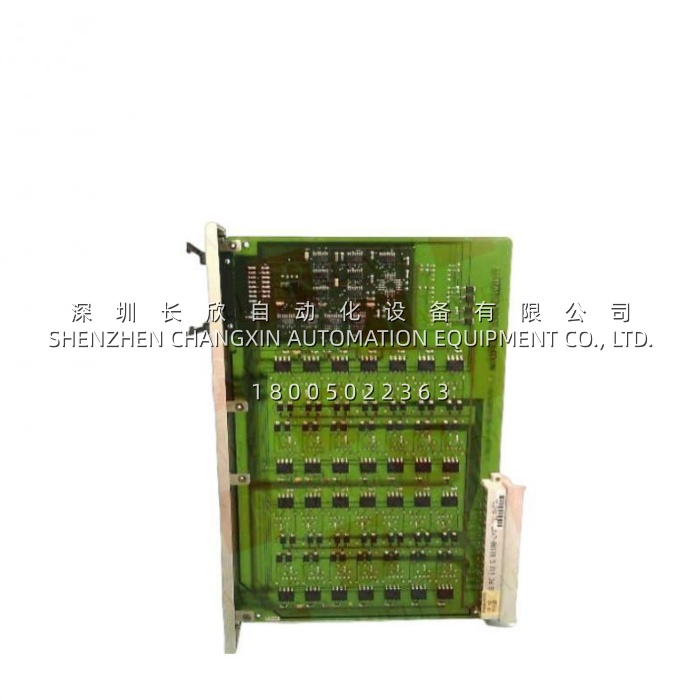
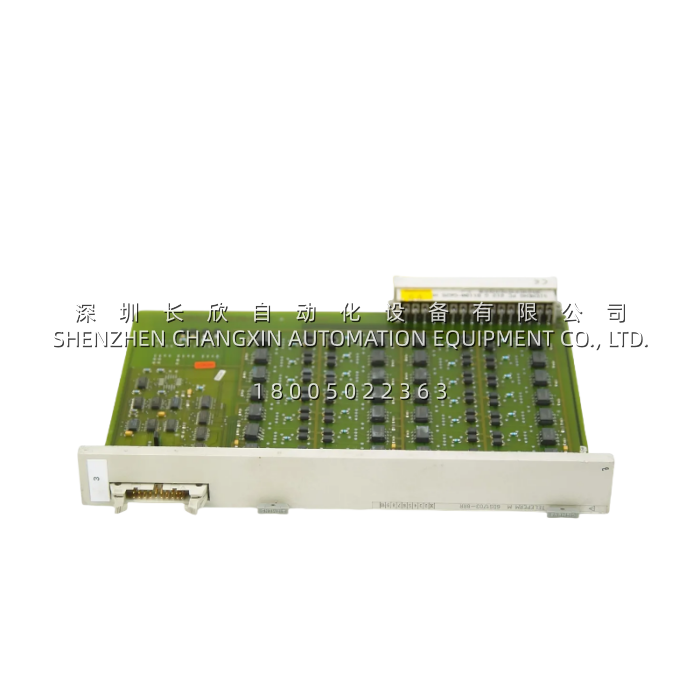
Consider a coal-fired power plant in Southeast Asia operating a 1980s-vintage TELEPERM M system. After a lightning strike damaged the original 6DS1703-8RR module responsible for monitoring superheater tube temperatures, the plant faced an immediate threat of unplanned shutdown. With no direct replacement available from Siemens (the TELEPERM M series has been discontinued), the engineering team sourced a fully tested Siemens 6DS1703-8RR from a specialty automation supplier. The module was installed in the MS I/O rack within hours, restoring 14 thermocouple channels to service and preventing a costly 72-hour outage that could have exceeded $500,000 in lost generation revenue.
In another instance, a chemical processing facility needed to expand its reactor temperature monitoring points to comply with new safety regulations. Instead of deploying an entirely new PLC system, they integrated a Siemens 6DS1703-8RR module into their existing TELEPERM M rack, adding 14 Pt100 channels without modifying the central controller or rewiring field terminations. The expansion was completed during a scheduled maintenance turnaround, demonstrating the module’s plug-and-play compatibility with the TELEPERM M architecture.
Parameters
| Main Parameters | Value/Description |
|---|---|
| Product Model | Siemens 6DS1703-8RR (also 6DS17038RR) |
| Manufacturer | Siemens (Germany) |
| Product Category | MS Point Extension Module / Measurement Point Extender |
| Input Channels | Up to 14 channels for Thermocouples and/or Pt100 RTDs |
| Channel Isolation | 1.5 kV AC (channel-to-earth) for robust noise immunity |
| Input Range | –5 mV to +55 mV (thermocouple) with negative gradient buffer |
| Accuracy Contribution | < ±0.2 °C internal error budget (sensor tolerances excluded) |
| Terminal Rating | 300 V AC / DC dielectric protection |
| Operating Temperature | –20°C to +70°C (rack ambient; industrial hardened) |
| Storage Temperature | –40°C to +85°C |
| Humidity | 5 – 95% RH (non-condensing) |
| Dimensions | Approx. 24.3 x 19 x 3 cm (standard TELEPERM M form factor) |
| Weight | 0.22 – 0.32 kg (lightweight to reduce connector stress in vibration) |
| Mounting Type | Plug-in into TELEPERM M MS I/O rack backplane |
| System Compatibility | Siemens TELEPERM M — AS620, CS275, OM650 |
Technical Principles and Innovative Values
Innovation Point 1 – Automated Self-Calibration for Long-Term Accuracy: The Siemens 6DS1703-8RR executes an automatic calibration cycle every 30 seconds, lasting just 50 milliseconds. This routine uses a module-internal reference voltage to compensate for temperature drift, component aging, and offset errors across the entire signal chain—from the multiplexer (MUX) and high-impedance input amplifiers through to the voltage-to-frequency converter. The result is sustained < ±0.2 °C accuracy without manual recalibration, a critical advantage for long-term installations where maintenance access is limited.
Innovation Point 2 – High-Density Point Extension Without Additional CPU Load: Unlike a standard analog input module that requires the central processor to manage channel scanning, the Siemens 6DS1703-8RR operates as a “Point Expansion node” that aggregates up to 14 sensor readings into a transfer memory (URAM) accessible by the master controller. This architecture offloads scanning overhead from the CPU, allowing the Siemens 6DS1703-8RR to expand I/O capacity without adding a second processor or modifying the control application.
Innovation Point 3 – Built-in Negative Voltage Headroom for Sub-Ambient Monitoring: The Siemens 6DS1703-8RR is calibrated to accept input signals down to –5 mV, a safety buffer designed to prevent analog-to-digital converter (ADC) clamping during negative temperature gradients or sensor drift. This ensures precise sub-ambient monitoring capability, essential for cold-junction compensation and cryogenic applications where sensor output may dip below 0 mV.
Innovation Point 4 – Lightweight Design for Vibration Resistance: Weighing only 0.22–0.32 kg, the Siemens 6DS1703-8RR reduces inertial stress on backplane connectors—a common point of failure in high-vibration environments like turbine decks. The low-mass polymer housing minimizes “connector fretting” caused by resonance, enhancing long-term reliability compared to heavier