WhatsApp:+86 18005022363 WeChat: +86 18005022363
  Email:
Description
Application Scenarios
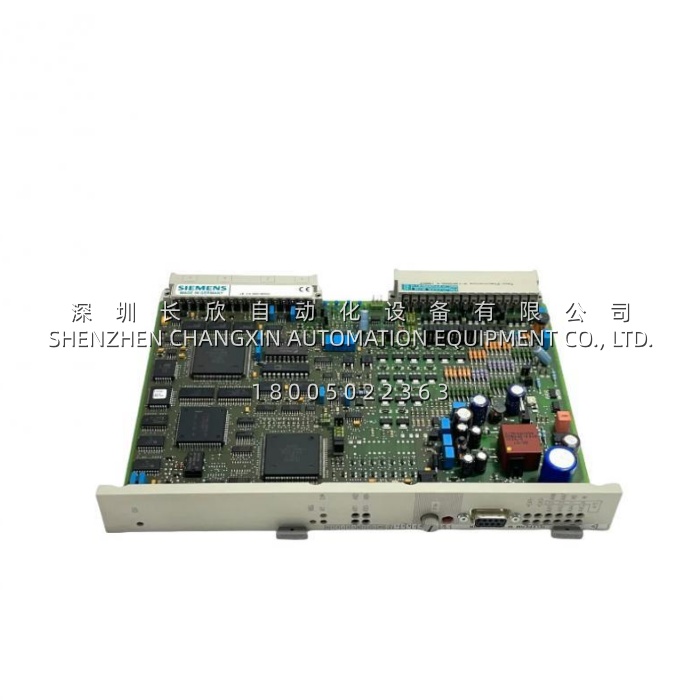
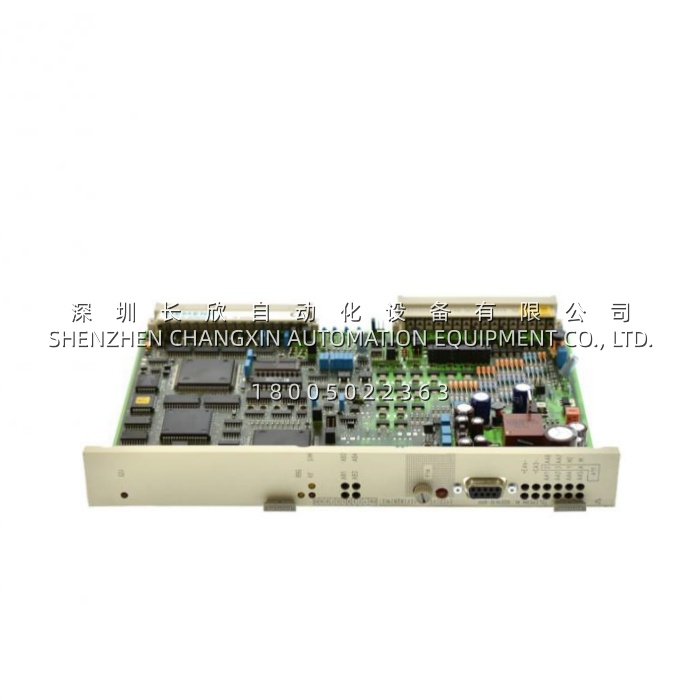
In a 600 MW coal-fired power plant still running TELEPERM ME for boiler auxiliary control, the original 6DS1412-8AA modules on the drum-level three-element control racks had begun showing intermittent scan-cycle drift after 28 years of service. The engineering team needed a drop-in replacement that would preserve the existing I/O wiring, firmware behavior, and redundant partner pairing—without re-engineering the control strategy or re-certifying the safety loop. After evaluating options, they selected the 6DS1412-8RR, jumper-configured to firmware variant “R” (X22/7-8 open per delivery state) to match the plant’s existing TML block library. Because the 6DS1412-8RR is pin- and function-compatible with the retired -8AA/-8CC/-8DD/-8DE variants, the swap was completed during a single planned outage: backplane seating, jumper verification, and redundant partner sync took less than 30 minutes per rack. Post-commissioning, the drum-level PID exhibited the same smooth step response, with no retuning required—exactly what a legacy-DCS spare should deliver.
Application Scenarios
Parameter
|
Main Parameters
|
Value / Description
|
|---|---|
|
Product Model
|
6DS1412-8RR
|
|
Manufacturer
|
Siemens (SIEMENS AG)
|
|
Product Category
|
K-Loop Continuous Controller Module (TELEPERM ME DCS)
|
|
Replaces
|
6DS1412-8AA / 8CC / 8DD / 8DE
|
|
Supply Voltage
|
DC 24 V (typical, backplane-powered via Teleperm ME rack)
|
|
Power Consumption
|
~12–16 W (module-level, depends on I/O loading)
|
|
Control Algorithms
|
PID, PI, P, Feedforward, Ratio, Selector, Cascade (via TML blocks)
|
|
Programming Languages
|
TML (TELEPERM M Language) + STEP M (binary sequencing)
|
|
Firmware Variants
|
Selectable via X22 jumpers: R (delivery default), E, D
|
|
I/O Signal Ranges
|
0/4–20 mA, ±10 V, –250…+250 µA (jumper-configured per channel)
|
|
Redundancy
|
Pair-wise redundant operation supported (identical module types only)
|
|
Mechanical Format
|
Eurocard 3HE, rack-mount (compatible with standard Teleperm ME chassis)
|
|
Operating Temperature
|
0 °C to +60 °C (ambient, rack-installed)
|
|
Diagnostic Features
|
LED status indicators, algorithm-block self-check, processor-fail signaling via binary output A,S,2
|
💡 Key annotation: The 6DS1412-8RR is not a S7/Profinet device—it belongs to the Teleperm ME generation. Buyers sometimes confuse it with newer Siemens loop controllers; confirming the DCS generation (TELEPERM ME vs. PCS 7 vs. S7-400) before ordering avoids costly mismatches.
Technical Principles and Innovative Values
-
Innovation Point 1 — Drop-in Evolution with Backward Pin Compatibility. The 6DS1412-8RR preserves the exact backplane pinout and functional register map of the discontinued -8AA/-8CC/-8DD/-8DE, meaning existing Teleperm ME projects can migrate without I/O rewiring or TML logic recompilation. On-line upgrade from -8DD/-8DE to -8RR is explicitly supported by Siemens.
-
Innovation Point 2 — Jumper-Selected Firmware Variants. Unlike many legacy modules locked to one firmware image, the 6DS1412-8RR uses X22 jumpers (7-8, 9-10) to present itself to the system as FW variant R, E, or D. This lets one spare SKU cover multiple plant configurations—critical for multi-unit sites where sister trains may run different historical firmware branches.
-
Innovation Point 3 — True Redundant Pair Architecture. Redundancy is implemented at the module-pair level with optional single-wiring (X2/f20–X2/f20) or cross-wiring (X2/f20–X2/b18 + X2/b18–X2/f20) topologies, selectable via X41/X43 jumpers. Both modules in a redundant pair must be identical (6DS1412-8RR with 6DS1412-8RR, or -8CC with -8CC, etc.—mixed variants are not supported).
-
Innovation Point 4 — TML + STEP M Dual-Language Execution. Analog loop math (PID, feedforward, ratio) runs in TML for deterministic float-precision; binary sequencing and interlock logic share the STEP M engine also used in SIMATIC, giving engineers a familiar grafcet-style environment for batch/sequence control layered on top of the loop layer.
-
Innovation Point 5 — Channel-Level Jumper I/O Typing. Each analog input/output channel’s electrical type (0–20 mA current vs. ±10 V voltage vs. –250…+250 µA low-current) is set by local jumper blocks (X81, X293, X295, X285, X287, etc.), letting one module serve wildly different field instrument populations—from 4–20 mA transmitters to old ±10 V positioner loops—without extra signal-conditioning hardware.
Parameter
| Main Parameters | Value / Description |
|---|---|
| Product Model | 6DS1412-8RR |
| Manufacturer | Siemens (SIEMENS AG) |
| Product Category | K-Loop Continuous Controller Module (TELEPERM ME DCS) |
| Replaces | 6DS1412-8AA / 8CC / 8DD / 8DE |
| Supply Voltage | DC 24 V (typical, backplane-powered via Teleperm ME rack) |
| Power Consumption | ~12–16 W (module-level, depends on I/O loading) |
| Control Algorithms | PID, PI, P, Feedforward, Ratio, Selector, Cascade (via TML blocks) |
| Programming Languages | TML (TELEPERM M Language) + STEP M (binary sequencing) |
| Firmware Variants | Selectable via X22 jumpers: R (delivery default), E, D |
| I/O Signal Ranges | 0/4–20 mA, ±10 V, –250…+250 µA (jumper-configured per channel) |
| Redundancy | Pair-wise redundant operation supported (identical module types only) |
| Mechanical Format | Eurocard 3HE, rack-mount (compatible with standard Teleperm ME chassis) |
| Operating Temperature | 0 °C to +60 °C (ambient, rack-installed) |
| Diagnostic Features | LED status indicators, algorithm-block self-check, processor-fail signaling via binary output A,S,2 |
💡 Key annotation: The 6DS1412-8RR is not a S7/Profinet device—it belongs to the Teleperm ME generation. Buyers sometimes confuse it with newer Siemens loop controllers; confirming the DCS generation (TELEPERM ME vs. PCS 7 vs. S7-400) before ordering avoids costly mismatches.
Technical Principles and Innovative Values
- Innovation Point 1 — Drop-in Evolution with Backward Pin Compatibility. The 6DS1412-8RR preserves the exact backplane pinout and functional register map of the discontinued -8AA/-8CC/-8DD/-8DE, meaning existing Teleperm ME projects can migrate without I/O rewiring or TML logic recompilation. On-line upgrade from -8DD/-8DE to -8RR is explicitly supported by Siemens.
- Innovation Point 2 — Jumper-Selected Firmware Variants. Unlike many legacy modules locked to one firmware image, the 6DS1412-8RR uses X22 jumpers (7-8, 9-10) to present itself to the system as FW variant R, E, or D. This lets one spare SKU cover multiple plant configurations—critical for multi-unit sites where sister trains may run different historical firmware branches.
- Innovation Point 3 — True Redundant Pair Architecture. Redundancy is implemented at the module-pair level with optional single-wiring (X2/f20–X2/f20) or cross-wiring (X2/f20–X2/b18 + X2/b18–X2/f20) topologies, selectable via X41/X43 jumpers. Both modules in a redundant pair must be identical (6DS1412-8RR with 6DS1412-8RR, or -8CC with -8CC, etc.—mixed variants are not supported).
- Innovation Point 4 — TML + STEP M Dual-Language Execution. Analog loop math (PID, feedforward, ratio) runs in TML for deterministic float-precision; binary sequencing and interlock logic share the STEP M engine also used in SIMATIC, giving engineers a familiar grafcet-style environment for batch/sequence control layered on top of the loop layer.
- Innovation Point 5 — Channel-Level Jumper I/O Typing. Each analog input/output channel’s electrical type (0–20 mA current vs. ±10 V voltage vs. –250…+250 µA low-current) is set by local jumper blocks (X81, X293, X295, X285, X287, etc.), letting one module serve wildly different field instrument populations—from 4–20 mA transmitters to old ±10 V positioner loops—without extra signal-conditioning hardware.