WhatsApp:+86 18005022363 WeChat: +86 18005022363
  Email:
Product Overview
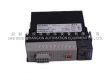
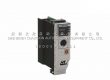
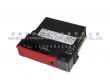
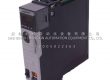
The ABB PPD103 B01 (order / article number 3BHE020455R0001) is a Panel Controller module belonging to ABB’s PP D100 series, occupying a dual-role position in ABB’s automation portfolio: on one hand, it serves as the CPU / process-panel controller in an Advant OCS or Symphony Plus PP D100 rack, where it executes control logic (FBD / CFC / SFC in Control Builder) for small-to-mid process nodes — turbine auxiliaries, BoP skids, compressor stations, reactor-batch sequences — and talks upward to the plant DCS/SCADA over Ethernet (ABB Industrial Network / Modbus TCP) while polling field instruments over two independent RS-485 ports (Modbus RTU, separate baud rates). On the other hand, the same PPD103 B01 (3BHE020455R0001) is specified as the control-processor board inside ABB AC 800PEC first-generation power-electronic control platforms and UNITROL 6000 excitation-system control racks, where its role shifts from “process-panel CPU” to “real-time control-algorithm executor” — running the excitation PID / PSS / limiter cascade, managing fiber-optic communication to the power-unit IGBT/thyristor bridge, and coordinating backplane I/O with ADCI/AINI/DIO expansion boards. This dual identity — Advant PP D100 process node vs AC 800PEC / UNITROL 6000 drive & excitation control — is the defining characteristic of the PPD103 B01, and the reason its spare demand spans both DCS-retrofit and drive/excitation service channels.Hardware-wise, the PPD103 B01 is built around an embedded 32-bit RISC processor (typical ~500 MHz class for the Advant PP D100 variant; AC 800PEC / UNITROL builds may use RISC/DSP-class silicon depending on firmware batch) with 256 MB RAM for runtime data and 512 MB Flash for non-volatile configuration storage. The unit draws 24 V DC (±10 %, typical 12–15 W) from the PP D100 rack’s backplane PSU or from the AC 800PEC / UNITROL control-rack auxiliary rail, and is not hot-swappable — replacement requires LOTO, rack power down, and a parameter download from the engineering station (or re-insertion of the original configuration storage media, depending on rack architecture). Front-face LEDs show PWR, RUN, ERR, and COM/ACT, giving at-a-glance health without opening the rack. Mechanical envelope varies slightly by deployment: Advant PP D100 build is ~178 × 127 × 51 mm, ~0.8–0.9 kg, seated in the PP D100 rack slot with screw-lock; AC 800PEC / UNITROL control-rack build is thinner ~120 × 130 × 40 mm, ~0.3–0.5 kg, seated in the PEC control-cage slot. IP20 (board/card level), 0 … +55/60 °C operating, 5–95 % RH non-condensing.Lifecycle-wise, the PPD103 B01 (3BHE020455R0001) sits in a mature / end-of-life band: Advant OCS PP D100 is succeeded by AC 800M / S800 + Panel 800 in ABB’s current DCS lineup, and AC 800PEC Gen-1 is succeeded by AC 800PEC Mk2 / ACS6000 (medium-voltage drive) and by the current UNITROL 6xxx / UNITROL DURAGEN excitation platform. But installed base is large — power-gen (thermal, hydro, nuclear aux, turbine BoP), oil & gas refining, metals (rolling-mill drives on AC 800PEC Gen-1), and plants with frozen UNITROL 6000 excitation BOMs — so the PPD103 B01 remains active in spares channels. ABB’s 3BHE prefix (vs 3BSE for S500/AC500, 3AUA for ACS800 drives) marks it as a drive/excitation/control-processor part, which is why the PPD103 B01 often appears on “传动及励磁系统备件” (drive & excitation spare) listings alongside NDCU-04, NGDR-07C, etc.
Technical Specifications
| Parameter Name | Parameter Value |
|---|---|
| Product Model | PPD103 B01 |
| Article / Order Number | 3BHE020455R0001 |
| Manufacturer | ABB (Sweden / ABB Drives & Controls) |
| Product Type | Panel Controller / Control Processor Module |
| Compatible Systems | Advant OCS / Symphony Plus (PP D100 rack); AC 800PEC Gen-1; UNITROL 6000 excitation |
| Processor | 32-bit RISC (~500 MHz class, Advant PP D100; RISC/DSP class on PEC/UNITROL builds) |
| RAM | 256 MB (runtime data / program) |
| Flash | 512 MB (non-volatile config storage) |
| Supply Voltage | 24 V DC (±10 %), from rack backplane or control-rack aux |
| Power Consumption | ~12–15 W (typical) |
| Scan / Control Cycle | ≤ 10 ms (Advant PP D100 logic; PEC/UNITROL: real-time control-loop, sub-ms cascade) |
| Communication (Advant PP D100) | 1× Ethernet 10/100 Mbps (ABB Industrial Net / Modbus TCP), 2× RS-485 (Modbus RTU, independent baud), 1× diag/PG serial |
| Communication (PEC/UNITROL) | Backplane high-speed serial + fiber Tx to power unit + debug port |
| Programming Tool | ABB Control Builder / Advant Engineering Workplace (PP D100); PEC/UNITROL firmware tools |
| Indicators | PWR, RUN, ERR, COM/ACT LEDs |
| Hot-Swap | Not supported — replace with power down |
| Mounting | PP D100 rack slot (screw-lock) / PEC control-rack slot |
| Dimensions (PP D100) | ~178 × 127 × 51 mm (H×W×D) |
| Dimensions (PEC/UNITROL) | ~120 × 130 × 40 mm (rack-dependent) |
| Weight | ~0.3–0.9 kg (variant-dependent) |
| Operating Temp. | 0 … +55/60 °C (derating >55 °C) |
| Protection | IP20 (cabinet / rack internal) |
| Standards | IEC 61131-2, CE / UL 508 / CSA C22.2 No.14, RoHS |
Main Features and Advantages
Dual-Role CPU: Process Panel (Advant PP D100) + Drive/Excitation Processor (AC 800PEC / UNITROL 6000). The PPD103 B01 is unusual in that the same 3BHE020455R0001 article number covers two deployment contexts that ABB’s product-line org splits elsewhere. In an Advant OCS PP D100 rack — think a small process node on a power-plant turbine aux (lube-oil skid, CW pump station, HAGC hydraulic power unit on a mill) that doesn’t justify a full INFI 90 I/O station — the PPD103 B01 is the “brain”: it runs Control Builder FBD/CFC programs (PID loops, sequence auto/manual, alarm handling), stores 256 MB RAM / 512 MB Flash worth of logic and parameters, and connects upward via the Ethernet port (10/100 Mbps) to the plant DCS (Symphony Plus / 800xA) using ABB’s Industrial Network protocol or Modbus TCP, while the two RS-485 ports hang field instruments — Modbus RTU to a multi-parameter Tx rack, or to a small drive’s USS, or to a third-party analyzer — with independent baud rates so a 9600-baud legacy gas analyzer and a 19200-baud VFD can share the same PPD103 B01 without protocol conflict. In the AC 800PEC Gen-1 / UNITROL 6000 context, the PPD103 B01 shifts role: the 32-bit RISC executes the excitation control cascade (automatic voltage regulator AVR, PSS, OEL/UEL, limiter chain) or the PEC power-electronic control (DC-link regulation, gating coordination for the fiber-connected power unit), and the Ethernet/RS-485 ports become secondary (debug / supervisory) while the primary I/O moves over backplane high-speed serial to ADCI/AINI/DIO expansion and fiber to the power-unit thyristor/IGBT bridge. This “one board, two careers” is why the PPD103 B01 appears on both “DCS spare” and “drive & excitation spare” cribs.256 MB RAM + 512 MB Flash for Real Control Programs. The PPD103 B01 isn’t a “dumb” panel-HMI (that’s NIMP/NIEDA on ACS800, or Panel 800 on AC 800M) — it’s a proper CPU with memory budget that lets it host meaningful Control Builder applications: dozens of FBD charts, CFC continuous-function blocks, SFC sequences, and the non-volatile Flash retains the compiled program + parameter set across power cycles. On UNITROL 6000, the PPD103 B01 holds the AVR tunings, PSS coefficients, limiter thresholds, and comms maps — swap a failed PPD103 B01, and the technician downloads the project from the PG (or inserts the original config storage, depending on rack architecture) and the excitation cubicle is back online with the same AVR gains, no “re-tune PSS at 2 AM” drama. On Advant PP D100, the 512 MB Flash holds the process-node application (maybe 200–300 FBD blocks for a BoP skid), and the 256 MB RAM holds runtime values — the ≤10 ms scan is adequate for process loops (not drive-current-loop fast, but process-PID and sequence is fine).Dual RS-485 + Ethernet Connectivity. On the Advant PP D100 build of the PPD103 B01, the networking is deliberately flexible: Ethernet 10/100 for the plant DCS uplink (Modbus TCP or ABB Industrial Net), and two RS-485 ports that are independent— Port A at 9600 baud talking to a 1990s-vintage gas analyzer, Port B at 19200 talking to a Modbus RTU temperature rack, no problem. This avoids the “one baud rate for all RS-485 on the CPU” limitation that cheaper panel-PLCs have. The PPD103 B01 also carries a diag/PG serial port for local laptop connection during commissioning (pre-Ethernet fallback). On the PEC/UNITROL build, the Ethernet/RS-485 are more supervisory — the heavy lifting (power-unit fiber, backplane I/O) uses the PEC proprietary bus — but the ports are still there for the service engineer to connect DriveWindow / Unitrol Tool via a laptop when the excitation cubicle needs a parameter tweak.LED Diagnostics & Watchdog. Front face of the PPD103 B01 carries PWR (green — 24 V present), RUN (green — program executing), ERR (red — hardware/firmware fault), COM/ACT (yellow/green blink — bus/ethernet activity). On a UNITROL 6000 cubicle, a Friday-night “excitation lost comms to DCS” callout starts with the PPD103 B01 ERR LED — if ERR is red and RUN is dark, the PPD103 B01 itself crashed (watchdog triggered, maybe 24 V rail sag from a failing rack SMPS); if ERR is dark and COM is blinking but DCS sees no data, the Ethernet cable or the DCS NIC is the suspect. The PPD103 B01 also implements hardware watchdog — if the RISC stops heart-beating, the watchdog forces an internal reset (or asserts a fault to the rack’s alarm contact) rather than letting the AVR or PEC loop run wild. This is safety-consequential on excitation and drive control — a hung CPU on a UNITROL 6000 can over-excite the generator if the PSS keeps integrating; the watchdog mitigates that.Non-Hot-Swap, DIN/Rack Slot. The PPD103 B01 is not hot-swappable — unlike some modern ET 200 or Profinet IO, pulling/reseating the PPD103 B01 while the PP D100 rack or PEC control-rack is live will damage the backplane header and possibly the RISC/Flash. Swap requires full LOTO on the rack’s 24 V DC auxiliary (and on the AC 800PEC / UNITROL cubicle’s 110/230 V AC aux if that feeds the control-rack SMPS), discharge, then unclip the PPD103 B01 from the slot (screw-lock at the face). After seating the replacement, power up, download the Control Builder project (or restore from config media), and the node/regulation is back. This “no hot-swap” is the #1 mistake on PPD103 B01 — a panel tech thinks “it’s just a CPU like the S7-400 which ishot-swap in some slots” and pulls it live; result is a scrapped PPD103 B01 and a corrupted Flash that needs a full re-download anyway.
Application Field
The ABB PPD103 B01 (3BHE020455R0001) deploys in two distinct plant contexts that share the same CPU board:First context: Advant OCS / Symphony Plus PP D100 process nodes. These are “small DCS nodes” — a plant has a main DCS (Symphony Plus / 800xA on AC 800M) for the big loops, but scattered around the yard are small process skids that don’t justify a full I/O station (i.e., not INFI 90 ICTAI01+NTAI05 scale). Examples: turbine lube-oil skid (temp/pressure/flow/valve position, 20–40 I/O points), CW pump station (4 pumps, header pressure cascade), HAGC hydraulic power unit on a rolling mill (pressure/level/valve, 30–50 I/O), compressor-station local control (anti-surge + performance, 40–60 I/O), reactor-batch skid in pharma/chemical (batch seq, 50–80 I/O). The PP D100 rack holds a PPD103 B01 as CPU, plus a few local I/O modules (DI/DO/AI/AO on the PP D100 backplane — not the same as INFI 90’s ICTxx/NTxx, PP D100 has its own I/O family), and the PPD103 B01‘s Ethernet talks Modbus TCP up to the main DCS, RS-485 talks local instruments. On a 500 MW thermal unit, there might be 8–12 such PP D100 nodes (turbine aux, BOP, ash-handling CW, coal-handling, mill aux) each with a PPD103 B01 — spare crib holds 2–3 across the unit.