WhatsApp:+86 18005022363 WeChat: +86 18005022363
  Email:
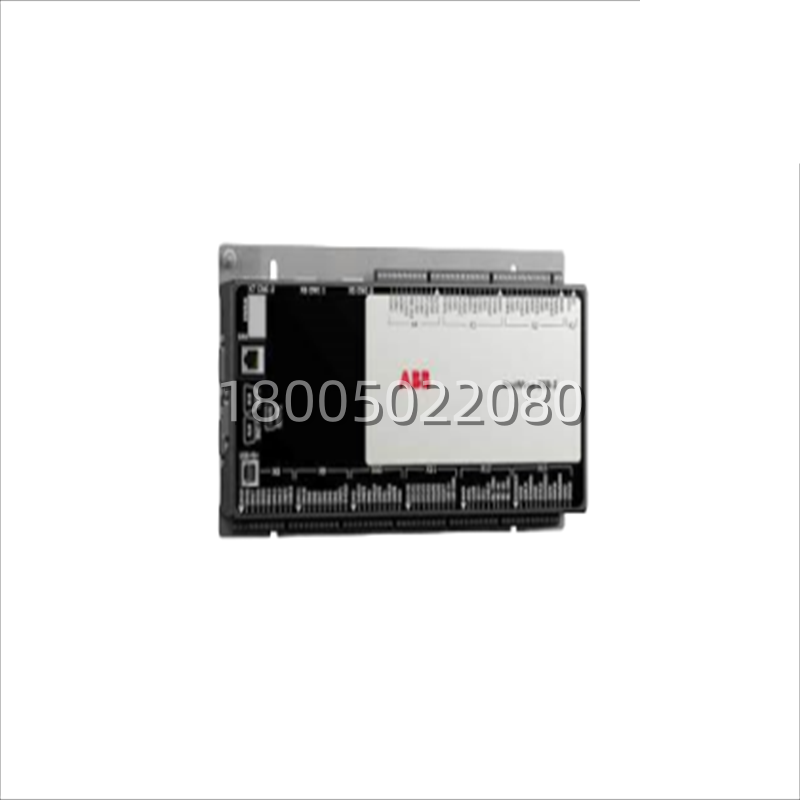
Application ScenariosA regional OEM building intermittent-motion carton erectors was hitting a wall with a general-purpose PLC’s motion block: at 180 m/min line speed, the registration-mark photocell needed to catch the print mark, compute the correction, and fire the fold-ram servo within 12 ms—but the PLC’s 4 ms task + Profibus DP jitter to the servo drive blew the window, and every third blank showed a mis-fold. The engineering team swapped to the NSB202-501W: EtherCAT linked the controller to two ABB servo drives (index conveyor + turret fold-ram) at 100 µs cycle, the 16 DI grabbed the registration-photocell, product-presence, and safety-string directly on the controller (no remote I/O hop), and the 16 DO fired the vacuum pump, glue-valve solenoid, and the fold-ram brake. CANopen carried a small local HMI for the operator. Commissioning in ABB Motion Designer took one afternoon; the NSB202-501W‘s position/speed/torque cascades ate the 12 ms window with margin to spare. The OEM’s service lead noted: “The NSB202-501W is the only thing in that cabinet that doesn’t flinch when we push 200 m/min during a rush order.”h2
Parameter
| Main Parameters | Value/Description |
|---|---|
| Product Model | NSB202-501W (3AXD50000032683) |
| Manufacturer | ABB (Baldor Motion line) |
| Product Category | Standalone Motion Controller |
| Processor | 32-bit |
| Supply Voltage | 24 V DC (≤ 10 W typical) |
| Axis Capacity | 2 primary (some configs 4 closed-loop + 4 open-loop) |
| Onboard I/O | 16 DI / 16 DO |
| Aux Interfaces | 1 × auxiliary encoder channel |
| Motion Cycle | ~100 µs/step (EtherCAT) |
| Communication | EtherCAT (motion) + CANopen (I/O/HMI) |
| Program Memory | 256 KB (some sources cite 2 MB; 256 KB is the lean Baldor NSB baseline) |
| RAM / Data | 32 KB (baseline) / up to 1 MB on extended builds |
| Safety | IEC 61508 SIL 3 compliant |
| Operating Temp. | -20 °C to +70 °C |
| Protection | IP20 (cabinet interior) |
| Mounting | DIN rail / cabinet chassis |
| Lifecycle | Discontinued – spare / refurb market |
h2 Technical Principles and Innovative Values
- Innovation Point 1: 100 µs EtherCAT Motion Cycle. The NSB202-501W doesn’t just “speak” EtherCAT—it mastersit, scheduling servo PDOs at 100 µs granularity. For registration-mark correction, flying-shear cam-follow, or electronic-cam synchronization across two axes, that cycle is the difference between “catch it” and “miss by half a blank.” A standard PLCopen motion block on a 2 ms OB rarely touches this.
- Innovation Point 2: 16+16 I/O Onboard = No Remote Slice for Basics. Many motion controllers force you to buy a remote I/O slice for photocells, safety-strings, and solenoid DOs. The NSB202-501W carries 16 DI + 16 DO on the card itself—enough for a two-axis OEM machine’s entire sensor/actuator budget. That shrinks the panel, kills a communication hop, and removes a failure point.
- Innovation Point 3: Position / Speed / Torque Triple-Loop Native. The NSB202-501W runs all three cascaded loops in firmware—you don’t write STL for a PI current inner loop; you parameterize it in ABB Motion Designer. For a tension-controlled unwind or a press ram with torque-limiting, that means the NSB202-501W handles the tricky inner loop while the OEM just feeds “tension setpoint” from the CANopen HMI.
- Innovation Point 4: SIL 3 on a Motion Controller. IEC 61508 SIL 3 on the NSB202-501W means the safety string (ESTOP, guard-door, light curtain) can land directly on the controller’s DI with certified response—no separate safety PLC needed for machines under ~2 axes. For a standalone erector or a small conveyor-indexer, that’s the difference between “one cabinet” and “two cabinets.”
- Innovation Point 5: Motion Designer Ecosystem. The NSB202-501W configures through ABB Motion Designer (the Baldor-originated Windows tool)—drag-and-drop cam tables, electronic-gear ratio, registration-mark autotune, and a built-in oscilloscope that logs position error vs. time. That scope alone has saved more than one OEM from “why did the fold miss?” wild-goose chases.
h2 Application Cases and Industry ValueIn a Southeast Asian label-converting line (die-cut + matrix-strip + rewind), the original motion controller was a 15-year-old Baldor NextMove PCI card that had finally died with no spares. The integrator replaced it with a NSB202-501W + two ABB MicroFlex e150 servos (die-cut pull-roll + rewind tension). The NSB202-501W took the web-break photocell on DI-1, the registration-mark sensor on DI-2 (aux encoder channel set to “mark-capture”), and ran a position-correction cam on the pull-roll axis: every mark-detect → compute position error → add a velocity bump on the next cam sector. EtherCAT cycle 100 µs, cam resolution 4096 points. Post-retrofit, the die-cut registration drift dropped from ±0.8 mm to ±0.12 mm at 120 m/min, and the NSB202-501W‘s Motion Designer scope caught a periodic 3 Hz tension ripple that turned out to be a worn lay-on roller—diagnostic win the old NextMove couldn’t give them.A second case: a European pharmaceutical blister-line OEM standardized the NSB202-501W across their mid-range machine (index chain + forming station + lidding servo). The 16 DI covered product-presence, lane-guide position switches, and the four safety ESTOP strings; 16 DO drove the vacuum pump, lidding-heater SSR, index-clutch solenoid, and reject-pusher. EtherCAT went to the two servos; CANopen daisy-chained a 4.3″ ABB CP600 HMI for the operator. When ABB discontinued the NSB202-501W two years later, the OEM had already stocked 18 NOS units—enough for three years of builds. Their sourcing lead’s note: “The NSB202-501W is the only Baldor-heritage card that still fits a single DIN slot and gives you SIL 3 + EtherCAT + 16+16 I/O. Nothing in the MotiFlex generation replicates that density yet.”