WhatsApp:+86 18005022363 WeChat: +86 18005022363
  Email:
Description
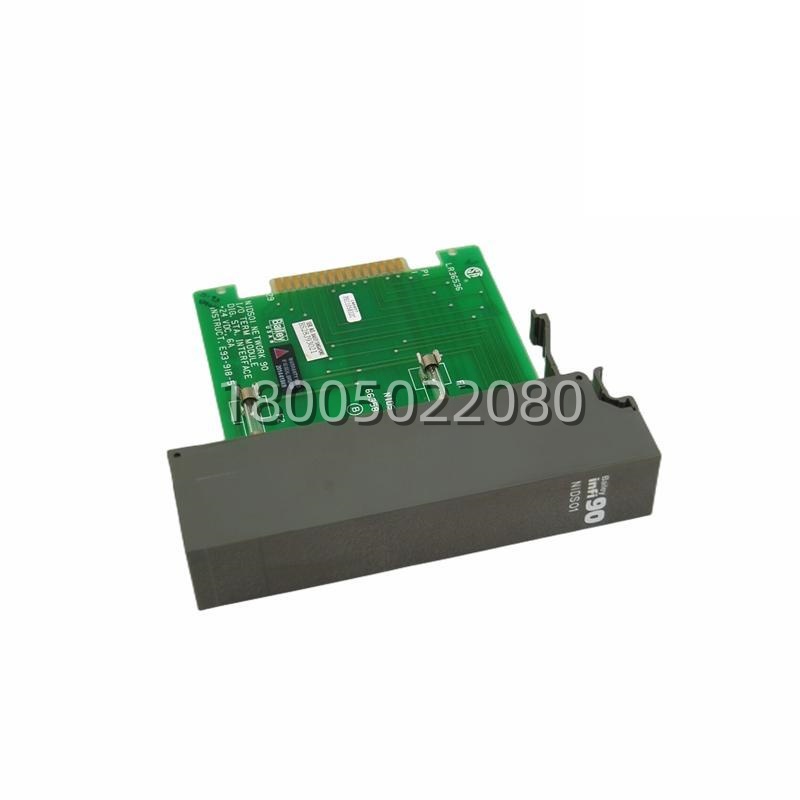
Application Scenarios
In a 600 MW coal-fired power plant, operators struggled with intermittent false alarms from boiler flame scanner status inputs—legacy modules were failing to reliably discriminate between legitimate fault signals and electrical noise from adjacent high-voltage switchgear. Maintenance teams replaced the problematic modules with the ABB NIDI01, whose optical isolation and electromagnetic compatibility (EMC) design immediately eliminated the nuisance trips. The module’s millisecond-level response ensured that genuine flame-out conditions triggered immediate protective action, while the fast response time enabled operators to monitor pulverizer feeder status with confidence. The ABB NIDI01 now reliably acquires digital signals from over 120 field devices across the boiler and turbine areas, restoring operational integrity and reducing false-trip related downtime by over 75%.
Parameters
| Main Parameters | Value/Description |
|---|---|
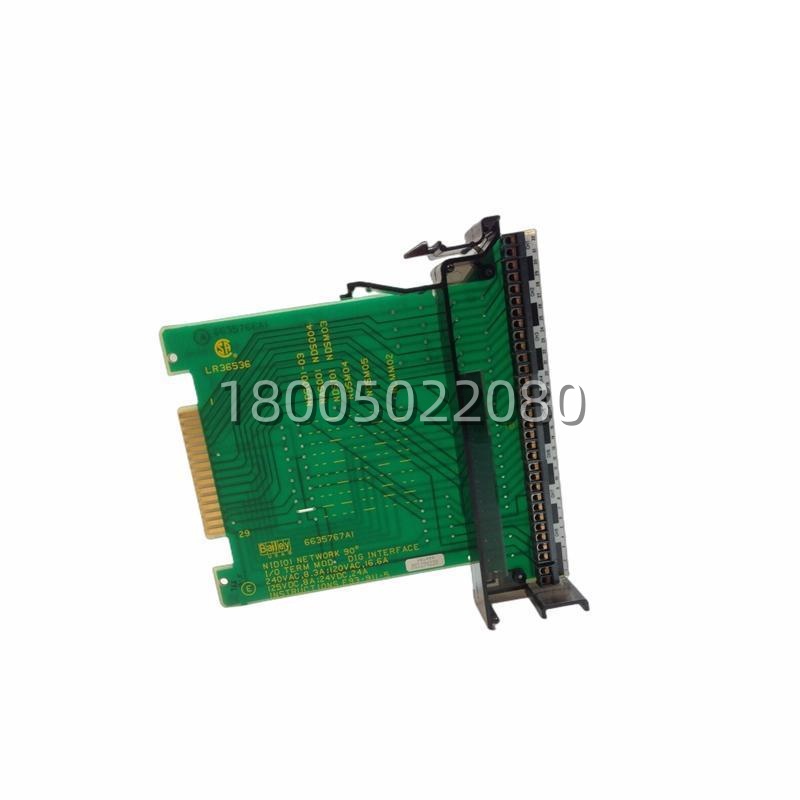
| Product Model | NIDI01 |
| Manufacturer | ABB (Bailey) |
| Product Category | Digital Input Interface Board |
| System Platform | ABB Bailey INFI 90 / Net 90 / Symphony Plus |
| Input Type | Discrete switch input / Digital signal |
| Signal Voltage | 24 V DC nominal; supports 48V DC or 115V AC/DC depending on variant |
| Optical Isolation | Yes (channel-to-system) |
| Response Time | Millisecond-level |
| Mounting | Control cabinet rack / DIN rail |
| Operating Temperature | 0°C to +60°C |
| Storage Temperature | -40°C to +85°C |
| Humidity | 5% to 95% RH (non-condensing) |
| Dimensions | Approx. 17.8 cm × 5.1 cm × 17.8 cm |
| Weight | Approx. 0.2–0.5 kg |
| Warranty | 12 months |
Technical Principles and Innovative Values
Innovation Point 1: Optical Isolation for Robust Noise Immunity
The ABB NIDI01 implements optical isolation between field wiring and the system logic side, protecting the controller from voltage transients, ground loops, and electromagnetic interference common in heavy industrial environments. This galvanic isolation ensures that noisy field signals do not compromise the integrity of the control system’s internal logic, delivering stable operation even when adjacent to variable frequency drives and high-power switching equipment.
Innovation Point 2: Multi-Channel Configurable Signal Acquisition
The ABB NIDI01 supports multiple digital input channels, with specific channel counts verified via the module’s side label. When paired with the appropriate termination unit (e.g., NTDI01), the module accommodates various field voltage requirements through user-replaceable fuses—3A for 24 VDC applications and 0.25A for 125 VDC or 120 VAC applications. This configuration flexibility simplifies system design and spare parts management.
Innovation Point 3: Seamless INFI 90/Symphony Plus System Integration
As part of the ABB Bailey INFI 90 architecture, the ABB NIDI01 connects to the system backplane and communicates with the controller via the I/O data bus. This deep integration ensures deterministic scan cycles and coordinated operation with other I/O modules, communication interfaces (e.g., INNISxx network interface stations), and processor modules (e.g., IMMFPxx series). The result is a highly maintainable, scalable distributed control system.
Innovation Point 4: Millisecond-Level Fast Response for Time-Critical Monitoring
With millisecond-level input response, the ABB NIDI01 supports time-critical industrial applications where rapid detection of field device state changes is essential. This fast response ensures that protective interlocks, emergency shutdown signals, and process interlock conditions are detected and transmitted to the controller with minimal latency, enhancing both safety and process efficiency.
Application Cases and Industry Value
Case Study: Chemical Plant Process Interlock Modernization
A specialty chemical manufacturer operating a batch reactor train with 16 agitator motors and numerous valve position sensors experienced frequent nuisance trips due to unreliable digital input processing on their legacy INFI 90 system. The intermittent nature of the faults—often traced to electrical noise coupling into the sensor wiring—caused unnecessary batch aborts and significant material waste. After replacing the failing modules with the ABB NIDI01, the plant achieved stable, noise-free signal acquisition across all digital input points. The optical isolation effectively eliminated the noise-induced false trips, and the millisecond response ensured reliable detection of critical interlock conditions such as high-temperature alarms and low-flow cutoffs. The plant reported a 90% reduction in process interruptions related to I/O faults and improved batch yield by 3.5% over the following year.