WhatsApp:+86 18005022363 WeChat: +86 18005022363
  Email:
Description
Application Scenarios
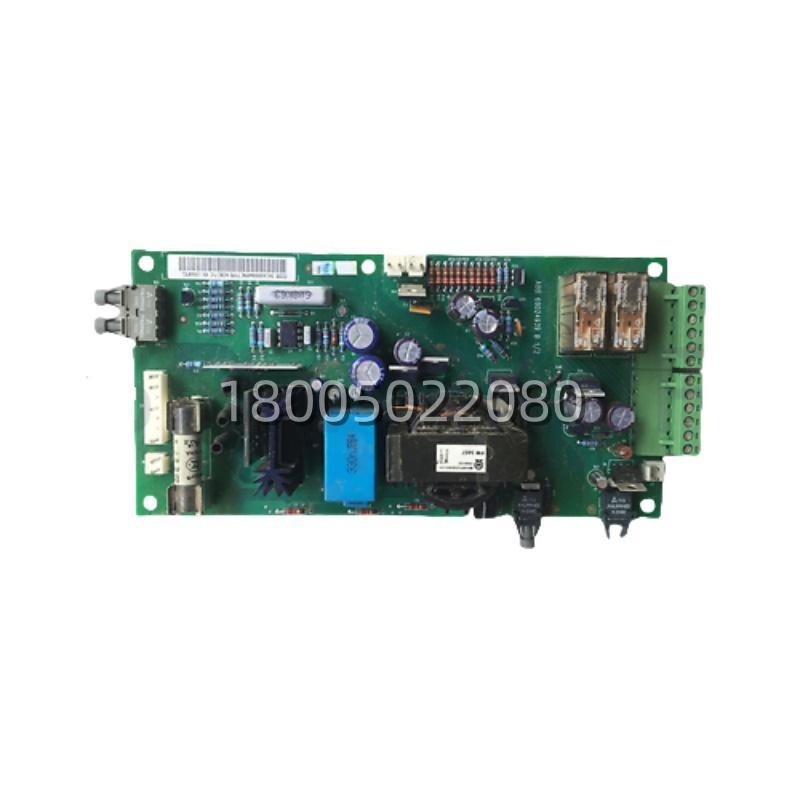
On a 40-ton overhead crane at a steel service center, the hoist drive is an ACS800-04-0320-3 (320 kW, 400 V) with a NCBC-71C on the power stack. Every time the hook lowers a loaded coil, the motor goes generative—pushing energy back into the DC bus. The NCBC-71C‘s chopper IGBT fires ~10× per second, dumping that energy into a 6-ohm brake resistor bolted to the cabinet roof. After nine years of 20-ton+ lifts, the crane started throwing random “DC OVERVOLT 3210” faults during light-down moves—nothing heavy, just the empty hook. The drive tech pulled the NCBC-71C, found one of the DC-bus sense resistors had drifted ~8 % (heat-cycled, old lead-free solder), making the bus-voltage reading artificially high. Swapped in a verified NCBC-71C (10-minute job: isolate 400 V, wait 15 min for DC bus to bleed, unbolt from heatsink, transfer the resistor studs, reseat the gate-ribbon to the AINT-71). The crane was back in service before the next shift. The plant maintenance lead put it plainly: “The RDCU is the brain, the AINT is the muscle, but the NCBC-71C is the fuse that isn’t a fuse. When it lies, the whole drive trips. Keep one on the shelf.”
Parameters
| Main Parameters | Value/Description |
|---|---|
| Product Model | NCBC-71C / NCBC-61C (frame-matched pair) |
| Manufacturer | ABB (ACS800 Drive Series) |
| Product Category | Power Board / Brake Chopper Interface |
| Compatible Drives | ACS800-01, ACS800-04 (wall-mount & cabinet units) |
| Frame Coverage | 61C: Frames R0–R4 (smaller kW) / 71C: Frames R5–R8 (larger kW) |
| Voltage Class | 400 V AC & 690 V AC drives (DC bus ~540 V / ~900 V nominal) |
| Brake Chopper | Integrated IGBT, frame-matched dissipation rating |
| DC-Bus Sensing | Onboard divider network (fed to RDCU for OV monitoring) |
| Brake Resistor IF | Stud terminals, frame-sized ohm/watt rating per ABB resistor选型 |
| Gate Interface | Ribbon to AINT-61 / AINT-71 inverter board |
| Mounting | Bolted to inverter heatsink (same stack as AINT + capacitor assy) |
| Operating Temp | -20 °C to +55 °C (follows ACS800 cabinet envelope) |
| Revision | “C” suffix = RoHS-compliant, improved thermal pad vs. non-C |
Technical Principles and Innovative Values
- Innovation Point 1: Chopper IGBT + Sense + Bleed on One Board. On drives without a built-in brake chopper (smaller VFDs), you’d need an external DB resistor contactor or a separate chopper pack. The NCBC-71C / NCBC-61C integrate it into the power stack: the IGBT sits on the same heatsink as the AINT inverter modules, the gate drive comes over a short ribbon from AINT (sub-nanosecond skew), and the DC-bus voltage divider feeds directly into the RDCU’s analog input for “DC OVERVOLT” protection. One board, three jobs—fewer interconnects, fewer failure points.
- Innovation Point 2: Frame-Matched Thermal Design (61C vs. 71C). ABB didn’t make one NCBC and hope it fits all. The NCBC-61C has a smaller IGBT die and narrower bus-bar landing pads, matching the R0–R4 frame’s inverter current. The NCBC-71C steps up the IGBT, the bus-bar cross-section, and the resistor stud diameter to match R5–R8. Swapping a 71C into a R4 frame physically won’t bolt (heatsink hole pattern differs); swapping a 61C into an R6 will cook the IGBT on first regenerative event. The frame-lock is a feature, not a limitation—it forces correct sizing.
- Innovation Point 3: “C” Revision Thermal & EMI Improvements. The non-C predecessors (NCBC-61 / NCBC-71) had occasional field reports of gate-ribbon EMI sensitivity in very noisy cabinets (adjacent 500 kW drives switching). The “C” spin added a thicker thermal pad (better heat transfer from IGBT to heatsink = lower junction temp = longer life) and tighter EMI filtering on the DC-sense line. If you’re replacing an old NCBC-61, the -61C drop-in is the recommended swap—same footprint, better longevity.
Application Cases and Industry Value
Case 1 – Underground Mine Winder (South Africa): A double-drum winder uses four ACS800-04-0440-3 units (440 kW each, 400 V) on the cage hoist, all with NCBC-71C boards. During a loaded descent, the motor regenerates ~350 kW back into the DC bus; the NCBC-71C chopper fires at ~750 V DC setpoint, holding bus at ~770 V while the resistor absorbs the energy. After seven years, one winder started nuisance-tripping “DC OV” on light loads—investigation found a cracked solder joint on the DC-sense divider (thermal cycling from daily 20°C→55°C cabinet swings). The spare NCBC-71C from the crib was swapped in during a weekend window. The mine reported that standardizing on “one NCBC-71C per drive, one spare per 4 drives” had saved them twice in five years—once on the sense-resistor drift, once on a chopper IGBT that failed shorted after a resistor short-circuit event (the NCBC-71C sacrificed itself, protecting the AINT-71 inverter modules behind it—a 400 board saving 4k of AINT).Case 2 – Centrifuge Separator (Food & Beverage, Netherlands): A 132 kW centrifuge decanter drive (ACS800-04-0170-3, frame R5, NCBC-71C) sees 15 regen events per hour as the bowl spins down for cleaning. The NCBC-71C chopper duty cycle averages 12 % over a shift. After 28,000 hours, the gate-driver ribbon header on the NCBC-71C showed oxidation (humidity in the washdown-area cabinet). The drive started throwing “CHOPPER FAULT” intermittently. Instead of a full drive replacement, the integrator swapped the NCBC-71C (15 min job, same torque specs on the bus studs), added a small silica gel pack inside the drive door, and the centrifuge ran another 18,000 hours before the next planned overhaul. The OEM’s regional service manager noted: “For centrifuge duty, the NCBC-71C is a consumable. Budget one every 30 khours.”