WhatsApp:+86 18005022363 WeChat: +86 18005022363
  Email:
Description
Application Scenarios
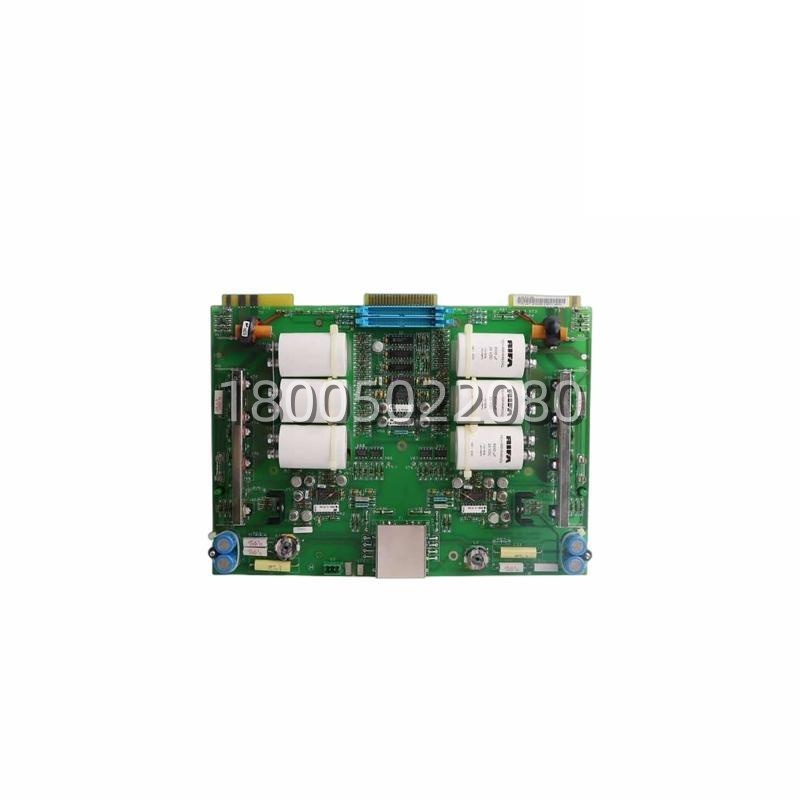
In a large oil refinery, the precise custody transfer of a feedstock (like crude oil) between tankers and storage tanks is critical for financial accounting. The measurement relies on a high-accuracy turbine flow meter installed in the pipeline. The meter generates a low-voltage, sinusoidal pulse train where each pulse represents a discrete volume. This raw signal is susceptible to electrical noise from pumps and motors and can degrade over long cable runs. The ABB Saft 123 PAC Amplifier Pulse Board is installed in a junction box near the meter. It receives the raw sensor signal, filters out high-frequency noise, amplifies it to a robust logic level (e.g., 24V DC), and shapes it into a clean, square-wave pulse. This conditioned signal is then transmitted reliably to the flow computer or PLC (like the YXI115B). The Saft123PAC directly addresses the core challenge of preserving signal integrity in a harsh environment, ensuring that every single pulse—and thus every barrel of oil—is counted accurately, which is fundamental for billing, inventory control, and process balancing.
Parameter
| Main Parameters | Value/Description |
|---|---|
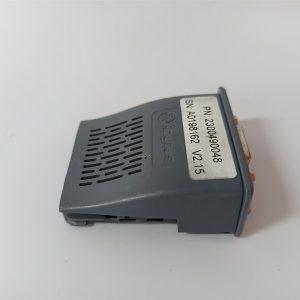
| Product Model | ABB Saft 123 PAC / Saft123PAC |
| Manufacturer | ABB (Asea Brown Boveri) |
| Product Category | Signal Conditioning Amplifier / Pulse Shaping Board |
| Primary Function | Amplification, filtering, and shaping of low-level AC or pulse signals into standardized digital outputs. |
| Input Signal Type | Typically accepts signals from: Magnetic Pickups (MPU), Variable Reluctance Sensors, Turbine Flow Meters, Geared Proximity Sensors. Signals are often low-voltage AC (mV to few V range). |
| Input Impedance | High input impedance to minimize loading on the sensor, preserving signal strength. |
| Frequency Range | Designed to handle a specific pulse frequency range (e.g., 0 Hz to 20 kHz), suitable for speed and flow applications. |
| Amplification Gain | Adjustable or fixed gain to boost the weak sensor signal to a usable level. |
| Output Signal | Clean, square-wave pulse or transistor (NPN/PNP) output, typically at logic levels (e.g., 24V DC, 0/24V). Compatible with PLC digital inputs. |
| Power Supply | Requires an external DC power source, typically 24V DC, standard for industrial control. |
| Filtering | Built-in low-pass filtering to suppress high-frequency electrical noise (EMI/RFI). |
| Adjustments | May feature potentiometers for setting: Trigger/Sensitivity Level, Gain, Pulse Width. |
| Status Indication | LEDs for Power On, Input Signal Detection, and Output Pulse activity. |
| Mounting | Typically DIN-rail mounted or panel-mounted in an enclosure. |
| Connection | Screw terminal blocks for power, sensor input, and amplified output. |