WhatsApp:+86 18005022363 WeChat: +86 18005022363
  Email:
Description
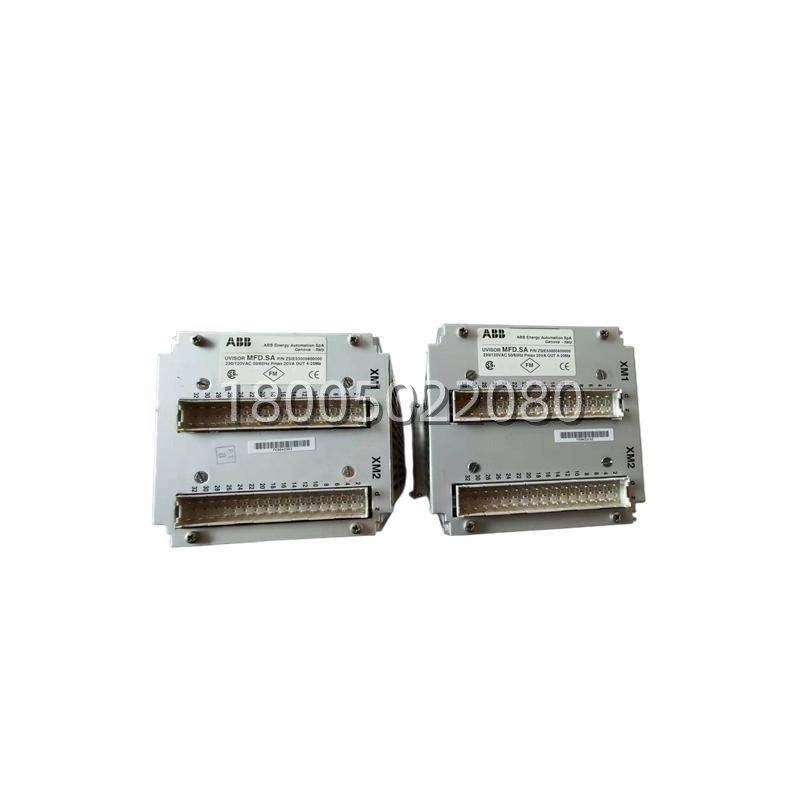
Application Scenarios:At a large chemical processing plant, a steam boiler supporting multiple distillation columns experienced a near-miss safety event. During a routine burner start-up sequence, the main gas valve opened, but the flame failed to establish due to a momentary ignition fault. The original, less sophisticated flame safeguard controller experienced a detection lag, allowing unburned fuel to accumulate in the combustion chamber for a critical few seconds. This created a potential flashback or explosion hazard. The plant immediately initiated a safety upgrade, replacing the controller with the ABB ZSIE53000400000 Flame Controller. During the next start-up attempt with the new system, a similar ignition failure occurred. The ZSIE53000400000, with its high-speed scanning and advanced signal processing, detected the absence of flame within milliseconds, not seconds. It immediately executed a safety shutdown, closing the fuel valves and initiating a full purging cycle before any significant fuel buildup could occur. The chief engineer noted that the ABB ZSIE53000400000 provided the deterministic, fail-safe response required for their SIL-rated safety system, effectively turning a potential catastrophe into a controlled, safe shutdown and restoring operational confidence.
Parameter:
| Main Parameter | Value / Description |
|---|---|
| Product Model | ABB ZSIE53000400000 |
| Manufacturer | ABB (Typically from the ABB BMS/Burner Management portfolio) |
| Product Category | Flame Controller / Burner Management Module |
| Safety Integrity Level (SIL) | Suitable for applications up to SIL 2 / SIL 3 (depending on system architecture)* |
| Flame Detection Inputs | Typically 2 independent channels for UV/IR scanners or flame rods |
| Control Outputs | Multiple relay outputs for safety shut-off valves, igniter, alarm, etc. |
| Input Power | 24 VDC or 110/230 VAC (depending on specific variant) |
| Communication Interface | Optional communication modules for integration with DCS/PLC (e.g., Modbus) |
| Operating Temperature | -20°C to +60°C (Standard Industrial Range) |
| Certifications | Compliant with major international combustion safety standards (e.g., EN 298, EN 50156, FM, TÜV) |
| Monitoring Functions | Flame signal strength display, fault diagnostics, self-test routines |
*Note: The specific SIL rating is achieved through the entire system design, including sensors and final elements. The controller is designed to be a core component of such a safety instrumented function (SIF).Technical Principles and Innovative Values:
- Innovation Point 1: Dual-Channel, Cross-Checking Logic. A fundamental safety innovation of the ABB ZSIE53000400000 is its use of dual, independent flame signal input channels. It doesn’t just monitor one sensor; it continuously compares signals from two separate detection devices (e.g., a UV scanner and an ionization rod, or two scanners). The controller employs 2-out-of-2 (2oo2) or similar voting logic, requiring agreement for a “flame proven” signal. This architecture dramatically reduces the risk of both spurious trips (nuisance shutdowns) and, more critically, dangerous failures to trip on a loss of flame.
- Innovation Point 2: Advanced Signal Processing & Dynamic Sensitivity. Unlike simple amplitude-based detectors, this controller uses sophisticated algorithms to analyze the flame signature. It can distinguish between the flicker frequency of a true hydrocarbon flame and deceptive light sources like hot refractory or furnace glow. Furthermore, it can dynamically adjust sensitivity during the start-up sequence (high sensitivity for pilot ignition) and main flame operation (stable sensitivity), ensuring reliable detection across all operating phases without false alarms.
- Innovation Point 3: Comprehensive Self-Diagnosis & Secure State Management. The ZSIE53000400000 continuously performs internal diagnostics on its circuitry, input channels, and output relays. It can detect faults such as sensor failure, cable breaks, or internal processor errors. Upon detecting any fault, it defaults to a predefined safe state (typically a fuel valve closed/trip condition). This fail-safe design ensures that any failure within the controller itself does not compromise the safety function, a cornerstone principle in safety instrumented system design.