WhatsApp:+86 18005022363 WeChat: +86 18005022363
  Email:
Description
Consider a modern automotive assembly line where a robotic welding arm must perform hundreds of precise spot welds per minute. The robot’s controller needs to constantly monitor “Part Present” sensors and “Clamp Closed” limit switches while firing the welding gun.
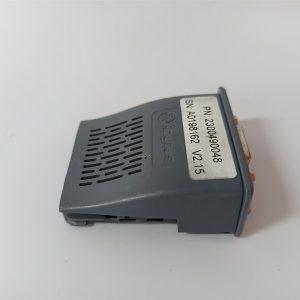
In this high-speed environment, the V17151-210 interface module acts as the sensory extension of the controller. It receives the digital signals from the limit switches and transmits them to the CPU via the system bus. Simultaneously, it receives commands to activate the welding solenoid. By utilizing the V17111-130 for these critical I/O tasks, the system offloads processing from the main CPU, ensuring that the robot reacts to safety interlocks instantly, preventing damage to the vehicle chassis or the robot itself.
Parameter
表格
Technical Principles and Innovative Values
The V17111-130 and V17151-210 modules are engineered to maximize the efficiency of the S7-1200 architecture through advanced signal handling.
Innovation Point 1: Modular Bus Integration. The V17151-210 connects directly to the PLC via a high-speed system bus (or backplane), eliminating the need for external wiring for communication. This “plug-and-play” architecture reduces cabinet wiring complexity and potential points of failure.
Innovation Point 2: High-Density I/O. These modules pack multiple input and output channels into a compact footprint. The V17111-130 allows for the consolidation of discrete sensors into a single interface point, saving valuable panel space and reducing the overall system cost.
Innovation Point 3: Signal Integrity & Isolation. To prevent electrical noise from field devices (like motors or solenoids) from interfering with the sensitive PLC logic, these modules employ robust electronic isolation. This ensures that the V17151-210 delivers clean, noise-free data to the controller.