WhatsApp:+86 18005022363 WeChat: +86 18005022363
  Email:

Description
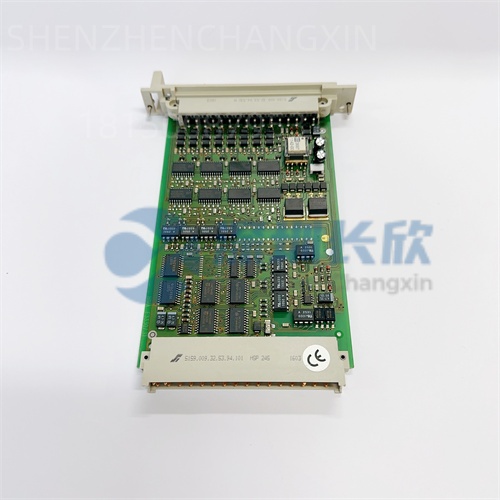
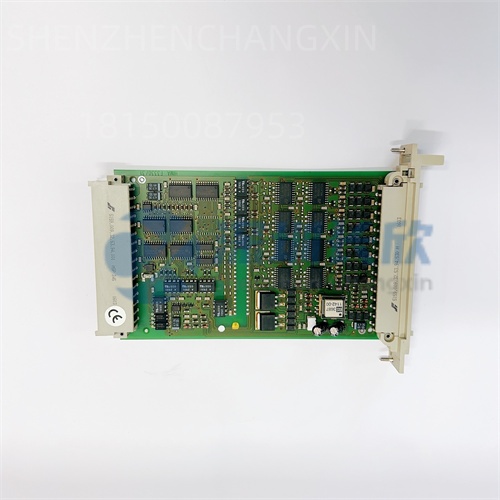
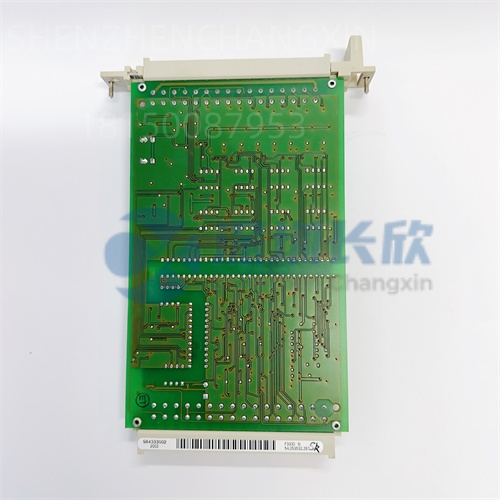
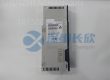
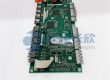
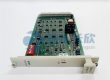
The HIMA F3330 984333002 is a safety-related 8-channel digital output module manufactured by HIMA, a German expert in industrial safety solutions . Designed as a critical component within HIMA’s safety instrumented systems (SIS), such as the HIMax or HIQuad platforms, this module is engineered to provide highly reliable output signals for driving actuators like solenoid valves and relays in safety-critical applications . It complies with the IEC 61508 functional safety standard and is suitable for applications requiring up to Safety Integrity Level 3 (SIL 3), ensuring the highest levels of safety and reliability in processes where failure could lead to hazardous events .
Application Scenarios
In a large petrochemical refinery, a catalytic cracking unit operates at high temperatures and pressures. A sudden pressure surge beyond safe limits must trigger an immediate emergency shutdown (ESD) to isolate the unit and prevent a catastrophic explosion. The HIMA F3330 984333002 module is installed within the refinery’s central safety system cabinet. When the safety controller (e.g., HIMA F35) detects the overpressure via input modules, it executes the safety logic and sends a trip command. The F3330 module receives this command and activates its output channels within milliseconds, cutting power to critical control valves and initiating the shutdown sequence . Its integrated redundant safety shutdown circuits and self-diagnostics ensure that even if one internal path fails, the module can still be de-energized to guarantee a “fail-safe” state, directly addressing the core pain points of functional safety, system availability, and protection of human life and assets .
Technical Principles and Innovative Values
The HIMA F3330 is built upon a foundation of functional safety engineering, with several key innovations ensuring reliable safety shutdowns.
Innovation Point 1: Redundant, Integrated Safety Shutdown Architecture. The module’s core safety mechanism is its “integrated safety shutdown circuit,” which is designed with redundancy according to IEC standards . In normal operation, the controller’s output commands pass through this circuit to the load. During a self-test, if a channel fault is detected, the operating system attempts to de-energize the entire module via one shutdown path. If this primary path fails, a redundant backup path is activated. As a final safeguard, a watchdog circuit can remove power altogether, ensuring a deterministic safe state . This multi-layered approach guarantees that a single point of failure within the module cannot prevent a safety action.
Innovation Point 2: Advanced Load Management and Protection Circuits. The module is engineered to safely drive industrial actuators. It includes specific short-circuit protection that activates when any channel’s current exceeds 500mA, isolating the module to prevent damage . Crucially, it provides guidelines for protecting the module itself when driving inductive loads (e.g., relay coils, solenoid valves). It recommends using external RC snubber circuits and flyback diodes across inductive loads to suppress voltage spikes generated when the output is switched off, thereby extending the module’s service life and reliability in harsh electrical environments .
Innovation Point 3: Seamless Integration within High-Availability Safety Platforms. The F3330 is designed to work within HIMA’s fault-tolerant system architectures like the HIQuad (H41q/H51q), which features Quadruple Modular Redundant (QMR) or 2oo4D central processing units . In such a system, the module communicates over a dedicated, high-integrity I/O BUS. Its hot-swappable design (where supported by the system) allows for maintenance or replacement without taking the entire safety loop offline, significantly improving system availability and reducing mean time to repair (MTTR) for critical processes .
Application Cases and Industry Value
Case Study: Offshore Platform Fire & Gas (F&G) Detection and Control System
An offshore oil production platform faces constant risks from hydrocarbon leaks and potential fires. The platform’s Fire & Gas system must reliably detect hazards (via gas detectors, smoke sensors, and manual call points) and automatically initiate mitigation actions (such as closing isolation valves, activating deluge systems, and sounding alarms) to protect personnel and the facility.
Implementation & Outcome: The platform’s F&G system is built around a HIMA HIQuad safety controller, with F3330 984333002 modules serving as the primary output interface for all safety actions. Each of the 8 channels on multiple F3330 modules is configured to control a specific final element: one channel might activate a deluge valve solenoid, another might shut down a turbine, and others could trigger audible/visual alarms. The system’s QMR architecture ensures continuous operation even if a hardware fault occurs. During a routine test, a simulated fault was injected into one output channel of an F3330 module. The module’s self-diagnostics immediately detected the fault, reported it to the central controller, and the redundant safety circuit ensured the channel was de-energized, preventing a false activation while maintaining the integrity of the other seven channels. This project resulted in a certified SIL 3 safety system that met stringent regulatory requirements. The platform’s safety manager emphasized the proven reliability of the HIMA hardware and the clarity of its diagnostic information, which reduced troubleshooting time and increased confidence in the platform’s safety barriers.
Related Product Combination Solutions
The HIMA F3330 984333002 operates within a complete safety system ecosystem:
HIMA Safety Controllers (e.g., F35. F8650. HIQuad CU modules): The central processing units that execute the safety application logic and command the F3330 outputs .
HIMA Digital Input Modules (e.g., F3236): 16-channel safety input modules for receiving signals from emergency stop buttons, pressure switches, and other dry-contact safety devices .
HIMA System Chassis/Backplanes (e.g., K1406 sub-rack): The mechanical and electrical backbones (like those in H41q/H51q systems) that house the controllers, communication, and I/O modules .
HIMA Power Supply Modules (e.g., F7130A): Provide reliable and often redundant 24V DC power to the system racks .
HIMA Communication Modules (e.g., F6217): Interface modules for connecting the safety system to higher-level control networks or for system expansion .
HIMA Engineering Software (e.g., Safety Builder): The configuration and programming tool used to design the safety logic, parameterize I/O modules like the F3330. and perform system diagnostics .
Installation, Maintenance, and Full-Cycle Support
Installation: The F3330 984333002 module must be installed into a compatible HIMA system sub-rack or chassis (e.g., a HIQuad I/O sub-rack). Ensure the system is in a safe state or powered down as per safety procedures. Align the module with the guide rails and firmly press it into the backplane connector until it is fully seated and any locking levers engage. Connect the field wiring to the module’s front terminal block according to the wiring diagram, paying special attention to the recommendations for protecting inductive loads with diodes and RC circuits .
Maintenance: Utilize the module’s comprehensive self-diagnostic capabilities through the HIMA engineering software or the central controller’s display to monitor its health regularly . Any fault indicated (e.g., a specific channel error) should be investigated promptly. The module may support hot-swapping in redundant system configurations, but this must be performed strictly in accordance with HIMA’s procedures and after a proper risk assessment . Always use static-safe handling practices.
Full-Cycle Support: We provide end-to-end support for the HIMA F3330 984333002. from helping you verify its compatibility with your existing HIMA system architecture to supplying guaranteed tested and functional modules. Our technical team can assist with configuration in Safety Builder software, interpreting diagnostic codes, and planning lifecycle management strategies, including potential migration paths to newer HIMA platforms when required.