WhatsApp:+86 18005022363 WeChat: +86 18005022363
  Email:
 Description
 Description
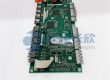
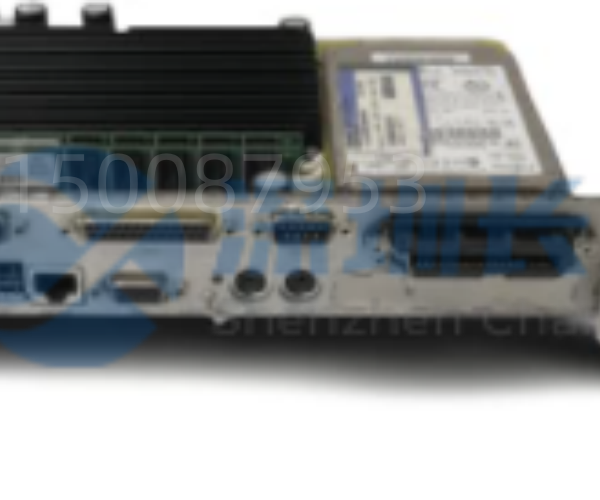
The CONCURRENT VP32502X (also known as VP 325/02x or VP 325/02x-U) is a high-performance, PC-compatible single-slot VME (Versa Module Europa) single board computer (SBC) originally manufactured by Concurrent Technologies (now part of Concurrent Real-Time) . Designed for demanding embedded computing applications, this robust board combines the processing power of an Intel Pentium M processor with extensive I/O capabilities and expansion options, making it ideal for mission-critical systems in industrial automation, defense, telecommunications, scientific research, and aerospace markets where reliability, durability, and long-term stability are paramount .
Note on Naming Confusion: It’s important to distinguish this product from an ALSTOM PLC board also labeled VP32502X, which is a different product—a CPU module for ALSTOM’s control systems with features like DIN rail mounting, dual Ethernet ports, and support for CPU redundancy . This response focuses on the Concurrent Technologies single board computer.
Application Scenarios
In a satellite ground station’s telemetry, tracking, and command (TT&C) system, processing high-bandwidth data streams from multiple satellites in real-time was critical. The existing computing hardware struggled with the computational load of demodulating, decoding, and packetizing the data while maintaining strict timing guarantees.
The engineering team deployed a system upgrade using Concurrent VP32502X boards in a VME chassis. Each board’s 1.6 GHz Pentium M processor handled dedicated signal processing tasks for a specific satellite channel . The boards’ dual Gigabit Ethernet ports allowed high-speed data transfer to a central server, while the optional onboard CompactFlash provided reliable, vibration-resistant storage for boot images and configuration files . The system architect noted, “The VP32502X boards provided the perfect balance of processing power, I/O flexibility, and ruggedness for our remote ground station environment. Their support for real-time operating systems like VxWorks was crucial for meeting our deterministic latency requirements, and the PMC expansion slots let us integrate custom FPGA cards for specialized signal processing.” This directly addressed the core challenges of computational performance, deterministic timing, and system reliability in a critical aerospace application.
Technical Principles and Innovative Values
The Concurrent VP32502X embodies a convergence of commercial off-the-shelf (COTS) computing technology with rugged industrial design principles.
Innovation Point 1: Balanced Performance and Low-Power Design. At its core, the board utilizes the Intel Pentium M processor, renowned for its high performance-per-watt ratio. This was a strategic choice for embedded systems where thermal management and power consumption are critical constraints . The fanless operation eliminates a common point of failure (the cooling fan), significantly enhancing the board’s reliability and mean time between failures (MTBF) in continuous operation environments like industrial control cabinets or vehicle-mounted systems.
Innovation Point 2: Modularity through the VME and PMC Ecosystem. The board’s design leverages the open VME64 architecture as its backbone, ensuring compatibility with a vast array of existing VME chassis, backplanes, and peripheral cards . Furthermore, the inclusion of a PMC site is a key innovation. It allows system integrators to customize functionality by adding specialized mezzanine cards for additional serial ports, analog/digital I/O, specialized communication protocols (e.g., MIL-STD-1553. ARINC 429), or FPGA-based processing, all without redesigning the core computing platform .
Innovation Point 3: Robust I/O and Storage for Harsh Environments. The board provides a comprehensive set of interfaces (dual Gigabit Ethernet, SATA, EIDE) suitable for data-intensive applications . A significant innovation is its flexible storage strategy. By offering options for an onboard hard drive, CompactFlash, or Microdrive, it caters to different environmental needs. For example, CompactFlash, being solid-state, is ideal for high-vibration or mobile applications, while an onboard HDD might offer higher capacity for data logging in a stable setting . This flexibility allows a single board design to serve diverse market segments from factory floors to airborne platforms.
Application Cases and Industry Value
A national research laboratory was developing a next-generation particle detector requiring real-time data acquisition and pre-processing from thousands of sensor channels. The system needed to buffer, filter, and perform initial analysis on several gigabytes of data per second before sending refined datasets to a central computing cluster.
The solution involved a distributed processing architecture built around VME crates populated with Concurrent VP32502X boards. Each board was responsible for a segment of the detector. The Pentium M processor ran custom C++ data reduction algorithms, while the ample 2GB of RAM served as a large buffer for incoming data bursts . High-speed data from front-end electronics was received via PMC-based fiber optic interface cards. Processed results were then streamed out through the board’s Gigabit Ethernet ports. The project lead reported, “The VP32502X provided the deterministic performance we needed within the tight space and power constraints of our detector electronics racks. Its reliability over multi-year experimental runs was exceptional. The ability to use standard Linux tools for development, alongside real-time patches, drastically reduced our software development time.” This case highlights the board’s value in enabling complex, distributed real-time computing in large-scale scientific instrumentation, where customization, reliability, and performance are non-negotiable.
Related Product Combination Solutions
A complete embedded system solution based on the VP32502X typically integrates with these components:
VME Chassis: A 6U or 3U VME rack (e.g., from companies like Elma, Pentair) to house the SBC and other VME cards.
PMC Expansion Cards: Specialized function cards such as:
Digital I/O Cards: For interfacing with industrial sensors and actuators.
Communication Interface Cards: Adding serial (RS-232/422/485), CAN bus, or avionic buses (MIL-STD-1553).
Analog I/O Cards: For data acquisition and control.
FPGA Processing Cards: For hardware-accelerated algorithms.
Power Supply: A robust, industrial VME power supply unit.
Operating System: RedHawk Linux (Concurrent’s real-time Linux distribution), VxWorks, RTEMS, or a standard Linux distribution with real-time kernel patches .
Development Tools: NightStar Tools (Concurrent’s real-time debugging suite) or other cross-compilation and debugging tools suitable for the chosen OS .
Related Concurrent Boards: VP 327/02x-U (with 1.8 GHz/1.4 GHz processor and 2MB L2 cache) for different performance points .